
The Himachal Pradesh government has revived efforts to frame a policy for outsourced employees, raising fresh hope among thousands of workers who have long been demanding job security and better service conditions.
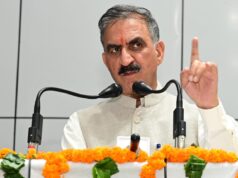
As per information, Chief Minister Sukhvinder Singh Sukhu has sought a detailed proposal from concerned departments, signalling a renewed push on an issue that has remained unresolved for years. The matter has been referred to the Personnel Department, where initial work on drafting a policy has begun.
Across the state, a large number of outsourced employees have been working in various government departments for 15 to 20 years. Despite their long service, many continue to receive monthly salaries in the range of ₹10,000 to ₹12,000, without job security, pension benefits or clear service rules.
Policy Exercise Gains Momentum
Officials indicated that the government will begin collecting department-wise data on outsourced employees, including their tenure, roles and existing service conditions. A review of contractual arrangements is also expected as part of the exercise.
The proposed policy is likely to focus on streamlining employment conditions, ensuring timely salaries and introducing safeguards for workers engaged through outsourcing agencies.
Regularisation Remains a Key Concern
The question of regularisation continues to dominate the debate. In Himachal Pradesh, policies in the past have allowed regularisation of daily wage and contractual employees after a fixed period of service, subject to eligibility and availability of posts. However, outsourced employees fall under a different category, as they are hired through third-party agencies rather than directly by the government.
Due to this distinction, extending regularisation benefits to outsourced staff poses legal and administrative challenges. Financial implications are also significant, as regularisation would increase the burden on the state exchequer in terms of salaries, allowances and pensions.
Ground Reality and Demands
Outsourced employees have repeatedly raised concerns over low wages, lack of career progression and absence of social security benefits. Many of them are engaged in essential services, including healthcare, education and administrative support, yet remain outside the formal government employment framework.
Employee groups have been demanding a dedicated policy that either ensures regularisation or at least provides parity in wages and service conditions.
Relief Expected, Clarity Awaited
The revival of the policy exercise has brought the issue back into focus, but the outcome remains uncertain. While the government’s move signals intent to address the concerns, it is not yet clear whether the policy will lead to regularisation or limit itself to improving working conditions within the outsourcing framework.