
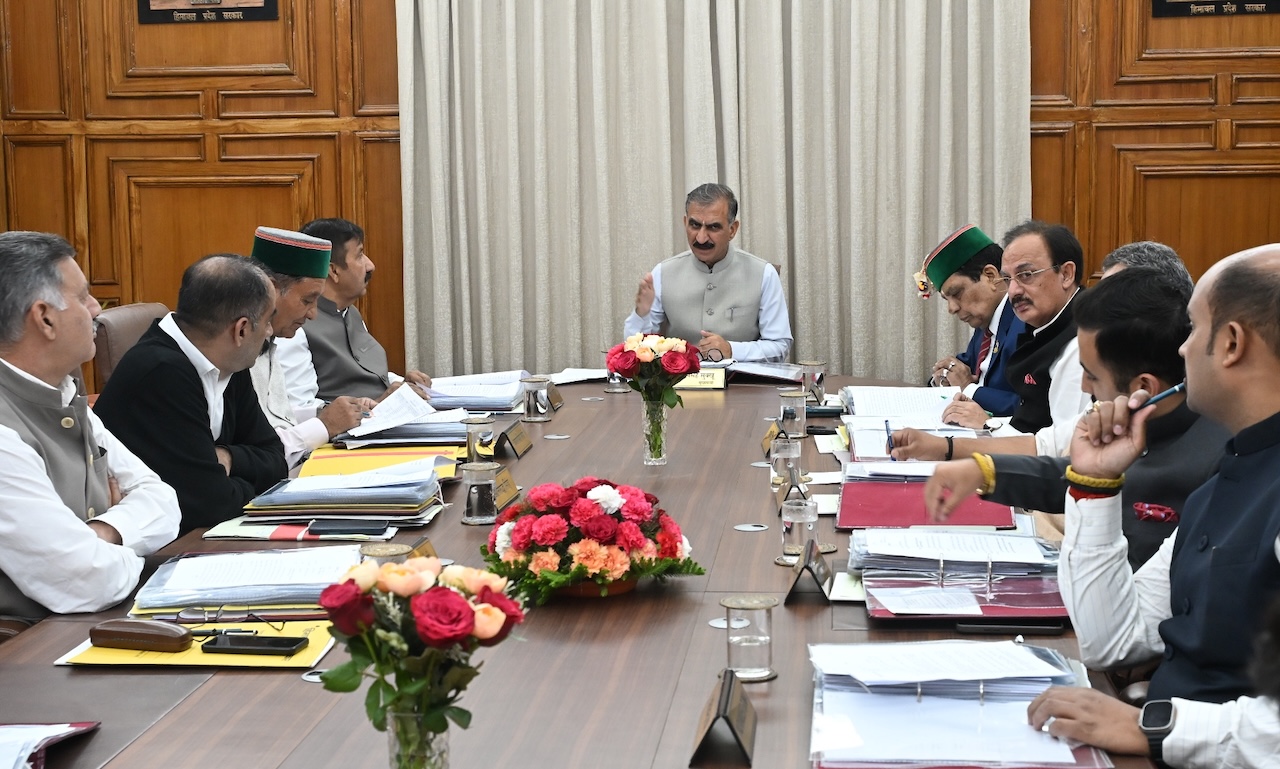
Shimla: In a major boost to the healthcare sector, the Himachal Pradesh Cabinet on Monday approved a series of measures aimed at strengthening medical education, improving healthcare services and incentivising specialist doctors across the state.
The Cabinet approved the grant of Non-Practising Allowance (NPA) to super-specialist faculty members possessing recognised DM, M.Ch. and DrNB qualifications serving under the Department of Medical Education and Research. The move is expected to benefit highly qualified faculty members working in government medical institutions and help the state attract and retain specialist doctors.
In another significant decision, the Cabinet approved a substantial increase in the monthly stipend of postgraduate medical students. Under the revised rates, first-year PG students will now receive Rs. 50,000 per month instead of Rs. 40,000, while second-year students will get Rs. 60,000, up from Rs. 45,000. Third-year students will receive Rs. 65,000 per month, replacing the earlier stipend of Rs. 50,000.
The Cabinet also approved amendments to the Post Graduate/Super-Speciality (PG/SS) Policy of the Department of Medical Education. Under the revised policy, General Duty Officers (GDOs) and direct candidates who choose to serve as Senior Residents at the Atal Institute of Medical Super Specialities (AIMSS), Chamiyana, or in the speciality of Radiodiagnosis at government medical colleges in Tanda, Hamirpur, Mandi, Chamba and Nahan, excluding IGMC Shimla, after completing their postgraduate degree, will be exempted from the mandatory field posting requirement. Their service in these institutions will be treated as field posting under the policy for a period of six years.
To expand specialised medical education, the Cabinet approved the introduction of B.Sc. Medical Technology (Radiotherapy Technologist) and Bachelor of Radiation Therapy Technology courses with an annual intake of 30 seats each at Indira Gandhi Medical College (IGMC), Shimla, and Dr. Rajendra Prasad Government Medical College, Tanda.
The Cabinet also approved the establishment of an All India Institute of Ayurveda at Dhaneta in Nadaun area of Hamirpur district. Around 75 acres of land has been identified for the proposed institute, which is expected to strengthen Ayurvedic education, research and healthcare services in the region.
In a move to improve critical care infrastructure, the Cabinet approved the procurement and supply of equipment for five Critical Care Blocks at Dr. Rajendra Prasad Government Medical College, Tanda; Shri Lal Bahadur Shastri Government Medical College, Mandi; Regional Hospital, Una; Civil Hospital, Ghawandal; and AIMSS, Chamiyana.
The Cabinet further approved the creation and filling up of dialysis technician posts in government medical colleges. Ten posts each will be created in the Departments of Nephrology at IGMC Shimla, Tanda and AIMSS Chamiyana, while five posts each will be created in the medical colleges at Hamirpur, Mandi, Chamba and Nahan.
Strengthening specialised healthcare services further, the Cabinet approved the establishment of a Department of Gastrointestinal Surgery at Dr. Rajendra Prasad Government Medical College, Tanda, along with the creation of two Assistant Professor posts.
Additionally, Rogi Kalyan Samitis of health institutions have been empowered to utilise 70 per cent of the revenue generated through diagnostic tests and procedure fees for sanitation and procurement of reagents, while institutions below the district hospital level will be allowed to utilise 100 per cent of such income for these purposes.
The Cabinet also approved the fee structure and other conditions for the Multi-Purpose Health Worker Course.