

The Himachal Pradesh government has allowed limited use of petroleum coke (petcoke) by industries operating boilers, a move that has sparked both industrial relief and environmental concern. The approval permits industries to use petcoke under stringent conditions to ensure minimal ecological impact.
According to the order, issued by Chief Secretary Sanjay Gupta, only petcoke with a sulfur content not exceeding 7.5 percent will be allowed. The industries eligible for its use must receive gas through pipelines from Indian Oil Corporation or Hindustan Petroleum Corporation Limited refineries. However, the storage of petcoke within industrial premises remains strictly prohibited.
Industries located near ecologically fragile zones—such as national parks, wildlife sanctuaries, or their buffer areas—will not be permitted to use or store petcoke. The Himachal Pradesh Pollution Control Board (HPPCB) will monitor these industries round-the-clock and submit regular compliance reports to the Administrative Secretary. Entry monitoring systems and pollution control mechanisms have been made mandatory for all industries using the fuel.
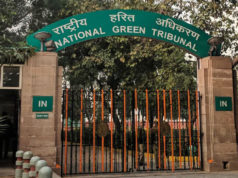
Petcoke, a carbon-rich byproduct derived from crude oil refining, is often used in power generation, cement manufacturing, and other energy-intensive sectors. However, its high sulfur and carbon emissions have made it controversial, with the Supreme Court and the National Green Tribunal previously restricting its use due to air pollution concerns.
Environmental experts warn that even limited use of petcoke can contribute to air quality deterioration if emission standards are not strictly enforced. They have urged the government to adopt real-time emission tracking systems and encourage cleaner alternatives in the long run.
While the decision is seen as a step to support industrial energy demands amid rising fuel costs, it has also reignited debate over whether short-term economic relief should come at the expense of environmental health. The government maintains that the move strikes a balance between sustainable industrial growth and ecological responsibility, but environmentalists remain wary about its long-term implications for Himachal’s fragile hill ecosystem.