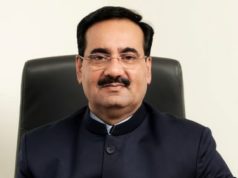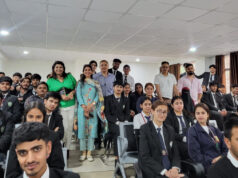

Shimla: The growing role of artificial intelligence (AI) in shaping the future of education came into sharp focus during a national Faculty Development Programme (FDP) at Bahra University, where global expert Narendra K. Rustagi, Director, Center for Global Business Studies, Howard University, highlighted both the opportunities and challenges associated with AI-driven learning.
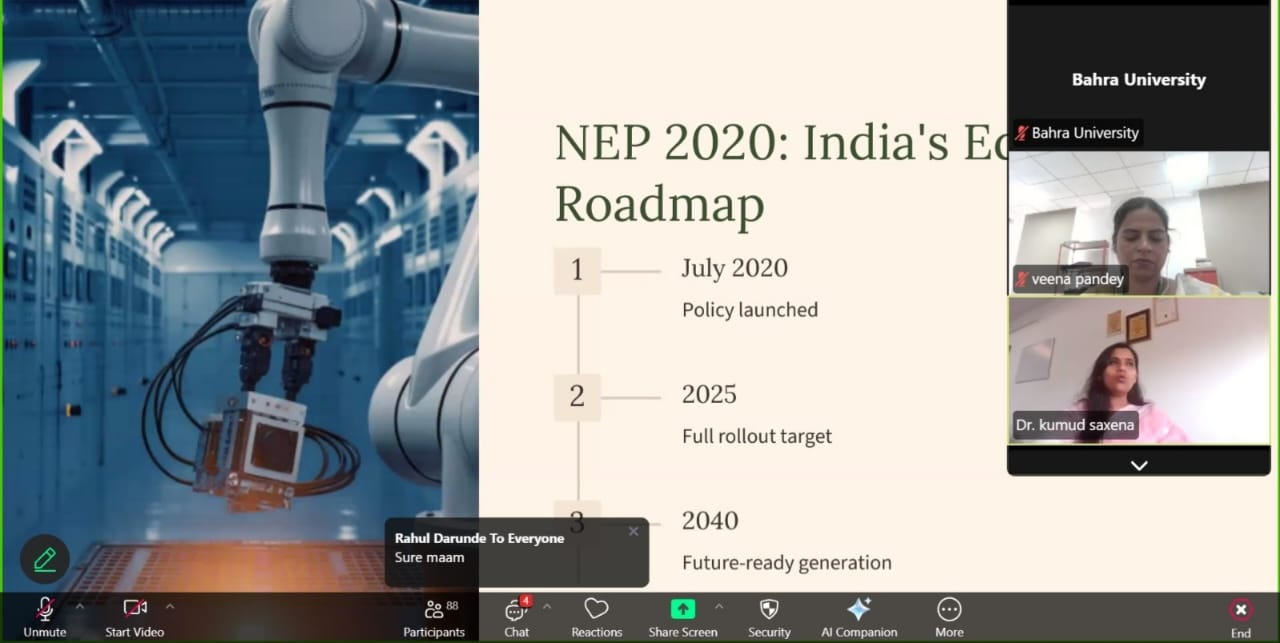
Addressing participants, the Howard University professor said that while AI has the potential to transform education systems worldwide, its integration must be handled carefully to maintain quality, transparency and academic integrity. He pointed out that institutions across the globe are increasingly adopting AI tools for personalised learning, automated assessments and advanced research, but concerns around data privacy, bias in algorithms and over-dependence on technology remain significant.
The FDP, conducted under the aegis of the Madan Mohan Malviya Mission, has brought together over 200 academicians from across India and abroad to deliberate on emerging trends in education, including AI, data analytics, machine learning and ethical research practices.
Experts at the programme explained that AI in education refers to the use of computer systems that can perform tasks requiring human intelligence, such as analysing large datasets, recognising patterns and making decisions. In classrooms, AI is increasingly being used to track student performance, provide customised learning pathways and support teachers with real-time feedback. In research, AI tools help in data analysis, predictive modelling and faster processing of complex information.
However, speakers cautioned that the rapid expansion of AI also raises critical concerns. Issues such as plagiarism through AI-generated content, lack of regulatory frameworks, digital divide and limited teacher training in new technologies could hinder its effective implementation. Emphasis was laid on the need for ethical AI practices, where accountability, fairness and human oversight remain central.
Vice Chancellor of Bahra University, K. K. Dave, highlighted the importance of equipping educators with the skills needed to adapt to these technological changes. He said that AI-driven tools can significantly improve research quality and teaching efficiency if used responsibly.
The discussions also aligned with the vision of the National Education Policy (NEP) 2020, which promotes the use of technology and multidisciplinary approaches in higher education. Academicians stressed that while AI can enhance accessibility and innovation, it should complement, not replace, the role of teachers.
Chairman of Rayat Bahra Group, Gurvinder Singh Bahra, said such platforms are essential for preparing educators to face future challenges. He added that collaboration between institutions and global experts is key to ensuring that AI is used to strengthen, rather than disrupt, the education system.