Shimla — The Himachal Pradesh Board of School Education (HPBOSE) has announced major reforms in its examination system and curriculum, marking a significant step toward aligning the state’s education framework with national standards. Board Chairman Dr. Rajesh Sharma said that beginning with the annual examinations in March 2026, the Board will introduce a new examination pattern in which all three series — A, B, and C — will contain the same questions, arranged in different sequences. The aim is to ensure uniformity, transparency, and fairness in the examination process. Board Secretary Dr. Major Vishal Sharma was also present during the announcement.
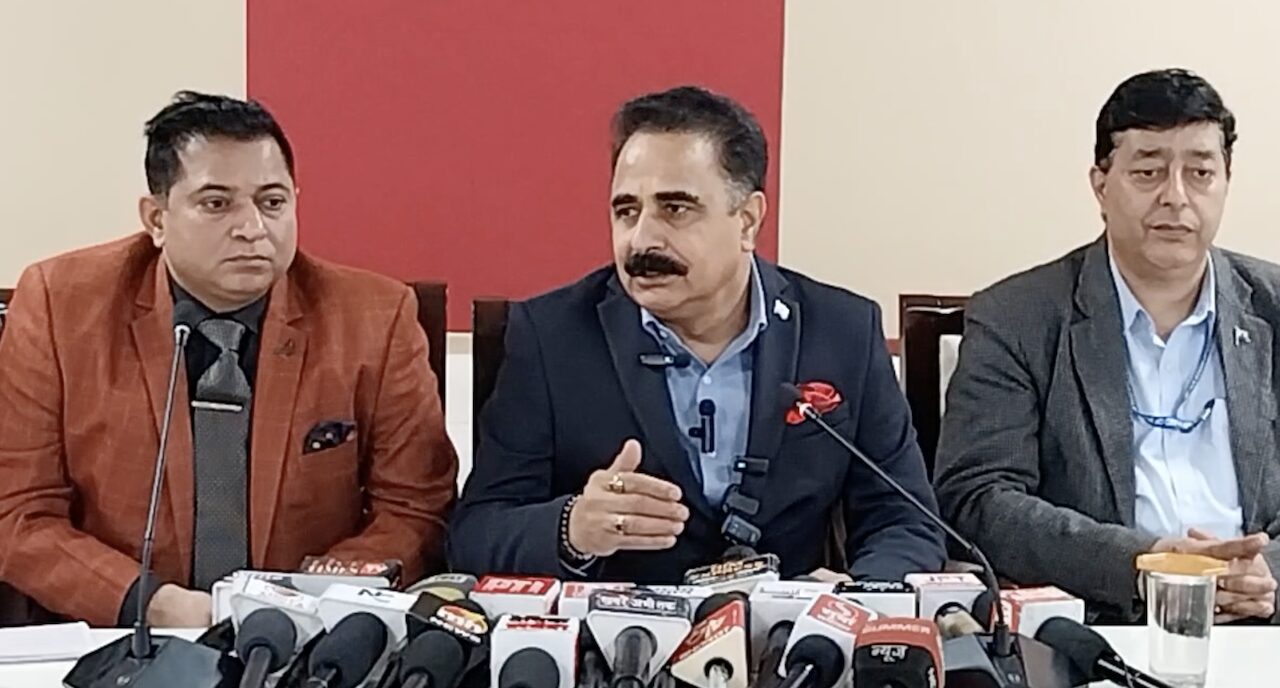
Dr. Sharma described the reform as a Diwali gift for students across Himachal Pradesh. He added that from the next academic session, the curriculum for classes 4 to 6 will also be revised. Students studying in schools affiliated with HPBOSE will now be taught from the same textbooks used in CBSE-affiliated schools. The step is intended to remove discrepancies between the Board and CBSE curriculum and to help students prepare better for national-level examinations.
The Board has also developed a comprehensive question paper bank, containing chapter-wise questions to assist students in their preparation. Additionally, HPBOSE will preserve CCTV footage of all examinations for one year to ensure transparency and accountability in the evaluation process. On the administrative side, the Board has released the pending installment of Dearness Allowance (DA) to its employees.
These reforms come as the Himachal Pradesh government takes broader steps to strengthen school education in the state. The government has recently decided to introduce the CBSE curriculum in 100 selected government senior secondary schools from the next academic session. At least one such CBSE-affiliated school will be established in every assembly constituency to ensure wider access and uniform educational standards. A dedicated cadre of teachers will be appointed to these CBSE schools, and the government plans to implement merit-based selection and performance-linked incentives.
These schools will also operate as day-boarding institutions, emphasising sports, arts, nutrition, skill-building, and personality development alongside academics. The move aims to raise the standard of education in government schools and provide rural students with access to the same learning quality available in CBSE institutions.