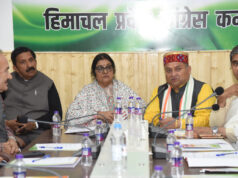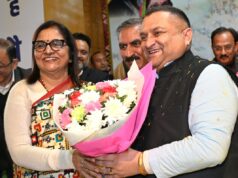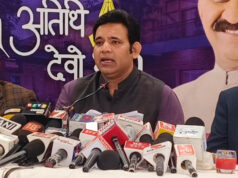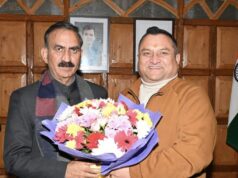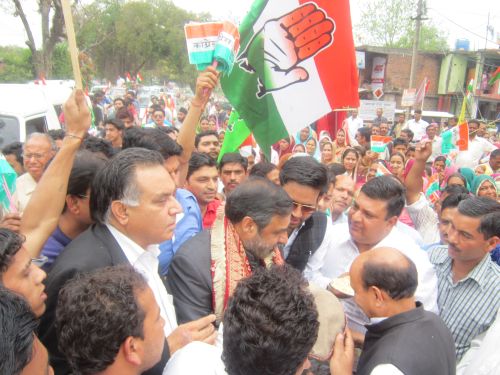


The Himachal Pradesh Congress finds itself in deep organisational disarray even as it governs the state. Almost a year after forming the government, the party continues to function without a complete state executive body, relying solely on its president, Pratibha Singh. The absence of office-bearers and coordinated leadership has exposed widening cracks within the party and fuelled growing dissatisfaction among workers and legislators alike.
The Congress high command is now under pressure to appoint a new president, a move that could determine the party’s political direction for the next three years. Several names are being discussed for the post, including former party president and Theog MLA Kuldeep Singh Rathore, Education Minister Rohit Thakur, Renuka MLA Vinay Kumar, and Arki MLA Sanjay Awasthi, a close confidant of Chief Minister Sukhvinder Singh Sukhu. But the name that has suddenly shifted the balance of the discussion is that of RS Bali, the young MLA from Nagrota Bagwan in Kangra district.
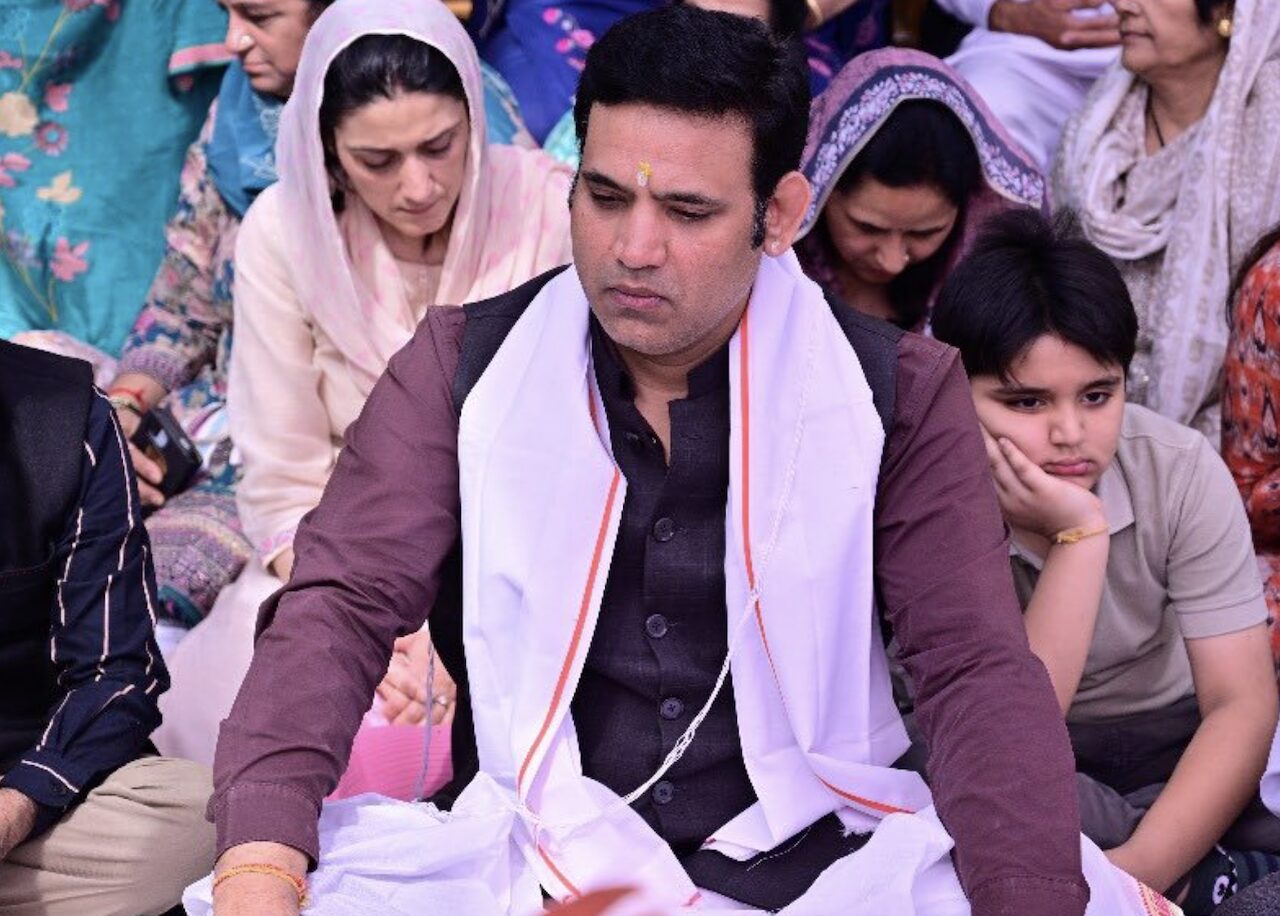
Bali’s entry into the equation has added both intrigue and hope to the Congress’s troubled state unit. At a time when factional politics paralyse the party’s internal structure, Bali is seen by many as a potential bridge between rival camps. Representing Kangra, a politically decisive region that holds the key to government formation in Himachal, Bali carries both regional and generational appeal. His late father, GS Bali, was a towering figure in state politics, and RS Bali’s growing influence has steadily positioned him as one of the Congress’s most visible young leaders.
Insiders believe that if Congress truly wants to rejuvenate itself, Bali’s appointment could send the right message. He has risen through the ranks of the NSUI, Youth Congress, and the party’s core structure, giving him both organisational experience and grassroots understanding. More importantly, he has the ability to run the party independently, including financially — a critical factor in the current political environment. In contrast, former president Kuldeep Singh Rathore is seen as reluctant to spend from his own resources to strengthen the organisation.
The Congress, however, is not only struggling with leadership appointments but also with deep polarisation between the camps of Chief Minister Sukhu and state president Pratibha Singh. The rivalry, fuelled by mistrust and differing styles of governance, has paralysed decision-making at the organisational level. Vikramaditya Singh, the PWD Minister and Pratibha Singh’s son, has often been vocal about the government’s functioning, reflecting the growing unease among the Virbhadra Singh loyalists who feel sidelined under Sukhu’s leadership.
Amid this internal tug-of-war, the Congress has failed to rebuild its grassroots network. District and block committees remain inactive, and the absence of a communication strategy has allowed the BJP to dominate the narrative both on the ground and online. With the next Lok Sabha elections approaching, the Congress cannot afford to enter the campaign season with a fractured structure and demotivated cadre.
RS Bali’s appointment, if it happens, could realign these equations. He brings with him a certain level of independence, financial backing, and mass connect that few others in the current party setup possess. His representation of Kangra also gives him an edge, especially after the exit of Sudhir Sharma, who was among the few influential faces from the lower Himachal region before his fallout with Sukhu. Bali’s rise could restore balance by offering Kangra renewed importance in state politics.
Yet, sceptics within the party caution that a youthful face alone may not be enough to heal years of factional bitterness. They argue that the Congress high command must not only make the right appointment but also empower the new working president with real decision-making authority. Without that, even a strong choice like RS Bali could end up entangled in the same political stalemate that has crippled the party’s organisation for months.
As things stand, the Congress is governing Himachal but not running its own house. The government may have two years left in its term, but the fate of the party’s revival depends on how it addresses this internal crisis. If RS Bali’s youthful energy and resources are channelled effectively, he could provide the Congress with the momentum it desperately needs. But if factional politics continues to dominate decisions, the writing on the wall will remain unchanged — the Congress will continue to govern without direction and fight elections without unity.
The next few weeks will reveal whether the party chooses renewal over repetition. Ultimately, it is not just about who becomes the president, but whether the Congress in Himachal can rediscover its collective strength. If the journey ahead needs young shoulders, RS Bali might just be the one to carry the doli.