

Shimla – Himachal Pradesh’s sacred hill shrines are facing a deep ecological crisis, with unchecked construction, mass tourism, and now devastating floods and landslides threatening their sanctity. Public Works and Urban Development Minister Vikramaditya Singh, expressing grave concern, said that protecting these holy sites is not only an environmental responsibility but also a matter of cultural and spiritual survival.
The minister said that sites such as Manimahesh, Shrikhand Mahadev, Churdhar and Bijli Mahadev, revered for centuries by the Dev Samaj in their natural form, are being increasingly damaged by uncontrolled development. He noted that Shrikhand Mahadev, which stands at 18,570 feet with its 75-foot natural Shivlinga, has seen ecological disturbance due to the unnecessary expansion of facilities. At Bijli Mahadev, Singh warned, cracks and fissures are widening as a result of deforestation, heavy rainfall, and ropeway construction, with falling boulders and unstable towers near the temple raising serious concerns about the hill’s geological stability.
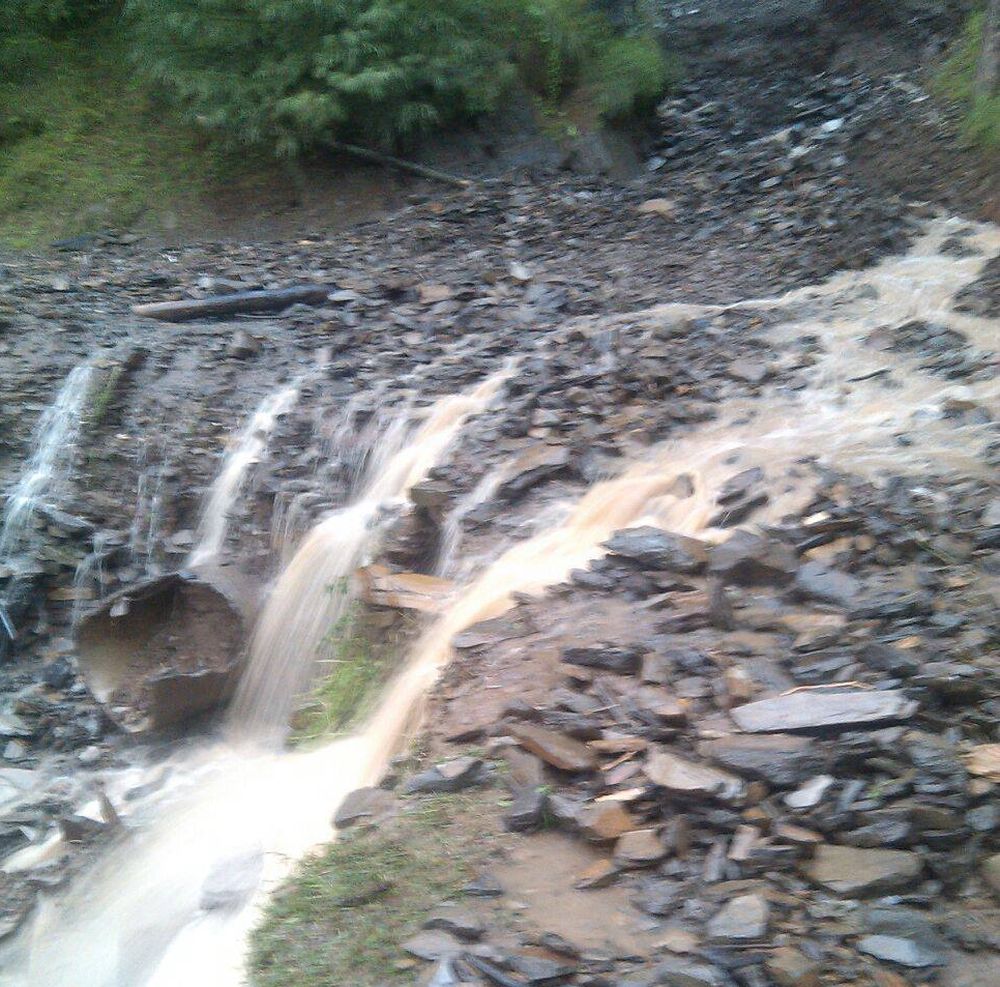
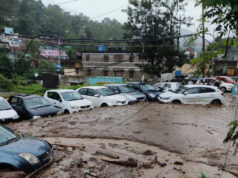
Singh’s warning comes at a time when Himachal Pradesh is reeling under one of its worst monsoon disasters in recent years. Heavy rain, cloudbursts and landslides have caused widespread devastation, claiming more than 355 lives, with dozens still missing. The Manimahesh Yatra in Chamba district was badly hit after flash floods and landslides stranded thousands of pilgrims. Around 350 devotees had to be airlifted by the Indian Air Force, while nearly 10,000 pilgrims were rescued in operations over several days. Despite these efforts, 17 pilgrims lost their lives.
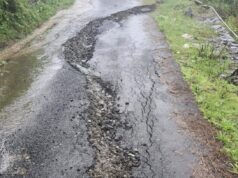
Elsewhere in the state, more than 1,200 roads remain blocked, electricity and water supplies have been disrupted, and losses to agriculture and public infrastructure are estimated at nearly ₹3,800 crore. In Sirmaur, a massive landslide near Chaukar village collapsed a 200-metre section of hillside, putting at least five homes in danger. The collapse of entire slopes after intense rainfall has highlighted how fragile Himachal’s mountains have become. The Supreme Court has also taken note, observing that illegal tree-felling and environmental neglect have worsened the scale of this year’s disaster.
Against this backdrop, Singh stressed the need to rethink the way pilgrimages and tourism are managed. He said the number of daily visitors to high-altitude shrines must be regulated in line with the carrying capacity of the environment rather than commercial profit. Every pilgrim, he added, must take responsibility for carrying back their own waste, as plastic bottles, wrappers and other litter not only pollute these holy sites but also hurt the religious sentiments of devotees. He strongly opposed the practice of burning garbage at sacred places like Shrikhand Mahadev, saying it desecrates the environment and diminishes the spiritual experience.
Calling for restraint in overdevelopment, Singh reminded people that these shrines are sacred in their natural form and that excessive construction is against the very spirit of devotion. “True devotion includes respect for nature,” he said, urging that pilgrims be educated about the ecological importance of these sites. Protecting them, he added, is not only about the environment but also about safeguarding the cultural heritage and faith of Himachal Pradesh.
“If we fail to act now, future generations will not forgive us for destroying these sacred spaces,” Singh cautioned, calling for controlled tourism, responsible behaviour, and a halt to unnecessary construction to preserve the sanctity of Manimahesh, Shrikhand, Churdhar and Bijli Mahadev.