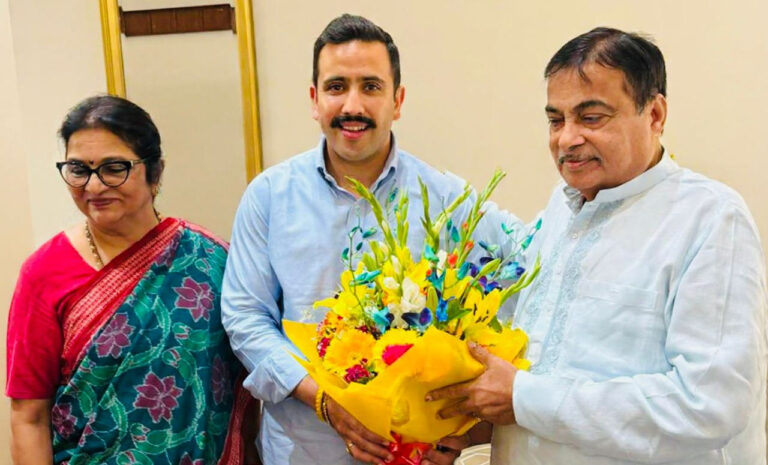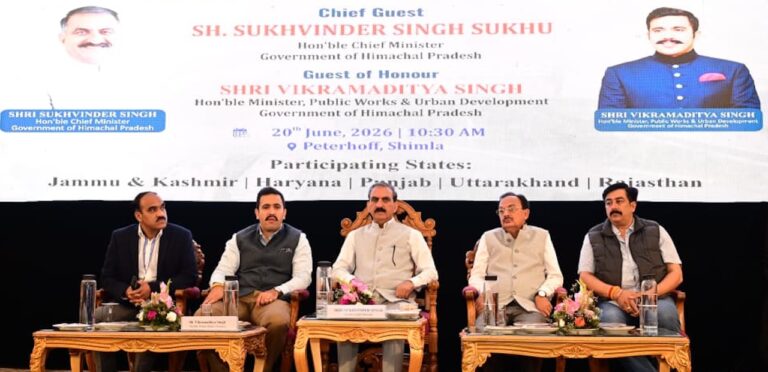
New Delhi: Himachal Pradesh has sought ₹1,350 crore as the Central share under the Urban Challenge Fund, flagging the unique financial and geographical constraints faced by hill states. The demand was raised by PWD and Urban Development Minister Vikramaditya Singh during a meeting chaired by Union Housing and Urban Affairs Minister Manohar Lal Khattar in New Delhi.
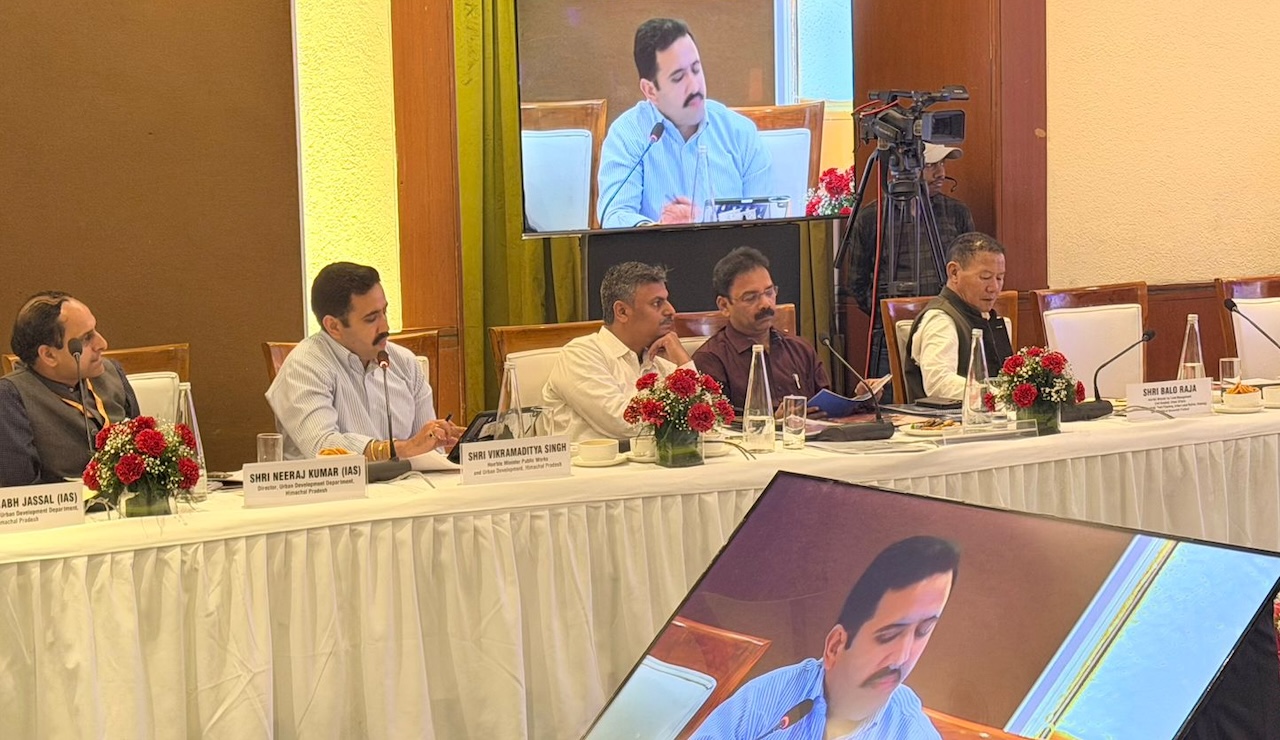
The state has proposed projects worth about ₹5,400 crore under the fund, aimed at building stronger urban infrastructure and developing economic hubs. Singh argued that Himachal’s Urban Local Bodies have a limited revenue base and that private sector participation remains low due to difficult terrain and weak commercial viability.
He sought special relaxations for hill and special category states, including easing population criteria and revising the funding pattern. The minister urged the Centre to reduce the requirement of mobilising 50 percent of project costs through bonds, loans, or public-private partnerships, and instead provide a higher share of Central assistance or viability gap funding.
Singh also requested support in accessing institutional finance and innovative funding mechanisms. He stressed the need for policy backing to attract credible private developers, saying such support would be crucial for the successful implementation of projects in hill regions.
Highlighting the state’s limitations, he said nearly 90 percent of Himachal’s area is mountainous and about 67 percent is under forest cover, leaving little land for development. Rapidly increasing tourist footfall is adding pressure on already stretched urban infrastructure, while ecological fragility further restricts expansion.
He described the Urban Challenge Fund as a key tool for developing resilient urban centres that can support tourism, generate employment, and improve living standards.
The state’s proposal includes a range of integrated, climate-resilient, and tourism-oriented projects. These cover decongestion and redevelopment of core urban areas, peripheral CBD development, smart parking, skywalks, and heritage façade improvements. Plans also include mobility solutions suited to hill towns, such as hydraulic parking systems, lifts, and escalators to tackle space constraints.
Other proposals include the redevelopment of traditional markets to boost local businesses, underground utility ducting for reliable services in disaster-prone areas, and cluster-based solid waste management systems to address environmental concerns.
The government has also pitched an Integrated Wellness Eco-tourism Centre with a skywalk, along with planned townships to reduce pressure on existing urban centres and attract investment. Strengthening urban governance through Integrated Command and Control Centres for disaster response and traffic management is also part of the plan.
Meanwhile, the Centre has asked the state to prioritise its proposals and submit projects worth ₹1,100–1,200 crore in the first phase. Of this, 25 percent will be provided as Central assistance, while the remaining funds will have to be arranged by the state through loans or PPP models.