

The Himachal Pradesh government has made it mandatory to submit a structural engineer’s report for the construction of buildings with more than three storeys in both urban and rural areas. A structural stability certificate will also be required for the construction of two-and-a-half-storey buildings. Without these documents, such buildings will not be treated as legally valid.
The provision has been incorporated into the Himachal Pradesh Town and Country Planning (HP TCP) Rules, 2021. Earlier, the requirement of a structural engineer’s report and stability certificate was applicable only to government buildings. The rule has now been extended to private constructions as well.
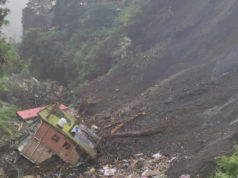
The decision has been taken in view of repeated damage to buildings due to landslides and natural disasters in the state. Several government and private structures have suffered damage in recent years, prompting visits by central government teams. These teams held meetings with Himachal Pradesh officials at the Secretariat and recommended making structural safety certification compulsory to ensure safer construction practices.
The Town and Country Planning Department has prepared development plans for cities including Shimla, Kullu, Dharamshala, Una, Mandi, Solan, Nahan and Chamba. In the Shimla Planning Area, permission is being granted for buildings ranging from three to five storeys, depending on road access. Buildings up to five storeys are permitted where a five-metre-wide road is available. In areas without road access, construction is limited to two storeys with an attic.
TCP Minister Rajesh Dharmani said that the rule has been implemented through the development plans and was already applicable to government buildings. He said the aim is to ensure that houses are structurally strong and constructed with proper technical advice.
The government has also reiterated norms related to construction near water bodies. Buildings must now maintain a safe distance from natural drains and streams. Construction permission is being granted only after leaving a minimum distance of five metres from drains and seven metres from streams and rivers.