

State achieves 56% Aadhaar coverage for children below five against national average of 39%
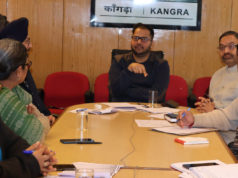
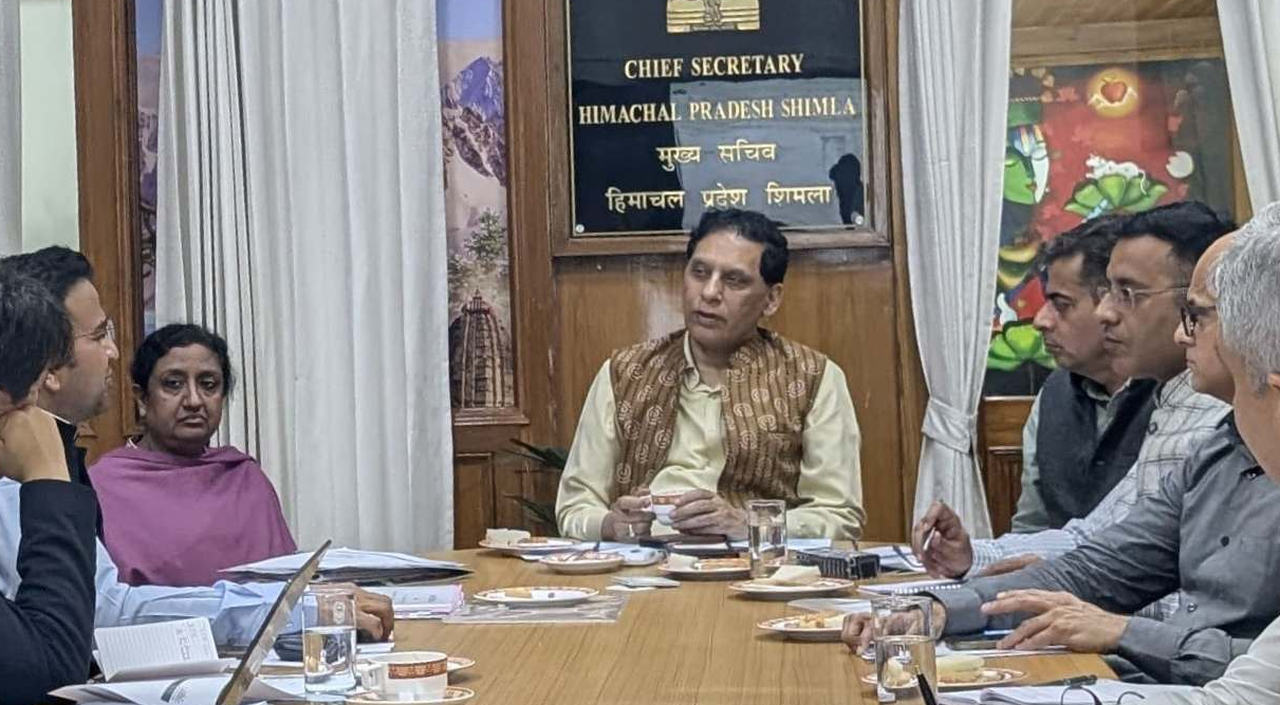
Shimla: Himachal Pradesh has launched face authentication in its Public Distribution System (PDS), becoming one of the early adopters of this advanced identity verification method. The initiative was formally rolled out by Chief Secretary Prabodh Saxena during a high-level meeting with departmental heads and officials from the Unique Identification Authority of India (UIDAI).
The launch comes as the state continues to show exemplary performance in Aadhaar coverage, particularly for children below the age of five. Himachal has achieved 56% Aadhaar enrollment in this age group, significantly higher than the national average of 39%.
Chairing the review meeting on Aadhaar progress, the Chief Secretary emphasized the need to achieve 100% Aadhaar saturation across all districts. He directed the Department of Digital Technology & Governance (DDT&G), India Post, and the School Education Department to activate all available Aadhaar enrollment kits and ensure their maximum utilization.
It was highlighted that the state has made considerable progress in reducing the pendency of mandatory biometric updates — the number has come down from 5.5 lakh to 4.75 lakh in just three months. Collaborative efforts between the Digital Technology and Education departments have led to successful biometric update camps across various schools.
Saxena instructed officials to extend these efforts to private schools as well and raise awareness among parents and guardians regarding the importance of biometric updates at the ages of 5 and 15. The School Education Department has been tasked with running awareness campaigns to ensure timely compliance.
To improve Aadhaar coverage among infants and toddlers, the Chief Secretary also directed the deployment of Aadhaar enrollment kits at immunization centers. Aadhaar registration for children aged 0–5 years will now be facilitated through a coordinated effort involving the Health Department, the Digital Technology & Governance Department, and the India Post Payment Bank (IPPB).
Commodore (IN) Dhiraj Sareen, Deputy Director General of UIDAI’s Chandigarh Regional Office, encouraged state departments to expand the use of Aadhaar authentication across their services. He also outlined the recent amendments in the Aadhaar SWIK (Social, Welfare, Innovation, Knowledge) regulations, which now allow private entities — including hotels, hospitals, and travel agencies — to use Aadhaar-based authentication upon approval from state departments.
Additionally, the Chief Secretary instructed all departments to digitize documents used for Aadhaar updates and to adopt Aadhaar-based authentication for beneficiary services to improve transparency and efficiency.
With these advancements, Himachal Pradesh continues to lead in digital governance and Aadhaar-linked service delivery, setting a strong example for other states to follow.