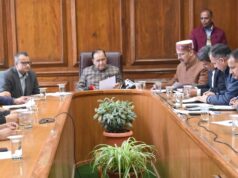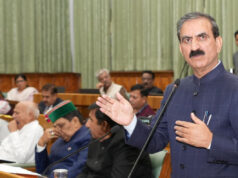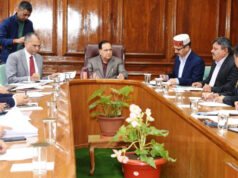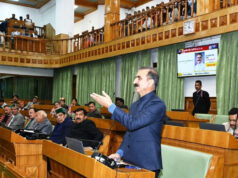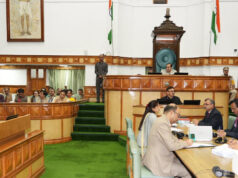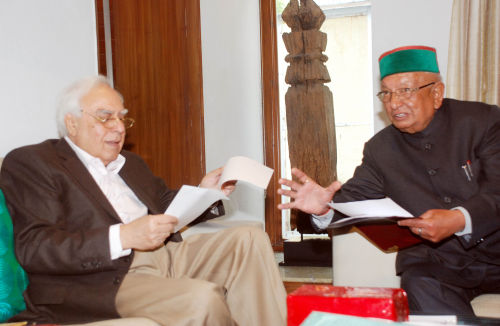


The Himachal Pradesh Legislative Assembly has unanimously passed a resolution urging the Central Government to confer the Bharat Ratna, the country’s highest civilian honour, on Dr. Yashwant Singh Parmar, widely revered as the architect and founder of Himachal Pradesh.
The resolution, introduced on Private Member’s Day by Nahan MLA Ajay Solanki, emphasised that Dr. Parmar was not just a political leader but a visionary who gave Himachal its identity. Both ruling and opposition parties spoke in one voice, calling Dr. Parmar a leader who transcended party lines and dedicated his life to the people of the state.
“Dr. Parmar left his government job and struggled for the creation of Himachal Pradesh. His contribution to the state’s formation and development can never be forgotten,” Solanki said while presenting the resolution.
Leader of Opposition Jairam Thakur supported the motion, stating, “This demand should have been fulfilled long ago. It is time to honour his legacy with the highest recognition.”
Industry Minister Harshvardhan Chauhan recalled Dr. Parmar’s simplicity and humility, noting that even during his tenure as Chief Minister, he travelled in HRTC buses and stayed in government rest houses. “He worked tirelessly under challenging conditions to lay the foundation of Himachal,” Chauhan said.
Deputy Chief Minister Mukesh Agnihotri remarked that Dr. Parmar’s life and work need no certification, as “the history he created speaks for itself.” Horticulture Minister Jagat Singh Negi described him as a messiah for tribal communities, while BJP MLA Sukhram Chaudhary said, “History is made not just by events but by great men like Dr. Parmar who understood the pain of the people and gave them an identity.”
The Architect of Modern Himachal
Dr. Yashwant Singh Parmar, born on August 4, 1906, in Chanhalag village of Sirmaur district, played a pivotal role in uniting 30 princely hill states and forming Himachal Pradesh in 1948. After the merger, Himachal was initially a Part C state under a Chief Commissioner, but Parmar’s relentless efforts ensured full statehood in 1971.
A scholar of law and political science, Dr. Parmar envisioned a self-reliant and progressive Himachal despite its geographical challenges. He emphasised horticulture, rural development, and education as key pillars for economic growth. Under his leadership, the apple revolution began, transforming the agrarian economy and making Himachal a horticulture powerhouse.
His policies focused on road connectivity in remote areas, strengthening primary education, and creating employment through agriculture-based industries. Dr. Parmar also advocated for land reforms, empowering small farmers and reducing economic disparity.
Why the Bharat Ratna Demand Matters
Dr. Parmar served as the first Chief Minister of Himachal Pradesh from 1952 to 1977 (with a short break in between) and laid the foundation of governance in the hill state. His vision turned a cluster of underdeveloped hill states into a progressive state with a unique identity.
Historians note that Himachal’s relatively balanced development model owes much to Parmar’s emphasis on equitable distribution of resources, land reforms, and social justice. Even today, his policies are considered a blueprint for inclusive growth in hilly regions.
The unanimous resolution in the Assembly reflects the deep respect for Dr. Parmar across political lines. If approved by the Centre, he would become the first leader from Himachal Pradesh to receive the Bharat Ratna.