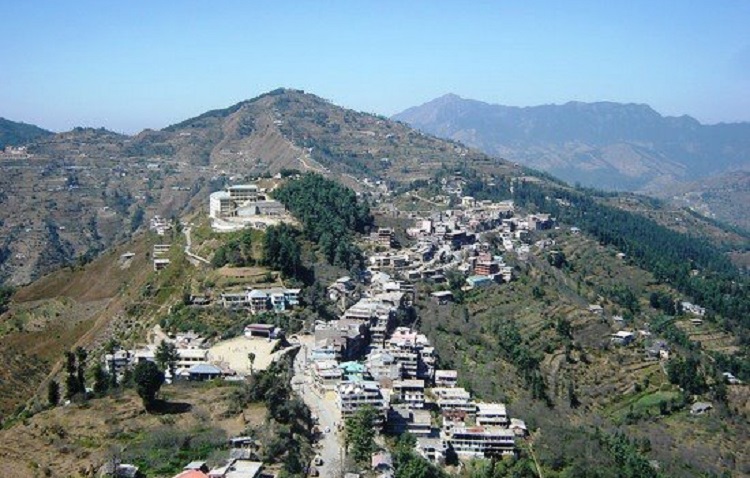


Snow cover dropped by 12.72% during winter 2023-24; Kangra tops the state with 4,027 landslide-prone locations
Shimla: Climate change is altering Himachal Pradesh’s hydrological pattern and increasing the risk of natural disasters, with the State Climate Change Centre warning that reduced winter snowfall and a rise in extreme rainfall events are making the state’s fragile mountain slopes increasingly vulnerable to landslides and flash floods.
According to the report, the total seasonal snow-cover area during the winter of 2023-24 declined by 12.72 per cent compared to the previous year. Over the past six years, snow cover in the state’s four major river basins has shrunk by 13.72 per cent, reflecting a broader shift in climatic conditions.
Basin-wise figures show that the Chenab basin recorded the steepest decline in snow cover at 15.39 per cent, followed by the Sutlej basin with 12.45 per cent, the Ravi basin with 9.89 per cent and the Beas basin with 7.65 per cent.
Experts say snowfall plays an important role in maintaining moisture and stability on mountain slopes. Reduced snowfall weakens this natural balance, and when intense rainfall occurs during the monsoon, soil and rock masses become susceptible to rapid movement, leading to landslides and flash floods.
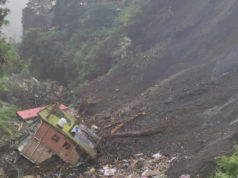
Reflecting the growing threat, the State Climate Change Centre’s post-monsoon landslide inventory has identified a record 13,569 landslide-prone sites across Himachal Pradesh. Kangra district accounts for the highest number with 4,027 vulnerable locations, followed by Mandi with 2,169 and Solan with 1,930. Chamba district has 534 identified landslide-prone sites.
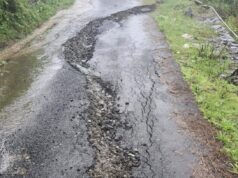
The report states that just three extreme rainfall events during the monsoon triggered 32 flash floods and 163 major landslides across the state. The findings suggest that a few hours of exceptionally heavy rain are now capable of causing widespread devastation, replacing the earlier pattern in which disasters were mainly associated with prolonged rainfall.
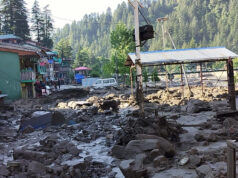
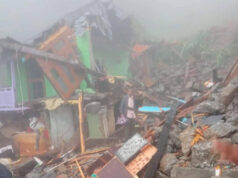
One of the most tragic examples was the collapse of the Shiv temple at Summer Hill in Shimla in August 2023, in which 20 people lost their lives. Extensive damage was also reported in the Thunag market area of Mandi district during recent rain-related disasters.
Extreme rainfall events have intensified in recent years
Data and scientific studies indicate that Himachal Pradesh has witnessed a sharp rise in extreme rainfall episodes over the last three years. During July 7-10, 2023, the state received nearly 436 per cent more rainfall than normal, resulting in devastating floods and landslides. Several locations recorded more than 200 mm of rain in a single day, while the event caused extensive damage to infrastructure and claimed hundreds of lives. Researchers attribute the disaster to the interaction of monsoon systems with western disturbances, which amplified rainfall intensity.
According to the India Meteorological Department’s annual report, Himachal Pradesh recorded 1,334.9 mm of rainfall in 2023, the highest annual rainfall since 1998. The July-August deluge alone caused losses exceeding ₹10,000 crore and claimed more than 400 lives. Several districts, including Mandi, Shimla, Solan and Kullu, recorded rainfall far above normal levels.
In 2024, the state again witnessed a series of cloudbursts and flash floods. Areas in Kullu, Shimla and Mandi were among the worst affected. The cloudburst events in August left more than 20 people dead and disrupted roads, electricity and water supply schemes across several districts.
The trend continued in 2025, when repeated intense rain spells triggered flash floods and landslides, particularly in Mandi district. Reports indicate that dozens of people lost their lives, while roads, bridges and power infrastructure suffered extensive damage. Climate experts have linked the increasing frequency of such disasters to rising temperatures and the growing moisture-holding capacity of the atmosphere.
The State Climate Change Centre report notes that Himachal Pradesh is entering a phase where reduced snowfall, rising temperatures and extreme rainfall events are converging to create multiple hazards. Roads, bridges, hydropower projects, water supply schemes and human settlements are becoming increasingly exposed to these risks.
With the state on the threshold of the 2026 monsoon season, the report has called for climate-sensitive development plans, scientific land-use policies and stronger disaster management strategies. It warns that unless adaptation measures are integrated into future infrastructure and planning decisions, Himachal Pradesh could face even more severe natural disasters in the coming years.
Scientists have repeatedly cautioned that the Himalayan region is warming faster than many other parts of the world, making mountain states such as Himachal Pradesh particularly vulnerable. The latest findings underline that climate change is no longer a future threat but an emerging reality that is reshaping weather patterns and disaster risks across the state.