

Himachal Pradesh has witnessed an exceptionally heavy monsoon this August, with rainfall crossing the 300 mm mark statewide, significantly above the seasonal average. According to data from the Meteorological Department, the state recorded 317.6 mm of rainfall in August, compared to the normal average of 220.9 mm — an excess of 44 percent.
Several districts have reported rainfall much higher than the seasonal norm, leading to severe damage to infrastructure, agriculture, and property. Una district tops the chart with 693 mm of rain, which is 117 percent more than the normal 319 mm. Kangra follows closely with 629.8 mm, 15 percent higher than the usual 549.5 mm. Solan recorded 525.7 mm, a staggering 114 percent above the average of 245.4 mm. Similarly, Kullu logged 332.3 mm, which is 112 percent more than normal, while Mandi received 555.5 mm, 61 percent above the average 345.8 mm.
Other districts also faced significant excess rainfall — Hamirpur (525.7 mm, 52% more), Bilaspur (485.1 mm, 84% more), Chamba (362.6 mm, 42% more) and Shimla (333.1 mm, 97% more). Even Kinnaur, which usually remains dry, recorded 104 mm, 59 percent above normal. Only Lahaul-Spiti experienced below-normal rainfall, with 64.7 mm, 33 percent less than the average.
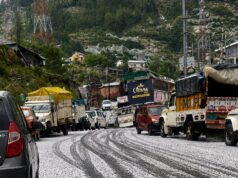
This relentless downpour has wreaked havoc across Himachal, triggering landslides, flash floods, and road blockages. According to recent reports, the monsoon has caused widespread damage to roads, bridges, and houses, disrupting connectivity to many remote areas. Several highways, including key national highways, were blocked for days, severely impacting tourism and local trade. The apple belt of the state also suffered losses due to transport disruptions and orchard damage.
Experts warn that the intensity of rainfall and frequency of cloudbursts in Himachal indicate a shift towards extreme weather patterns linked to climate change. With infrastructure already weakened by previous monsoon spells in June and July, the August deluge has aggravated the crisis, leading to huge financial losses for the state government, which is already grappling with a severe resource crunch.
Administration has issued advisories for residents and tourists to remain cautious as landslide-prone slopes remain unstable, and more rainfall is predicted in the coming days. Disaster management teams are working to clear blocked roads and restore essential services, but officials admit that the damage assessment could run into hundreds of crores of rupees.