
Calls out Centre and State for prioritising revenue over environmental balance; seeks urgent action plan
New Delhi: The Supreme Court of India has issued a stark warning about the deepening ecological crisis in Himachal Pradesh, cautioning that if unchecked, the state could “vanish in thin air” due to the worsening impact of climate change and unsustainable development practices.
A bench comprising Justices J.B. Pardiwala and R. Mahadevan made the observations on July 28 while hearing a petition challenging the Himachal Pradesh High Court’s refusal to interfere in a government notification that designated specific areas as “green areas” to curb construction.
Refusing to overturn the high court’s decision, the apex court instead used the moment to highlight the broader environmental emergency unfolding in the state. “The situation in the state of Himachal Pradesh has gone from bad to worse,” the bench noted, adding that climate change was having a “visible and alarming impact” on the fragile Himalayan ecosystem.
The court stressed that revenue generation cannot come at the cost of nature. “We want to impress upon the state government and the Union of India that earning revenue is not everything,” the bench said. “If things proceed the way they are, the day is not far when the entire state of Himachal Pradesh may vanish in thin air from the map of the country. God forbid this doesn’t happen.”
‘Humans, Not Nature, Responsible’
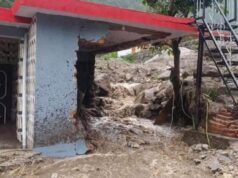
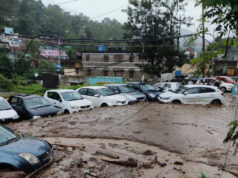
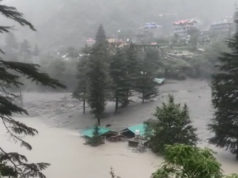
Pointing to the increasing frequency of landslides, soil subsidence, road collapses, and building failures, the bench directly linked these disasters to human intervention rather than natural causes.
“It is not right to blame only nature. Humans are responsible for the continued degradation—whether it is through hydropower projects, four-laning of roads, deforestation or construction of multi-storey buildings,” the court said.
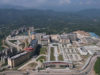
Himachal Pradesh, often called the “power state” of India for its hydropower potential, has seen rapid infrastructure expansion in recent years. The bench remarked that while hydropower is renewable and low-carbon, the construction of dams, tunnels, and roads has led to significant environmental costs.
Warnings Against Unplanned Development
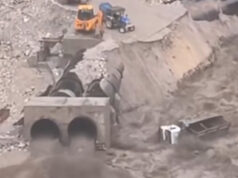
The court expressed concern over tourism-driven projects and road-widening works being taken up without adequate environmental assessments. “The unrelenting building, tunnel and road construction—frequently done without proper planning—has made the region more vulnerable to natural disasters,” it said.
It also flagged issues such as forest fires, encroachments, overgrazing, and urban expansion as major contributors to the ecological imbalance. With more than 66% of its area covered in forests, the state’s natural richness is now under threat from “human greed and apathy,” the bench observed.
Tourism a Double-Edged Sword
While acknowledging that tourism is a major revenue source for Himachal, the bench warned that “uncontrolled growth of tourism has strained the state’s environment.” If left unchecked, this pressure could severely undermine both ecological and social systems, it said.
The court called for a collaborative approach among Himalayan states to develop climate-conscious planning and policies, taking into account the unique geographical sensitivities of the region.
Taking a serious note of the situation, the Supreme Court ordered the registry to register the matter as a public interest writ petition. The court also asked the Himachal Pradesh government to submit a detailed action plan addressing the environmental concerns raised.
“We expect the state to file an appropriate reply explaining whether they have any action plan to meet the issues we have discussed and what they propose to do in the future,” the bench said.
The matter will be listed again for hearing on August 25 after receiving necessary orders from the Chief Justice of India.
Centre’s Responsibility Also Underlined
The court also reminded the Union government of its obligation to protect Himachal’s ecology. “Much damage has already been done, but something is better than nothing,” the court remarked.
With this strong intervention, the Supreme Court has not only raised a red flag about Himachal Pradesh’s future but also underlined the urgent need for sustainable development policies across the Himalayan region.