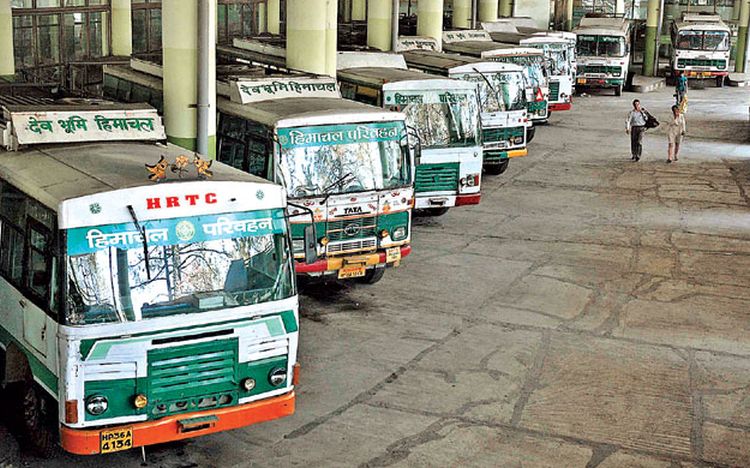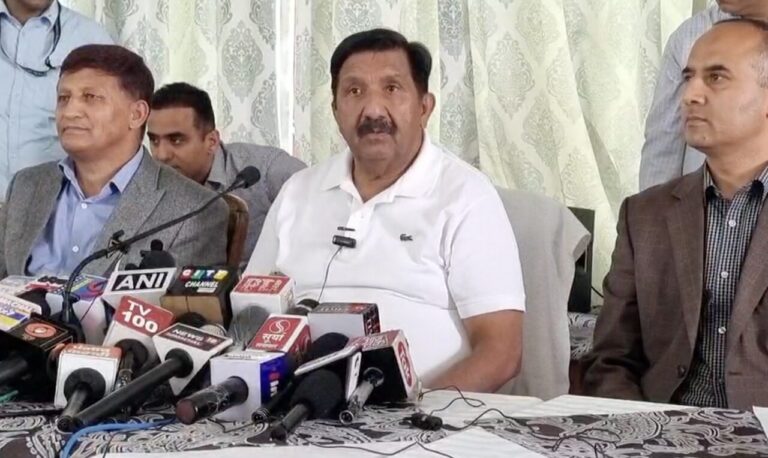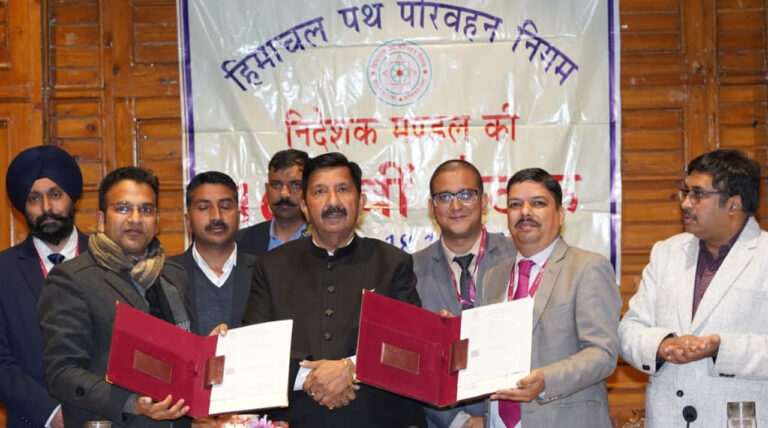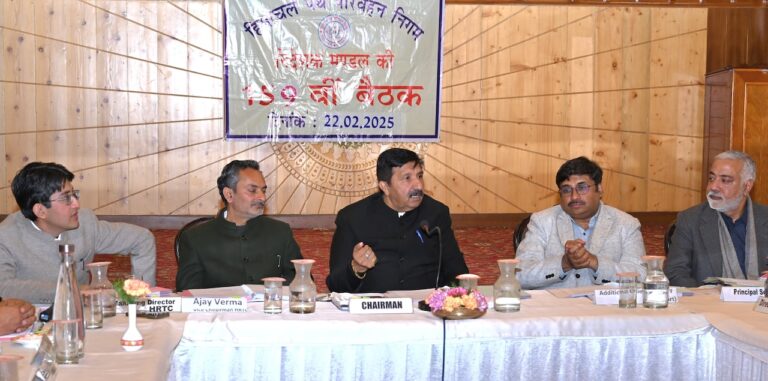
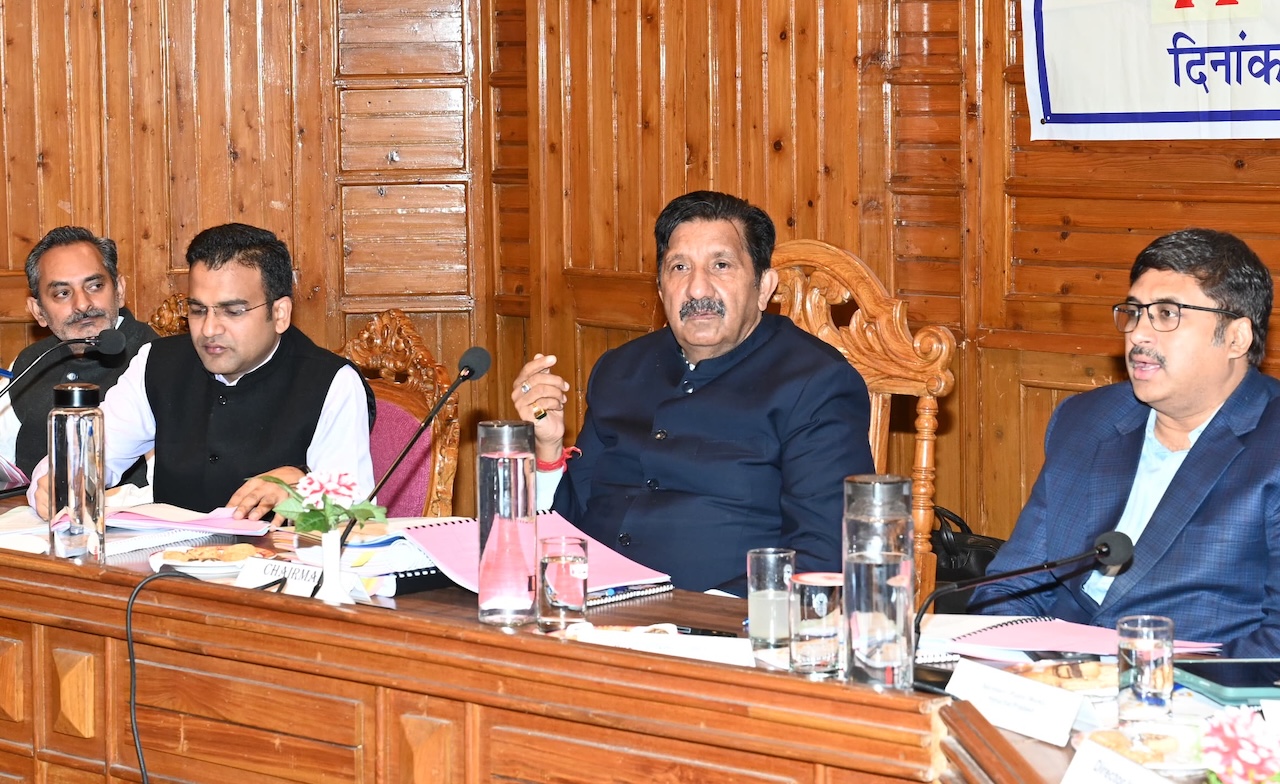
Shimla: The Himachal Road Transport Corporation (HRTC) is set for a major transformation with a series of technology-driven reforms, infrastructure upgrades, and innovative revenue initiatives. Chairing the meeting of the HRTC and Bus Stand Management and Development Authority (BSMDA) Boards, Deputy Chief Minister Mukesh Agnihotri announced key decisions aimed at improving operational efficiency, commuter convenience, and financial sustainability.
In collaboration with the Department of Digital Technologies and Governance (DDTG), HRTC has launched four new IT-based systems. Among these, the online travel pass system stands out — enabling students, government employees, and traders to apply for concessional passes digitally, pay fees online, and receive RFID-based smart cards.
To strengthen internal monitoring, a digital bus inspection scheduling system has been introduced. Inspection alerts and schedules will now be sent via SMS, helping improve staff accountability and ensure timely vehicle checks.
A GPS-based bus tracking system has been launched for 82 buses in Shimla, with plans to expand to the entire HRTC fleet. This system will allow real-time tracking of buses, enhancing route monitoring and service reliability.
The newly launched ‘Him Access HRTC system’ will benefit over 9,000 employees by allowing them to view their salary and personal details online, marking a step forward in employee welfare and transparency.
In terms of infrastructure, the Board approved ₹7 crore for the repair and maintenance of bus stands across the state. Additionally, CCTV cameras will be installed at all major terminals to enhance public safety. A new modern bus stand will also be constructed at Mandi Bharari in Bilaspur to cater to rising commuter demand.
To support the increasing number of electric buses, directions were issued to speed up the installation of e-charging stations at workshops and bus stands across Himachal.
A major commuter-focused initiative, ‘Him Bus Plus’, was also cleared. This scheme integrates identity management with cashless fare payments, offering a 5% discount on fares for all HRTC buses, including Volvos. A loyalty programme under the scheme will offer additional cashback benefits based on monthly travel. In a further boost for passengers, Super Luxury Bus fares will be reduced by 15%, with cardholders eligible for total discounts of up to 20% including loyalty rewards.
To boost tourism and revenue, Tourist Day Circuits connecting religious and sightseeing destinations around Shimla will be introduced. Other non-operational revenue measures include an advertisement policy on HRTC tickets, website and app, and a pilot to operate retail fuel outlets using HRTC’s fuel pumps at 2–3 locations.
In a move to improve roadside amenities, a Dhaba Policy will be implemented to empanel hygienic eateries along HRTC routes for the convenience of passengers.
On the staff welfare front, the Board approved a change in uniform colour from grey to khaki as per employee demands. Due to delays in the tendering process, employees will receive a cash allowance in place of one uniform set, with procurement expected to be completed within a month.
To ensure stringent vehicle fitness checks and open new income avenues, Automated Testing Stations will be established under Public-Private Partnership (PPP) mode.
With these decisions, the Himachal government is steering HRTC towards a digitally empowered, passenger-friendly, and financially stronger future.