New Delhi: In a significant political development ahead of the 2027 Punjab Assembly elections, the Bharatiya Janata Party (BJP) and the Shiromani Akali Dal (SAD) have announced the revival of their long-standing alliance, ending a six-year political separation that began over the contentious farm laws.
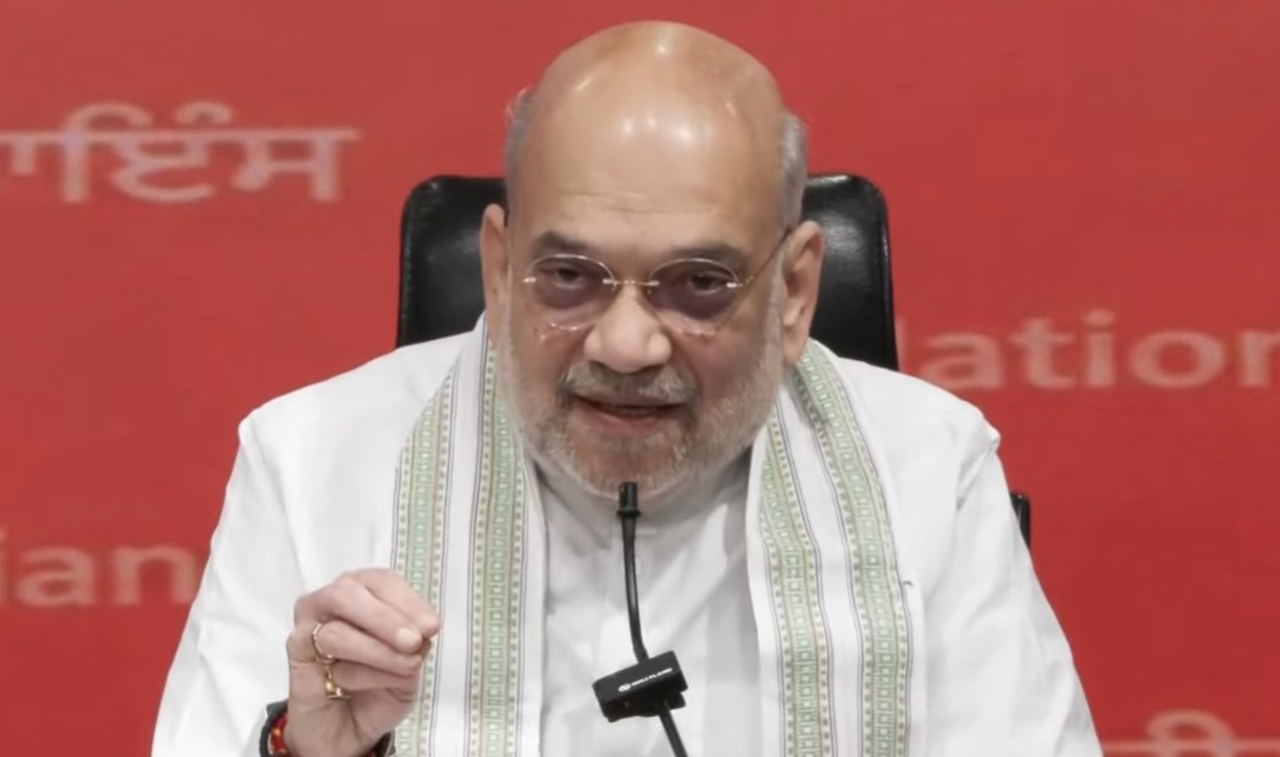
The announcement was made on Tuesday by Union Home Minister Amit Shah in the presence of BJP national president Nitin Nabin and Shiromani Akali Dal president Sukhbir Singh Badal at the BJP headquarters in New Delhi. With the reunion, the Akali Dal will also return to the BJP-led National Democratic Alliance (NDA), restoring a partnership that played a defining role in Punjab politics for nearly a quarter of a century.
Announcing the decision, Shah said both parties had agreed to contest the 2027 Punjab Assembly elections together. He also indicated that the Akali Dal would remain the senior partner in the alliance and that the Chief Minister would be from the regional party if the coalition forms the government.
Shah said the alliance would contest all 117 Assembly constituencies in Punjab, although the detailed seat-sharing arrangement is yet to be announced. Reports suggest that the BJP may seek around 40 seats, considerably more than the 23 it traditionally contested under the previous arrangement.
Describing the reunion as an important development, Shah recalled the longstanding relationship between the BJP and the Akali Dal, particularly the political association between former Prime Minister Atal Bihari Vajpayee, senior BJP leader L.K. Advani and former Punjab Chief Minister Parkash Singh Badal.
He also termed the alliance a symbol of Hindu-Sikh brotherhood and said the two parties would work together for Punjab’s peace, prosperity and development.
From a 24-year partnership to a bitter separation
The BJP and the Akali Dal shared one of the longest-running political alliances in the country. Their association began in 1996, followed by a formal electoral understanding ahead of the 1997 Punjab Assembly elections.
Under the traditional seat-sharing arrangement, the Akali Dal contested 94 of the state’s 117 Assembly seats, while the BJP contested the remaining 23. The arrangement reflected the Akali Dal’s stronger rural and regional political presence and the BJP’s organisational base in urban constituencies.
The partnership brought electoral success to both parties. They formed the government in Punjab in 1997 and subsequently returned to power in 2007 and 2012 under the leadership of Parkash Singh Badal.
In the 2007 Assembly elections, the Akali Dal won 48 seats, and the BJP secured 19. The alliance retained power in 2012, with the Akali Dal winning 56 seats and the BJP securing 12.
However, the political fortunes of the alliance declined in the 2017 elections, when the Congress returned to power under Captain Amarinder Singh. The Akali Dal was reduced to 15 seats, while the BJP won only three.
The final rupture came in September 2020 when the Akali Dal walked out of the NDA over the three agricultural laws introduced by the Narendra Modi government.
The party strongly opposed the legislation amid widespread farmers’ protests in Punjab. Harsimrat Kaur Badal, who was then a Union Cabinet minister, resigned from her ministerial position in protest.
The Akali Dal maintained that farmers’ interests had not been adequately protected, eventually ending its nearly 24-year-old alliance with the BJP. The three farm laws were subsequently repealed by the Centre in November 2021.
Separate electoral journeys failed to revive political fortunes
After the breakup, both parties attempted to strengthen their independent political positions in Punjab, but their electoral performances remained limited.
In the 2022 Assembly elections, the BJP contested independently, while the Akali Dal fought in alliance with the Bahujan Samaj Party.
The Aam Aadmi Party registered a sweeping victory, winning 92 of the 117 seats and forming the government under Bhagwant Mann.
The Congress secured 18 seats, while the Akali Dal managed just three and the BJP won two.
AAP and Congress face a changed political equation
The revival of the alliance is expected to change the political calculations for the 2027 Punjab Assembly elections.
For the Akali Dal, the partnership provides an opportunity to rebuild its organisational and electoral strength after suffering successive setbacks. The party will seek to reconnect with its traditional support base and regain the political influence it enjoyed during the Parkash Singh Badal era.
For the BJP, the alliance offers an opportunity to expand its political presence beyond urban constituencies by working with a regional party that has a long-standing organisational network across Punjab.
The development also presents a new challenge for the ruling AAP, which swept the 2022 elections, as well as the Congress, which will seek to regain power in the state.
The BJP and Akali Dal have identified the drug menace, corruption, farmers’ welfare, employment and economic development as major issues for their proposed political agenda.
Shah has also promised to make Punjab drug-free by December 31, 2029, while indicating that the alliance has prepared a roadmap covering key issues affecting the state.