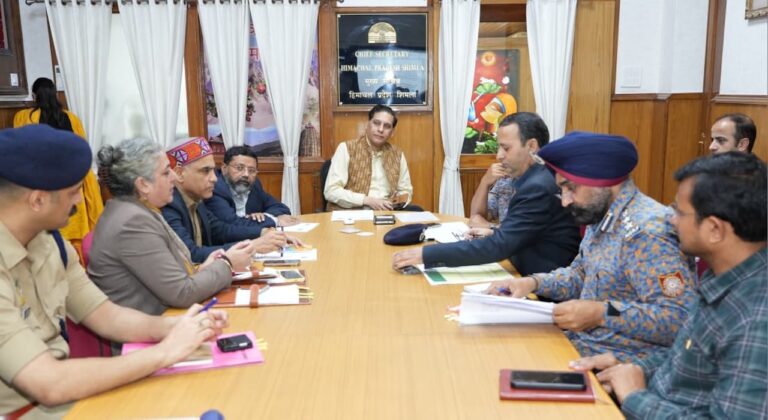

Shimla: Chief Secretary Kamlesh Kumar Pant has called for strengthening institutional mechanisms, community participation and the use of technology to build a more disaster-resilient Himachal Pradesh, saying every disaster offers important lessons that should be used to improve future preparedness and response.
He was addressing a post-disaster review seminar jointly organised by the National Disaster Management Authority (NDMA) and the Himachal Pradesh State Disaster Management Authority (HPSDMA) in Shimla on Friday.
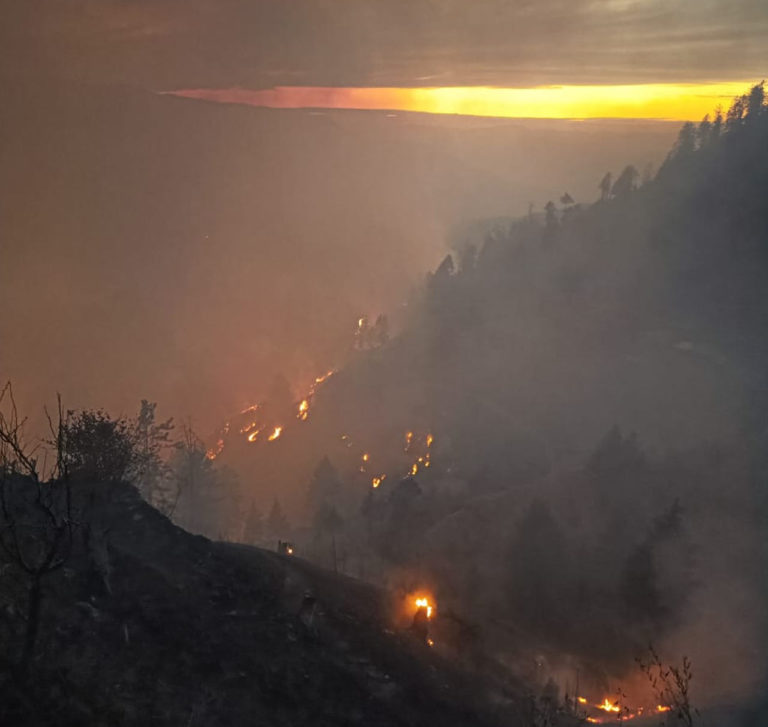
Pant said Himachal Pradesh’s fragile Himalayan ecology and difficult terrain make it highly vulnerable to cloudbursts, flash floods, landslides and other climate-induced disasters. He said the state has witnessed several devastating disasters in recent years, particularly during the monsoon season, exposing both the strengths and shortcomings of the existing disaster management system.
He said the coordinated efforts of government departments, the Armed Forces, the National Disaster Response Force (NDRF), the State Disaster Response Force (SDRF), Police, Fire Services, district administration, Panchayati Raj Institutions, volunteers and local communities have helped minimise the loss of lives during recent disasters. However, he stressed that every disaster provides valuable experience that should be used to strengthen preparedness for future emergencies.
The Chief Secretary said reviewing previous disasters helps the government identify operational gaps, assess institutional capacities and improve standard operating procedures. He pointed out that recent disasters highlighted several challenges, including disruption of road connectivity, communication breakdowns, inaccessible terrain, adverse weather conditions, logistical constraints, delays in obtaining real-time information and the need for better coordination among responding agencies.
He said the seminar provides an important opportunity to analyse these challenges, document best practices and develop strategies to make future disaster response faster, more coordinated and technology-driven.
Pant also underlined the importance of community-based disaster management, stating that local residents are invariably the first responders during any emergency. He said building resilient communities requires greater public awareness, regular capacity-building programmes and stronger volunteer networks so that people are better prepared to respond during disasters.
With extreme weather events becoming more frequent in the Himalayan region due to changing climatic conditions, experts have repeatedly emphasised the need for early warning systems, resilient infrastructure, effective communication networks and coordinated response mechanisms. The state government has been working to strengthen disaster preparedness through improved planning, modern technology and enhanced coordination among various agencies.