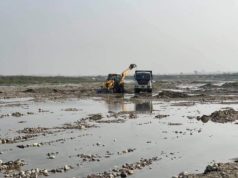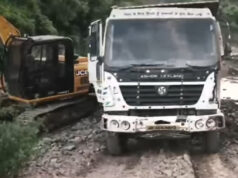


Kangra – Illegal mining in the Mand area of Indora Assembly constituency has turned the once-flowing stretch of the Beas River into a battleground between law and lawlessness. While the mining policy of Himachal Pradesh promises strict action against unauthorised extraction, the ground reality tells a different story—one of unchecked plunder, administrative silence and a river pushed towards ecological collapse.
For years, villagers allege, hundreds of tractors have been entering the riverbed under the cover of darkness. As night falls, the mining mafia reportedly swings into action, extracting sand and gravel in large quantities and transporting the material to stone crushers across the Punjab border. Residents claim the operation runs with alarming regularity, reducing the riverbed to deep scars and leaving behind destabilised banks.
The scale of the activity raises uncomfortable questions. How can such large-scale mining—reportedly involving hundreds of vehicles daily—continue without the knowledge of the authorities? Villagers say they have repeatedly submitted written complaints to the SDM in Indora, but no sustained crackdown has followed. Media reports have highlighted the issue time and again, yet enforcement remains invisible on the ground.
Ecological Damage Mounting
Environmental experts warn that indiscriminate sand mining disrupts the natural flow and morphology of rivers. Removing sand and gravel weakens riverbanks, increases the risk of landslides, lowers groundwater levels and threatens aquatic biodiversity. In fragile hill states like Himachal, rivers are not just water bodies; they are lifelines for irrigation, drinking water and local economies.
In Mand, locals say the impact is already visible. Portions of the river appear unnaturally deepened, water flow has changed in certain stretches, and agricultural land near the banks faces growing instability. If the trend continues, experts caution, the Beas could face long-term structural damage, triggering water scarcity and environmental imbalance in the region.
Law Reduced to Paper
Himachal Pradesh’s mining regulations clearly state that unauthorised mining—even on private land—invites strict legal action under the Mining Act. Equipment can be seized, heavy penalties imposed and criminal cases registered. Yet in Indora’s Mand belt, villagers say the law exists only on paper.
The contradiction between policy and practice has fuelled allegations of political pressure and collusion. Residents openly question whether powerful interests are shielding the illegal operators. “If the government wants, this can be stopped in a single day,” said a villager from Mand. “But someone somewhere is protecting them.”
The silence of the Mining Department has become as contentious as the mining itself. No major seizures, no high-profile arrests and no visible night patrols have reassured the public. The absence of decisive action has deepened the perception that enforcement is selective—or absent.
A River at Risk
The Beas is central to agriculture, animal husbandry and daily life in the region. Continued illegal extraction threatens not just the river’s physical structure but the socio-economic stability of communities that depend on it. Lower groundwater tables could affect irrigation. Bank erosion could endanger homes and farmland. Ecological degradation could become irreversible.
The bigger question now is not whether illegal mining is happening—it is whether the state machinery will act before the damage becomes permanent. Each passing night of unchecked extraction erodes more than sand; it erodes public trust in governance.
As the Beas faces what environmentalists describe as an existential crisis, the people of Indora are left asking: will the administration enforce its own mining policy, or will the river continue to be sacrificed to the mining mafia operating in the shadows?