

The Budget session of the Himachal Pradesh Vidhan Sabha opened on a tense note on Monday after Governor Shiv Pratap Shukla concluded his 50-page address in under three minutes, declining to read out key paragraphs related to the Revenue Deficit Grant (RDG).
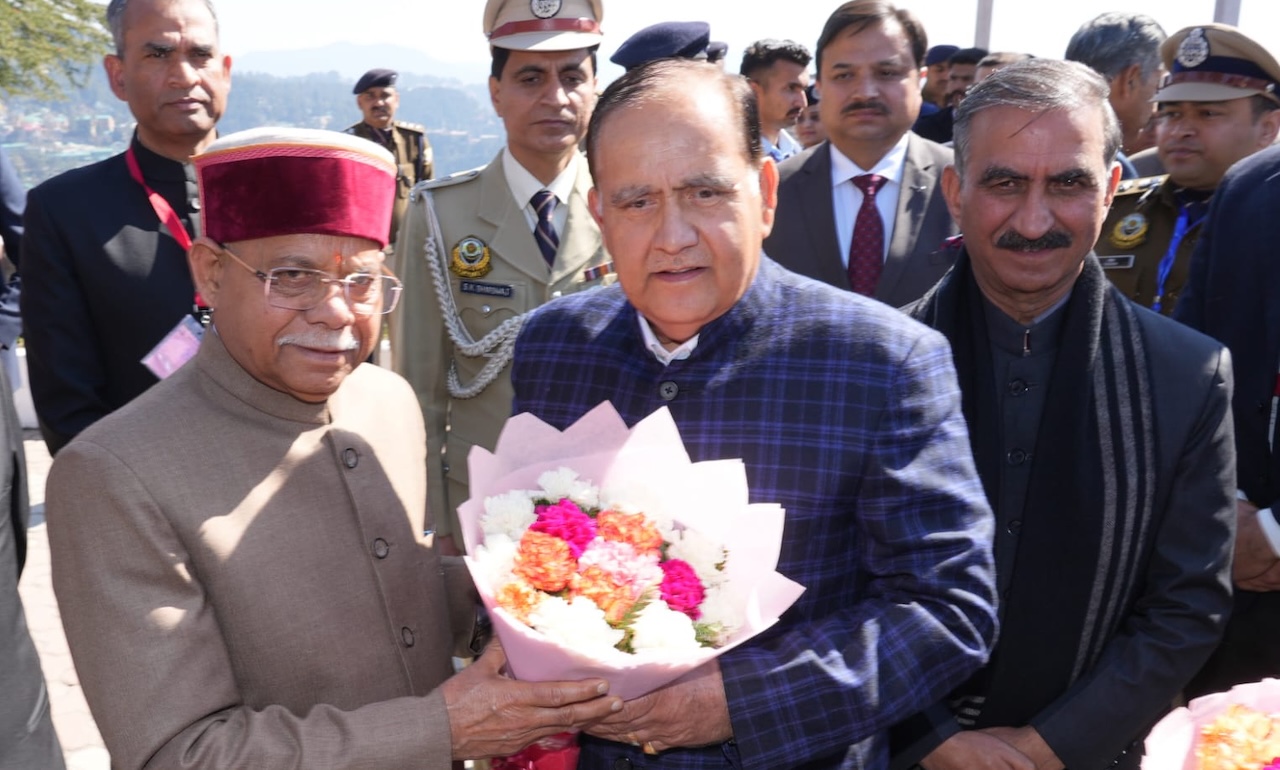
Soon after commencing his speech, the Governor informed the House that paragraphs three to 16 contained references concerning a constitutional body and would therefore not be read. The omitted sections primarily dealt with the 16th Finance Commission’s recommendation to discontinue the Revenue Deficit Grant to Himachal Pradesh — an issue that has intensified political confrontation in recent weeks.
Limiting himself to the introductory portion, the Governor stated that the session had been convened to pass Supplementary Demands for Grants for 2025-26, present the Budget for 2026-27 and transact legislative business. He expressed confidence that members would uphold the tradition of constructive debate.
The address, prepared by the state government and cleared by the Cabinet, made detailed reference to Article 275(1) of the Constitution, which provides for grants to states facing a gap between revenue receipts and expenditure. From the First Finance Commission in 1952 up to the 15th Finance Commission (2020–25), Himachal Pradesh has consistently received RDG support. The recommendation to discontinue it has now placed the state’s fragile finances at the centre of political debate.
Opposition Accuses Govt of Deflecting Responsibility
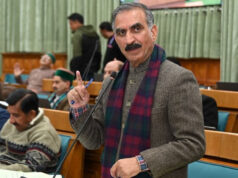
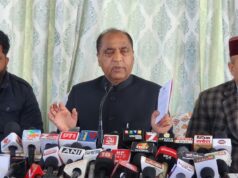
Leader of Opposition Jai Ram Thakur accused the state government of attempting to shift blame to the Centre for what he termed fiscal mismanagement. Participating in a discussion under Rule 102 on a resolution moved by the government to deliberate on the economic implications of the Revenue Deficit Grant withdrawal, Thakur said the ruling dispensation was indulging in “political gimmickry” instead of engaging in serious deliberations.
“There is a need for bold and tough decisions. We want the state to come out of this crisis, but we cannot be compelled to act according to the government’s convenience,” he said.
Thakur traced the state’s debt trajectory, stating that Himachal was virtually debt-free until 1993. He said the loan burden stood at Rs 14,000 crore by 2012-13, rose to Rs 47,900 crore during the Congress regime from 2013 to 2017 — an increase of 67 per cent — and increased by Rs 69,600 crore at a rate of 44 per cent during the BJP’s tenure.
While acknowledging the seriousness of the economic crisis, he criticised what he described as “extravagant expenditure” over the past three years. He also noted that the Revenue Deficit Grant had been discontinued for 17 states, and not exclusively for Himachal. Referring to Karnataka, he said the Congress government there had earlier opposed RDG, questioning the present attempt to single out the Centre. He further argued that the Congress’s pre-election “10 guarantees” had placed additional strain on the state exchequer.
Ruling Benches Call for Non-Political Approach
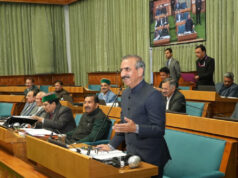
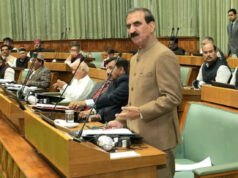
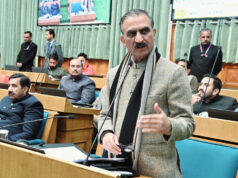
Theog MLA Kuldeep Rathore urged members not to politicise the RDG issue, stressing that Himachal’s financial structure differed significantly from that of larger states. He cited the financial burden arising from the 2023 and 2025 monsoon disasters and said the state’s limited revenue avenues made external support crucial. Naina Devi MLA Randhir Sharma also participated in the debate.
Earlier in the day, Speaker Kuldeep Pathania overruled objections from the BJP and permitted discussion under Rule 102 on the Revenue Deficit Grant-related resolution. Describing the issue as “important and urgent,” he allowed it to be taken up immediately after the Governor’s Address and obituary references.
Thakur questioned the move, expressing uncertainty over whether the ongoing sitting constituted a full-fledged Budget session and urging that the Motion of Thanks to the Governor’s Address be taken up first, in keeping with convention.
Responding, Pathania noted that legislative business had been conducted after the Governor’s Address in previous sessions as well, including in 2019-20 when Thakur himself was Chief Minister. He said members required adequate time to study the Address and announced that the Motion of Thanks debate would begin on Tuesday. Two full days have been earmarked, with proceedings extendable late into the night if necessary.
Parliamentary Affairs Minister Harshwardhan Chauhan defended the scheduling, stating that even Parliament conducts its Budget session in phases. He emphasised that the RDG issue was critical to the state’s fiscal future.
With the discontinuation of the Revenue Deficit Grant threatening to widen the revenue gap, the Budget session is set to revolve around competing narratives — one attributing the crisis to external policy decisions, the other to internal fiscal management.