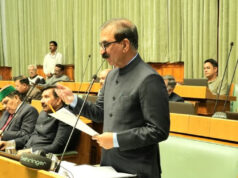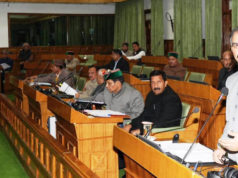


Shimla – Himachal Pradesh Chief Minister Sukhvinder Singh Sukhu informed the Legislative Assembly in a written reply that the state’s total debt has reached ₹98,182 crore as of July 31, 2025. He said the burden is expected to cross ₹1 lakh crore in the coming months.
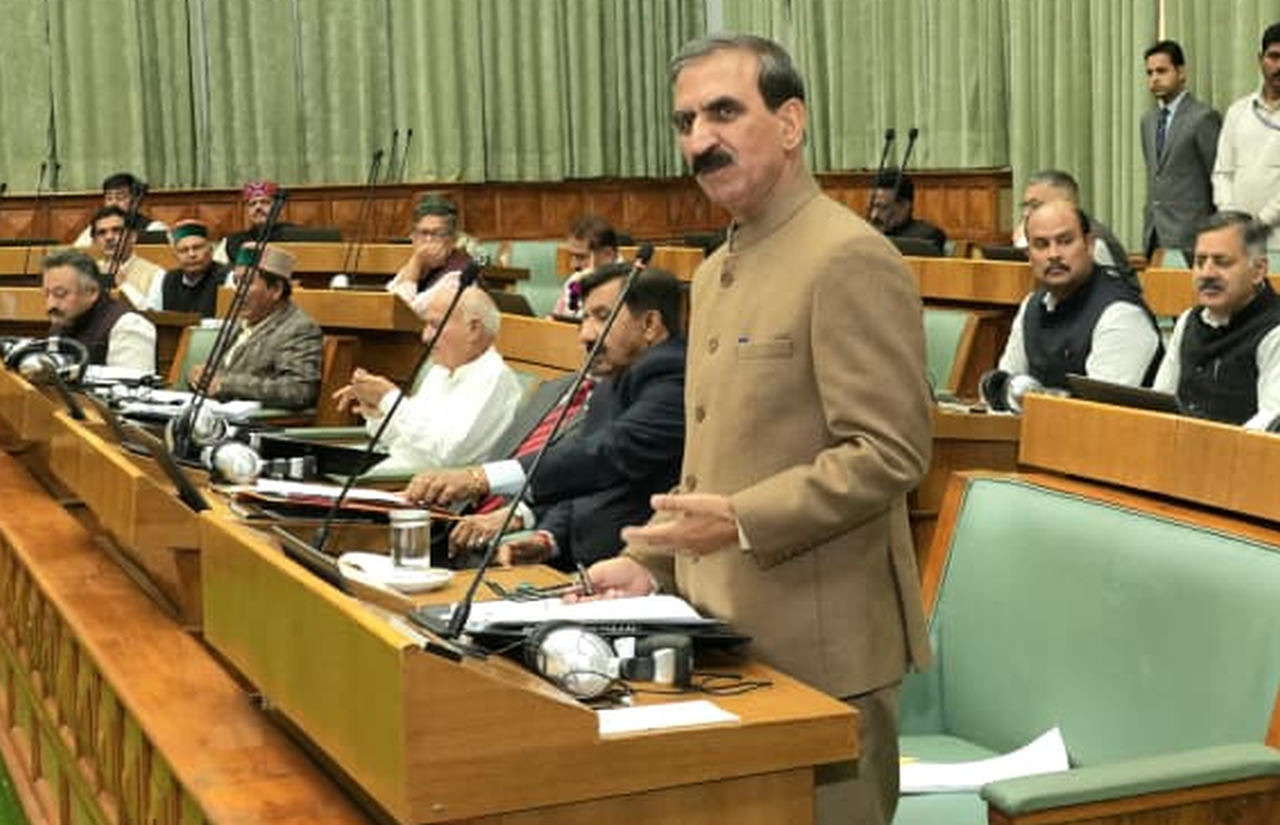
In response to a question by Bharmour BJP MLA Dr. Janak Raj, the CM clarified that loans taken by the government are being utilised for various developmental works through the budget. “The loan has been taken for a long period of 22 years as a strategy so that its repayment burden does not fall immediately,” he stated.
For the financial year 2025-26, a budget provision of ₹4,243.57 crore has been made for repaying the principal amount, while ₹6,738.85 crore has been allocated for interest payment.
The Chief Minister, in his written reply, highlighted that the state’s limited resources make it heavily dependent on central assistance for budgetary expenditure. This dependency grew after the implementation of GST on July 1, 2017, as many state-level taxes were merged into GST. While the Centre compensated the state for the initial five years, this compensation stopped on July 1, 2022, causing a financial strain.
The CM also pointed out that the revenue deficit grant recommended by the 15th Finance Commission, which stood at ₹11,431 crore in 2020-21, has been sharply reduced over the years to just ₹3,257 crore in 2025-26.
Sukhu acknowledged the state’s fragile financial position and stated that the government has initiated several measures to boost revenue from its own resources, thereby reducing its reliance on loans.
The state’s financial situation remains grim, with independent analyses warning that the revenue deficit may exceed budgeted targets. Committed expenditure on salaries, pensions, and interest now consumes nearly half of revenue receipts, leaving little for development. Reports indicate that in the current ₹58,514 crore budget, 67 percent is allocated for salaries, pensions, interest, and debt servicing, while the state’s debt-to-GSDP ratio has climbed to 42.5 percent and per capita debt has touched ₹1.17 lakh.
CAG data also shows that borrowing has risen sharply, with a large portion of funds spent on wages and pensions, further reducing capital investment. Experts suggest that without significant revenue augmentation and curbing of committed expenditure, the fiscal deficit may breach permissible limits, posing risks to future financial stability.