
Construction halted after cracks appear in eight houses; residents allege night blasting caused damage
Shimla: The Shimla administration has ordered an investigation into the appearance of cracks in residential buildings in the Cemetery and Dhingu Bawdi areas of Shanti Vihar ward, following concerns raised by local residents over ongoing four-lane tunnel construction.
The administration has also directed that tunnel construction be stopped immediately and instructed the National Highways Authority of India (NHAI) to take necessary measures to ensure the safety of the affected buildings.
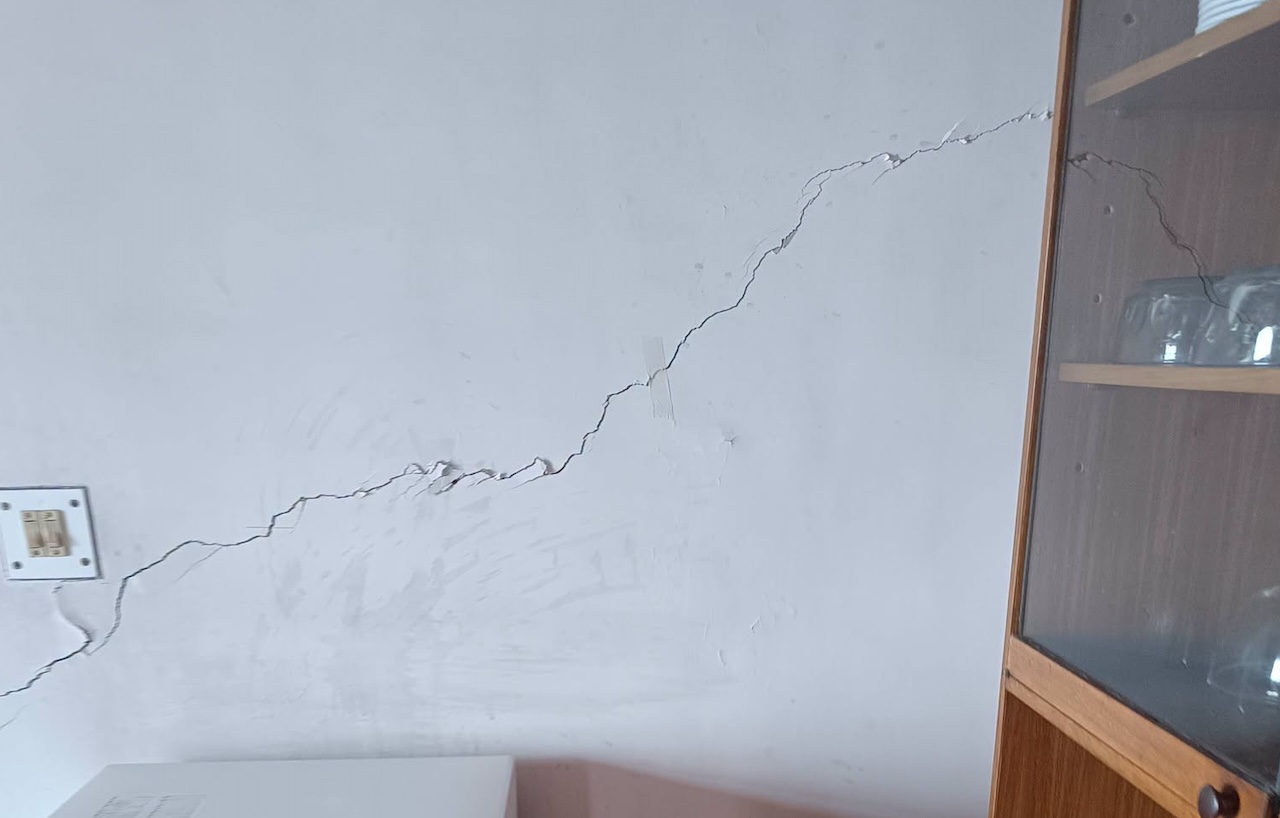
An administrative team led by ADM (Protocol) Gyan Sagar Negi visited the area on Saturday afternoon and inspected the damage reported by residents. During the inspection, cracks were found in eight houses, including their walls, floors and retaining structures.
Homeowners and local residents apprised the officials of their concerns and demanded immediate intervention. Representatives of the construction company were also present during the site inspection.
Probe to determine cause of cracks
Following the inspection, the administration ordered an investigation to determine the exact cause of the structural cracks. Officials said tunnel work would not be allowed to resume until the investigation report is received and necessary safety measures are put in place.
The move comes amid growing concern among residents over the impact of underground construction on existing buildings in the densely populated area.
Two parallel tunnels are currently being constructed underground as part of the four-lane project.
Bhattakufar cave-in had earlier raised similar concerns
The latest incident comes months after a road cave-in at Bhattakufar in November 2025 raised similar concerns about the safety of infrastructure located above the twin-tube tunnel project.
On November 22, 2025, a portion of the road at Bhattakufar suddenly sank, creating a large pit while schoolchildren were boarding a bus. A Class VIII student fell into the collapsed portion and was rescued by local residents, while the front tyre of a school bus became trapped in the crater. Following the incident, the district administration halted construction activity and withdrew permission for controlled blasting in the area.
A subsequent Geological Survey of India (GSI) investigation found that leakage from two underground water pipelines was the primary cause of the subsidence, but also identified vibrations generated by nearby tunnel construction as a secondary contributing factor. The GSI recommended that blasting associated with tunnel construction be stopped. The Bhattakufar episode had also prompted residents to raise concerns about cracks in houses and possible destabilisation of the hillside due to tunnelling and excavation.
Residents allege night blasting caused damage
Residents expressed anger in front of the administrative officials and alleged that the construction company and NHAI had failed to adequately consider the safety of existing buildings before beginning the work.
Locals claimed that they were not properly taken into confidence before construction started and alleged that adequate preventive measures had not been implemented to protect their homes.
Residents also alleged that blasting operations conducted during the night were responsible for the cracks appearing in their houses. They demanded that the authorities establish whether blasting or other construction activities had caused the structural damage.
However, the exact cause of the cracks will be established only after the technical investigation.
Demand for independent assessment
A survey conducted in the area found cracks in the walls, floors and retaining walls of eight out of ten houses inspected.
Affected homeowners have demanded that the tunnel construction remain suspended until the safety of the buildings is established. They have also called for an investigation by an independent agency or a team of technical experts.
Residents said construction should resume only after a detailed assessment confirms that the affected structures are safe and adequate protective measures have been implemented.
The administration’s decision to halt the work has temporarily put the tunnel construction on hold while the cause of the damage is examined.
The investigation is expected to determine whether the cracks are linked to tunnel excavation, blasting or other construction-related activity. Based on the findings, authorities will decide what corrective and safety measures are required before permitting construction to resume.