
Himachal Pradesh may soon have a scientific system capable of providing early warnings before major earthquakes, with the Indian Institute of Technology (IIT) Mandi and the Indian Space Research Organisation (ISRO) launching a joint project to develop an advanced seismic risk model for the state.
The initiative aims to assess earthquake hazards in a more precise manner by detecting subtle changes in the Earth’s surface that occur before seismic events. Himachal Pradesh lies in seismic zones 4 and 5, making it one of the most earthquake-prone regions in the country.
Unlike conventional studies that rely heavily on past earthquake records, the new project will use satellite-based technologies to monitor real-time geological changes. Scientists will employ the Global Navigation Satellite System (GNSS) to measure millimetre-level movements in the Earth’s crust, helping track tectonic plate motion. In addition, Interferometric Synthetic Aperture Radar (In-SAR) technology will be used to identify stress accumulation along fault lines and detect ground subsidence or uplift.
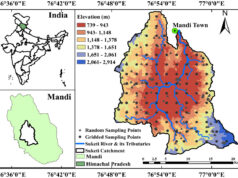
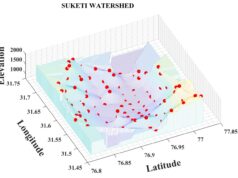
By integrating these technologies, researchers plan to develop a model capable of assessing the risk of earthquakes of magnitude 6 and above, well before they occur. The project will run for 36 months and will initially focus on the Mandi district and the surrounding vulnerable areas.
The study is being led by Mahesh Reddy of IIT Mandi. The research team will analyse soil conditions, slope stability and rock behaviour to understand how different geological settings influence earthquake impact. Experts, including Dr Dericks P. Shukla and Dhanya J. are part of the project and will work on converting field and satellite data into scientific and predictive models.
The findings are expected to have practical applications beyond academic research. Disaster management authorities will be able to identify high-risk zones and prioritise preparedness measures accordingly. The study is also expected to help refine earthquake-resistant construction norms by aligning them with local ground conditions.
Dr Dericks P. Shukla, Associate Professor at IIT Mandi, said the goal is to develop a model that not only predicts the likelihood of an earthquake but also estimates the possible impact in specific regions. He said the project, starting with Mandi, could serve as a blueprint for safeguarding other vulnerable areas of Himachal Pradesh in the future.
Apart from strengthening disaster preparedness, the project will also contribute to capacity building by training young researchers and professionals in remote sensing and geoinformatics, disciplines that are increasingly important for managing natural hazards in the Himalayan region.