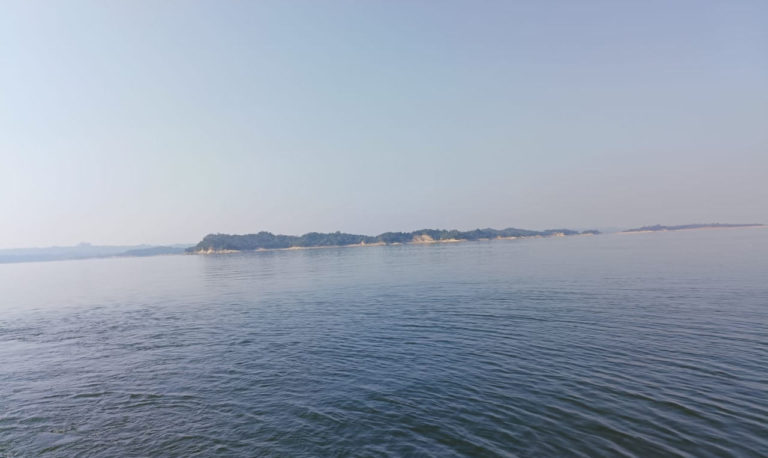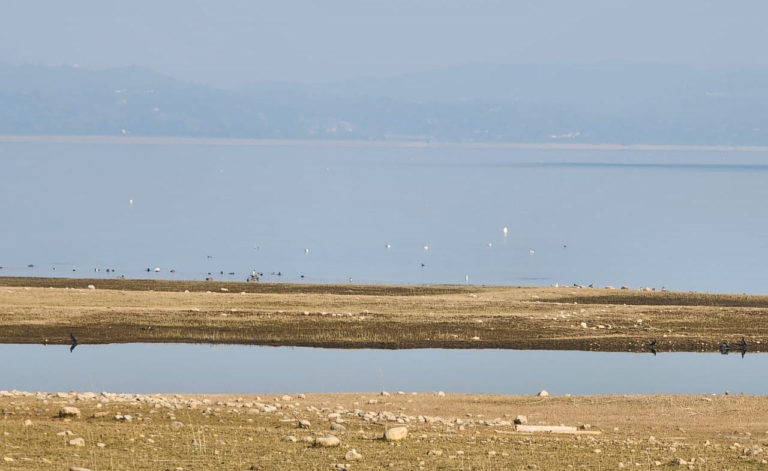

From Gujarat’s proposed sea-dammed freshwater reservoir to the Himalayan hydroelectric giants of Himachal Pradesh, India’s ambitious water projects reflect a remarkable journey of engineering, agricultural transformation, energy security and nation-building.
India’s development story is closely connected with its rivers, dams, reservoirs and irrigation networks. From the mighty Himalayan rivers to the vast river basins of central and southern India, the country has invested in some of the world’s most ambitious water infrastructure projects. These projects have not only generated electricity and supplied drinking water but have also transformed agriculture, supported industries, controlled floods and shaped the economic landscape of entire regions.
Among the most fascinating proposals is the Kalpasar Project of Gujarat, an extraordinary engineering vision that seeks to create a massive freshwater reservoir across the Gulf of Khambhat by constructing a dam across the sea. While Kalpasar remains a proposed project rather than an operational dam, its scale and concept make it one of India’s most ambitious water-resource development ideas.
The story of India’s water engineering, however, is incomplete without the Himalayan achievements of Himachal Pradesh, particularly the Bhakra and Pong dams. These monumental structures demonstrate how rivers originating in the mountains have contributed to food security, electricity generation and economic development far beyond the boundaries of the state.
1. Kalpasar Project, Gujarat: An Unprecedented Vision to Create a Freshwater Reservoir in the Sea
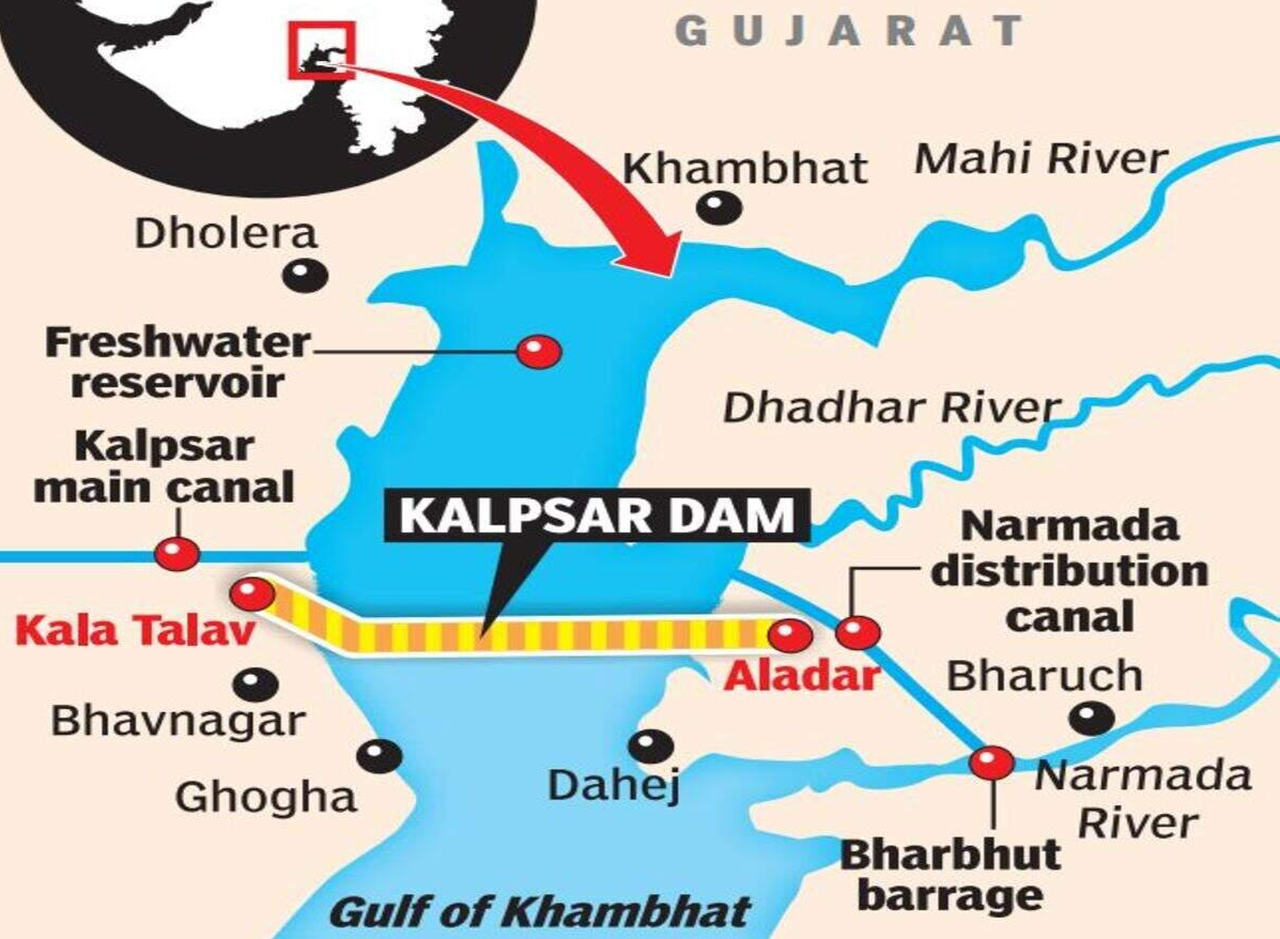
The Kalpasar Project is among the most extraordinary water-resource proposals in India. Its central idea is to construct a massive dam or dyke across the Gulf of Khambhat, separating a section of the gulf from the Arabian Sea and creating a freshwater reservoir.
The concept is particularly significant because Gujarat has large areas, especially in the Saurashtra region, that face recurring water scarcity. Agriculture, drinking water requirements and industrial development have all increased the demand for dependable freshwater resources.
The project aims to address these challenges by collecting freshwater from major river systems, including the Sabarmati, Mahi and Dhadhar, with water from the Narmada also proposed to supplement the reservoir.
How will the project work?
The proposed structure will extend across the Gulf of Khambhat. By regulating the entry of seawater and controlling tidal movement, the project aims to create a reservoir in which freshwater can be stored.
The earlier technical proposal envisaged a dyke approximately 60 kilometres long, with a reservoir storage capacity of around 7,800 million cubic metres. It also envisaged a major transport corridor across the structure.
The engineering challenge is enormous. The Gulf of Khambhat experiences strong tidal variations, substantial tidal currents and significant sediment movement. Therefore, the construction would require advanced coastal engineering, hydraulic modelling, flood regulation and salinity management.
The project is expected to offer several interconnected benefits:
- Irrigation: The original project planning envisaged irrigation benefits for approximately 10.54 lakh hectares across 37 talukas in nine districts of Saurashtra.
- Drinking water: A dependable freshwater reservoir could improve water availability for towns and villages in water-stressed areas.
- Industrial development: Additional water resources could support industrial growth.
- Road connectivity: A highway across the proposed structure could substantially shorten travel between Bhavnagar and the Surat region.
- Rail connectivity: The proposed transport corridor also includes a railway connection.
- Renewable energy: The latest project planning envisages approximately 2,470 MW of hybrid renewable energy capacity on reclaimed land, with power proposed for uses including pumping water for irrigation.
These are proposed benefits, not facilities currently operational. The exact design and final capacities will depend on the approved project report.
Where does the project stand?
Despite being discussed for decades, Kalpasar has not entered the construction stage. Its Detailed Project Report (DPR) has been under preparation and finalisation.
An important development came in 2026, when India and the Netherlands strengthened their technical cooperation on the project. Agreements involving the Central Water Commission, Gujarat’s Kalpasar Department and Dutch institutions Deltares and TU Delft are intended to bring international expertise in coastal engineering, water management and hydraulic modelling.
The Union Ministry of Jal Shakti also informed Parliament in July 2026 that the DPR was at an advanced stage of finalisation. Akashvani News+1
Kalpasar is therefore not simply a dam proposal. It represents an attempt to combine water conservation, coastal engineering, transport infrastructure and renewable energy in one integrated development initiative.
Its eventual success will depend on whether engineers can adequately address environmental concerns, seawater intrusion, ecological impacts, sedimentation, freshwater quality and the economic viability of such a massive structure.
2. Bhakra Dam, Himachal Pradesh: The Himalayan Giant That Changed India’s Agricultural History
If Kalpasar represents India’s future engineering ambition, the Bhakra Dam represents one of the country’s greatest achievements in water-resource development.

Located across the Sutlej River in Bilaspur district of Himachal Pradesh, Bhakra Dam is one of the most recognisable symbols of India’s post-independence infrastructure development.
Construction of the dam was undertaken as part of the Bhakra-Nangal multipurpose river valley project. It was designed to address several national priorities simultaneously: irrigation, electricity generation, flood management and water storage.
Engineering on a gigantic scale
Bhakra Dam is a concrete gravity dam standing 225.55 metres (740 feet) above its deepest foundation. It created the vast Gobind Sagar reservoir, which transformed the surrounding landscape.
Some of its important engineering features include:
- Dam height: 225.55 metres.
- Gross storage capacity: approximately 9,621 million cubic metres.
- Catchment area: approximately 56,980 square kilometres.
- Left Bank Power House: 630 MW.
- Right Bank Power House: 785 MW.
- Combined installed generating capacity: 1,415 MW.
These figures underline the extraordinary scale of the project.
How Bhakra transformed agriculture
The importance of Bhakra Dam extends far beyond Himachal Pradesh. Its water and electricity benefits have supported agriculture and economic development across Punjab, Haryana, Rajasthan and other parts of northern India.
The irrigation network associated with the Bhakra-Nangal system helped farmers move away from complete dependence on seasonal rainfall. Assured irrigation supported multiple cropping, agricultural productivity and the expansion of modern farming practices.
The project also became an important contributor to India’s Green Revolution, particularly in the northwestern agricultural belt.
For Himachal Pradesh, Bhakra is especially significant because the state provided the geographical setting for this massive national asset. The reservoir, known as Gobind Sagar, also supports fisheries, tourism and local livelihoods.
Bhakra is not merely a dam. It is an example of how mountain rivers can become instruments of national food security and economic transformation.
3. Pong Dam, Himachal Pradesh: The Beas River’s Gift to Northern India
Another remarkable engineering achievement in Himachal Pradesh is the Pong Dam, constructed across the Beas River.

Also known as the Beas Dam, it is located in Kangra district and creates the Maharana Pratap Sagar reservoir. The project is an important component of the Beas development system and plays a significant role in water storage, irrigation and electricity generation.
Unlike Bhakra, which is a concrete gravity structure, Pong is an earth-core gravel-shell dam. Its construction demonstrates a different approach to large-scale dam engineering.
Major engineering features
- Type: Earth-core gravel-shell dam.
- Gross storage capacity: approximately 8,570 million cubic metres.
- Live storage capacity: approximately 7,290 million cubic metres.
- Installed hydropower capacity: 396 MW.
- Number of generating units: Six.
The dam stores water from the Beas River and supports irrigation requirements in downstream areas, particularly in northern India.
More than irrigation and electricity
One of the most remarkable features of Pong Dam is its ecological significance.
The reservoir has developed into an important wetland habitat and is recognised as the Pong Dam Lake Wildlife Sanctuary. It is also a designated Ramsar wetland of international importance.
Every winter, thousands of migratory birds arrive at the reservoir, making it an important destination for birdwatchers, nature enthusiasts and wildlife researchers.
Thus, Pong Dam demonstrates that a major water infrastructure project can also become an important ecological landscape, although reservoir development and wildlife conservation require careful management.
For Himachal Pradesh, Bhakra and Pong together represent an extraordinary contribution to India’s water and energy security.
4. Sardar Sarovar Dam, Gujarat: The Narmada’s Water for Multiple States
The Sardar Sarovar Dam is another landmark in India’s multipurpose water development programme.
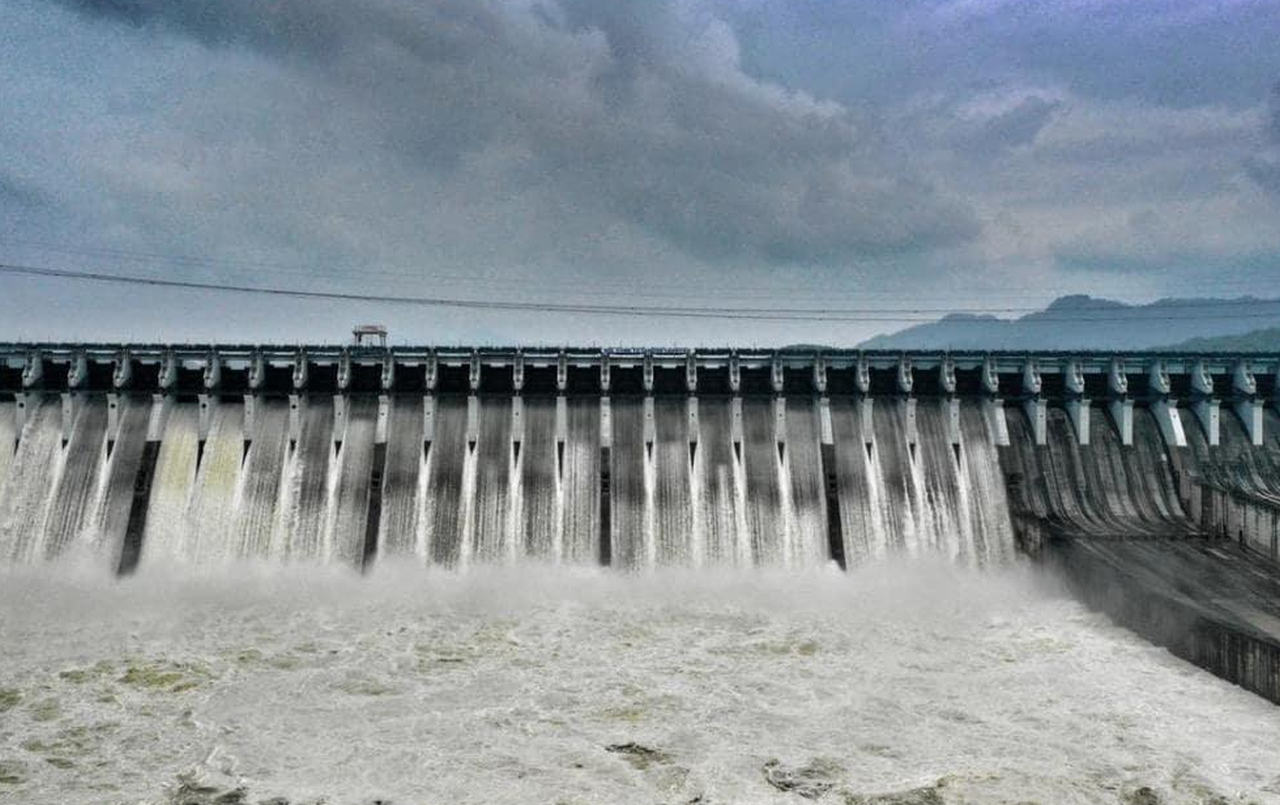
Built across the Narmada River, the project is one of the most important components of the Narmada Valley Development Programme. Its benefits extend across Gujarat, Madhya Pradesh, Maharashtra and Rajasthan through an extensive system of water distribution and electricity generation.
The dam was conceived to address water shortages in drought-prone regions, particularly in Gujarat and Rajasthan.
The Narmada Canal Network
The most impressive feature of the Sardar Sarovar project is not only the dam itself but also its extensive canal network.
The Narmada Main Canal and its distribution system carry water over long distances, bringing irrigation and drinking water to areas that traditionally depended on uncertain rainfall and groundwater resources.
The project is designed to provide irrigation benefits to approximately 18 lakh hectares in Gujarat and 2.46 lakh hectares in Rajasthan, according to the project’s established planning figures.
Its broader objectives include:
- Irrigation in drought-prone agricultural regions.
- Drinking water supply to villages and urban centres.
- Hydroelectric power generation.
- Support for industrial and economic development.
- Improved water availability in areas facing recurring scarcity.
A project with major social and environmental challenges
The Sardar Sarovar project has also been at the centre of one of India’s most significant debates over large dams.
Issues relating to displacement, rehabilitation, forest submergence and environmental protection have attracted decades of public debate and legal scrutiny.
The project illustrates an important lesson: large infrastructure development must be accompanied by responsible rehabilitation, environmental safeguards and transparent water distribution.
5. Polavaram Project, Andhra Pradesh: A Massive River Diversion and Irrigation Mission
The Polavaram Irrigation Project is among India’s most ambitious multipurpose irrigation projects. Located across the Godavari River in Andhra Pradesh, it aims to transform agricultural production, improve drinking water availability and facilitate the transfer of water between river basins.
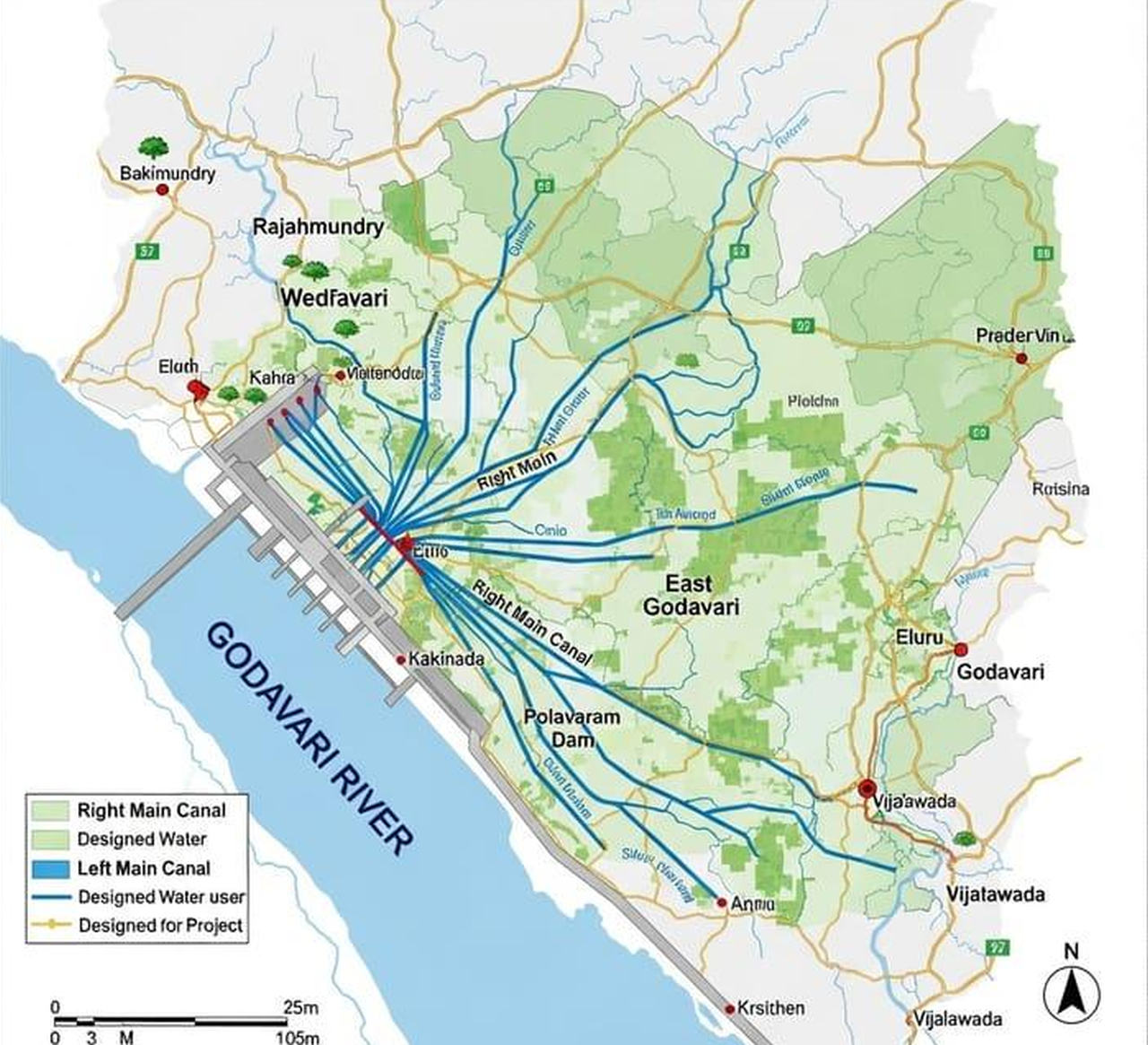
The project is particularly important because the Godavari is one of India’s largest rivers, carrying substantial quantities of water towards the Bay of Bengal.
What makes Polavaram special?
The project includes a massive earth-cum-rock-fill dam, a concrete dam section, spillways, power facilities and an extensive canal network.
Its major proposed benefits include:
- Irrigation potential of approximately 4.37 lakh hectares.
- Hydroelectric power generation capacity of 960 MW.
- Drinking water supply to approximately 28.5 lakh people in 611 villages.
- Diversion of 80 TMC of water towards the Krishna basin.
- Stabilisation of irrigation in the Godavari and Krishna delta regions.
The two major canals, the Left Main Canal and Right Main Canal, are designed to distribute water over extensive agricultural areas.
The project also envisages water supply for industrial requirements and Visakhapatnam.
Polavaram is particularly important because it combines irrigation development with inter-basin water transfer, making it a major component of India’s broader water-management strategy. Polavaram Project+1
However, the project has faced challenges relating to construction, inter-state water-sharing arrangements, land acquisition and rehabilitation of affected communities.
6. Ken-Betwa River Linking Project: Connecting Two River Basins
The Ken-Betwa Link Project is one of India’s most ambitious river-interlinking initiatives.
The project seeks to transfer water from the Ken River to the Betwa River through a network of dams, reservoirs, canals and associated infrastructure.
Both rivers are tributaries of the Yamuna, but the project aims to redistribute water resources to address regional shortages, particularly in the Bundelkhand region of Madhya Pradesh and Uttar Pradesh.
The Daudhan Dam and canal system
The central component is the proposed Daudhan Dam on the Ken River, along with a 221-kilometre link canal and associated infrastructure.
The project is designed to provide:
- Irrigation benefits to approximately 10.62 lakh hectares annually, according to the approved project planning.
- Drinking water supply to around 62 lakh people.
- Approximately 103 MW of hydropower.
- Approximately 27 MW of solar power.
The project received approval from the Union Government in December 2021, and its foundation stone was laid by Prime Minister Narendra Modi on December 25, 2024.
The estimated project cost is ₹44,605 crore at the 2020–21 price level, and the targeted completion date is March 2030.
Why is it important?
Bundelkhand has historically experienced water scarcity, drought and agricultural distress. The project is intended to improve irrigation reliability and drinking water availability.
However, the project also faces environmental concerns, particularly regarding the Panna Tiger Reserve and the ecological consequences of changing the natural flow of the Ken River.
Its implementation will therefore be closely watched as a test of whether large-scale river linking can balance agricultural development with ecological protection.
7. Tehri Dam, Uttarakhand: One of India’s Tallest Dams
The Tehri Dam is another extraordinary example of Himalayan engineering.
Constructed across the Bhagirathi River, the dam is one of India’s tallest and most significant multipurpose water infrastructure projects.
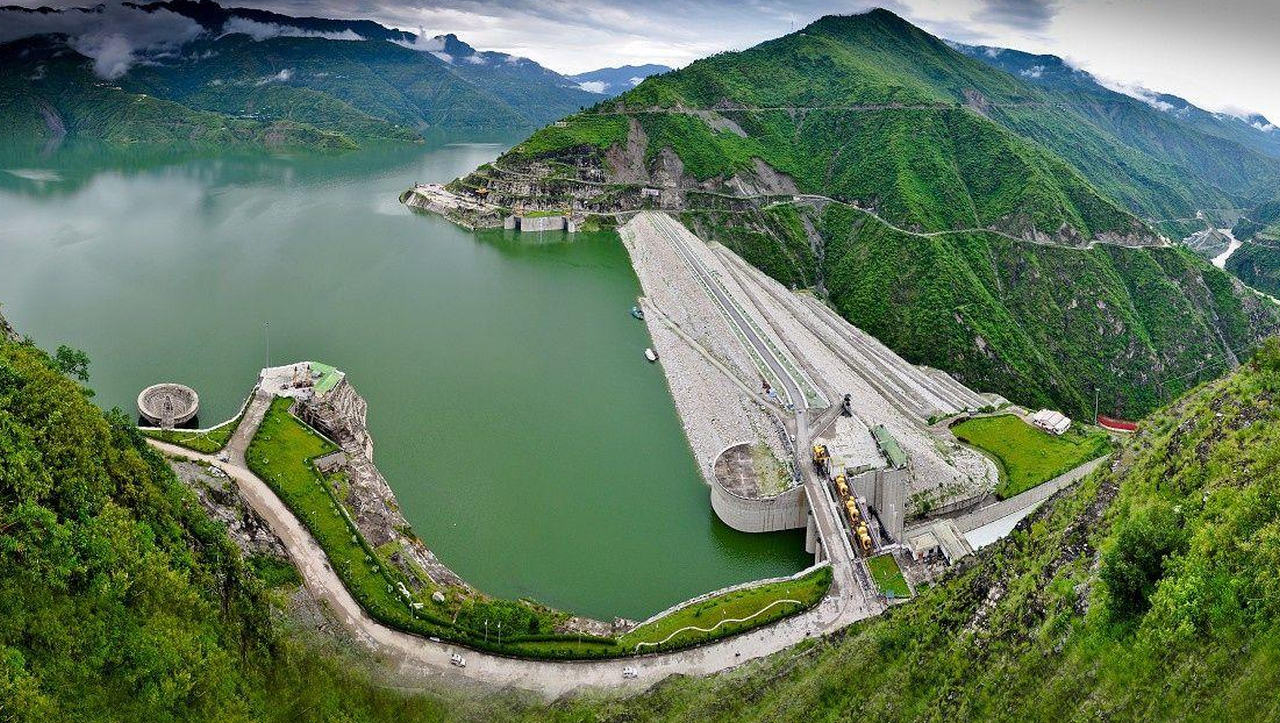
Standing approximately 260.5 metres high, Tehri Dam has transformed the river valley into a vast reservoir.
Multiple benefits from one structure
The Tehri project was developed to achieve several objectives:
- Hydroelectric power generation.
- Irrigation water supply.
- Drinking water supply to Delhi and parts of Uttar Pradesh and Uttarakhand.
- Regulation of river flows and flood moderation.
The Tehri Hydro Power Complex includes the 1,000 MW Tehri power station, the 400 MW Koteshwar project and the 1,000 MW Tehri pumped-storage project.
Together, these facilities represent a major contribution to India’s electricity infrastructure.
The pumped-storage component is especially relevant to the future of renewable energy. It can store energy by pumping water to an upper reservoir when electricity demand is low and generate power when demand rises.
Tehri therefore demonstrates how traditional hydropower infrastructure can evolve to support the increasing share of solar and wind power in India’s energy mix.
8. Hirakud Dam, Odisha: One of the World’s Longest Earthen Dams
The Hirakud Dam is another engineering landmark that deserves special mention.
Built across the Mahanadi River near Sambalpur, it was among the earliest major multipurpose river valley projects undertaken after India’s independence.
The dam was developed primarily to address recurring floods in the Mahanadi basin, while also supporting irrigation, electricity generation and industrial development.
A remarkable engineering structure
Hirakud is famous for its exceptionally long earthen embankments. Including its main dam and dykes, its total length is approximately 25.8 kilometres.
The reservoir, extending across a vast area, provides water for agricultural and industrial requirements.
Its principal benefits include:
- Flood moderation in the Mahanadi basin.
- Irrigation in western Odisha and adjoining agricultural areas.
- Hydroelectric generation.
- Water supply for industries.
- Support for fisheries and other reservoir-based livelihoods.
Hirakud is an excellent example of how a multipurpose dam can address both the problem of excessive water during floods and the shortage of water during dry periods.
9. Nagarjuna Sagar Dam, Telangana and Andhra Pradesh: A Monument to Irrigation Development
The Nagarjuna Sagar Dam is one of India’s major masonry dams, constructed across the Krishna River.
It was developed to provide irrigation and electricity to large agricultural regions of the erstwhile united Andhra Pradesh.
The dam created a large reservoir and an extensive canal network that supports agricultural development across Telangana and Andhra Pradesh.
Its major features include:
- A major masonry dam across the Krishna River.
- Large-scale reservoir storage.
- Left and right bank canal systems.
- Hydroelectric power generation.
- Irrigation support for extensive agricultural areas.
The project played an important role in transforming agricultural production in the Krishna basin and remains a major part of southern India’s water infrastructure.
10. Indira Gandhi Canal: Bringing Water to the Desert
India’s water engineering achievements are not restricted to dams. One of the most remarkable examples of large-scale irrigation development is the Indira Gandhi Canal.
Originally known as the Rajasthan Canal, this massive irrigation network carries water from the Sutlej-Beas river system towards the dry regions of northwestern Rajasthan.
Its principal objective was to transform parts of the Thar Desert by providing a dependable source of irrigation and drinking water.
From desert to agricultural landscape
The canal has supported agricultural expansion in districts such as Sri Ganganagar, Hanumangarh, Bikaner and Jaisalmer.
Its benefits include:
- Irrigation in arid and semi-arid regions.
- Increased agricultural production.
- Improved drinking water availability.
- Development of rural settlements.
- Support for livestock and local livelihoods.
The canal is particularly relevant to Himachal Pradesh because it demonstrates how water stored in Himalayan river systems can support agriculture hundreds of kilometres downstream.
11. Renuka Dam, Himachal Pradesh: A Major Upcoming Water Project
While Bhakra and Pong represent Himachal Pradesh’s historic contribution to India’s water infrastructure, the proposed Renuka Dam Project could become another major chapter in the state’s development story.
The project is planned on the Giri River in Sirmaur district.
Its primary objective is to provide additional drinking water to Delhi and other areas in the National Capital Region through the development of a large storage reservoir.
Why is Renuka important?
The project envisages a storage capacity of approximately 498 million cubic metres and is designed to provide around 23 cubic metres per second of regulated water supply to Delhi.
The project is also associated with a proposed 40 MW hydropower component.
For Himachal Pradesh, the project has significance because it could strengthen the state’s role in meeting the water requirements of the national capital.
However, the project involves substantial land acquisition, environmental considerations and rehabilitation issues. Its implementation has been subject to delays and coordination among participating governments.
The Central Water Commission’s national-project status information has included Renuka among projects under appraisal. Central Water Commission
12. Kishau Dam: Another Himalayan Project with Regional Importance
The proposed Kishau Multipurpose Project is another ambitious Himalayan water infrastructure project involving Himachal Pradesh and Uttarakhand.
It is planned across the Tons River, a major tributary of the Yamuna.
The project is intended to provide multiple benefits, including:
- Hydroelectric power generation.
- Water storage and regulation.
- Irrigation support.
- Drinking water supply.
- Improved water availability in downstream regions.
The proposed project has an installed hydropower capacity of approximately 660 MW.
Its importance lies in the fact that the Himalayan region has substantial water resources, but their effective utilisation requires coordinated planning between states.
The project also faces the usual challenges associated with large Himalayan dams, including environmental clearances, geological conditions, land acquisition and rehabilitation.
The revised Detailed Project Report was under preparation, according to the Central Water Commission’s national-project status information. Central Water Commission
A comparative look at India’s major water projects
| Project | State/region | Major purpose |
|---|---|---|
| Kalpasar | Gujarat | Proposed freshwater reservoir, irrigation and connectivity |
| Bhakra | Himachal Pradesh | Irrigation, hydropower and storage |
| Pong | Himachal Pradesh | Irrigation, hydropower and storage |
| Sardar Sarovar | Gujarat and other states | Irrigation, drinking water and power |
| Polavaram | Andhra Pradesh | Irrigation, drinking water and river linking |
| Ken-Betwa | MP and UP | Inter-basin water transfer |
| Tehri | Uttarakhand | Hydropower, irrigation and drinking water |
| Hirakud | Odisha | Flood moderation, irrigation and power |
| Nagarjuna Sagar | Telangana and AP | Irrigation and hydropower |
| Renuka | Himachal Pradesh | Drinking water supply and hydropower |
| Kishau | Himachal Pradesh and Uttarakhand | Storage and hydropower |
India’s Water Future: Engineering, Agriculture and Environmental Responsibility
India’s experience with large dams and irrigation projects shows that water infrastructure is much more than the construction of concrete walls across rivers. These projects are interconnected systems involving reservoirs, canals, power stations, flood regulators, water distribution networks and environmental management.
The Kalpasar proposal represents a particularly ambitious attempt to create a freshwater reservoir through coastal engineering. Polavaram and Ken-Betwa demonstrate the possibilities of inter-basin water management, while Sardar Sarovar and the Indira Gandhi Canal illustrate how large distribution networks can transform water-deficient agricultural regions.
The Himalayan projects, meanwhile, have a special place in India’s development journey. Bhakra and Pong have demonstrated how the rivers of Himachal Pradesh can contribute to national food and energy security. Tehri, Renuka and Kishau further underline the importance of Himalayan water resources in meeting the country’s growing requirements.
However, the future of such projects must be guided by scientific planning. Environmental protection, rehabilitation of displaced communities, river ecology, sediment management, seismic safety and equitable sharing of water are essential considerations.
The real achievement of a dam is not simply the amount of concrete used or the height of its structure. It is the number of lives it improves, farms it irrigates, homes it supplies with drinking water and industries it supports—without compromising the ecological future of the river.
From the proposed Kalpasar reservoir in Gujarat to the mighty Bhakra and Pong dams in Himachal Pradesh, India’s water engineering journey is a story of ambition, innovation and nation-building.