Dharamshala: A field-based learning assessment conducted across rural Kangra has highlighted a worrying decline in mathematics learning among middle school students while underscoring the crucial role played by government schools in educating rural children, particularly girls.

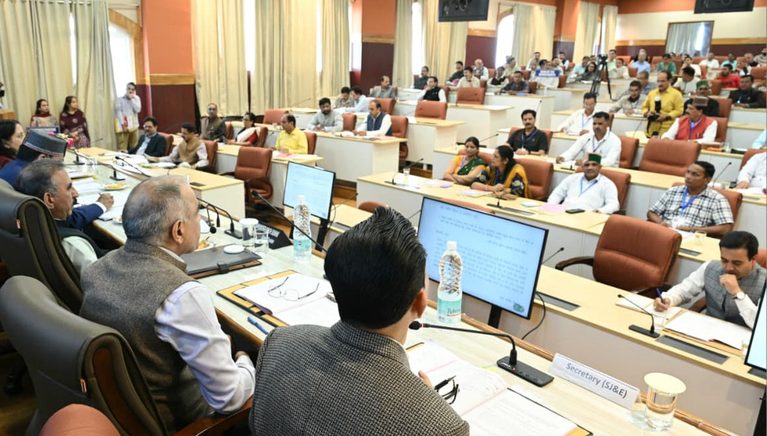
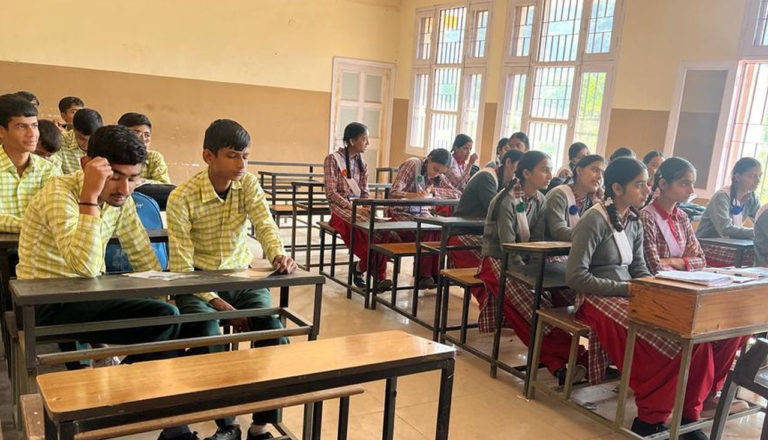
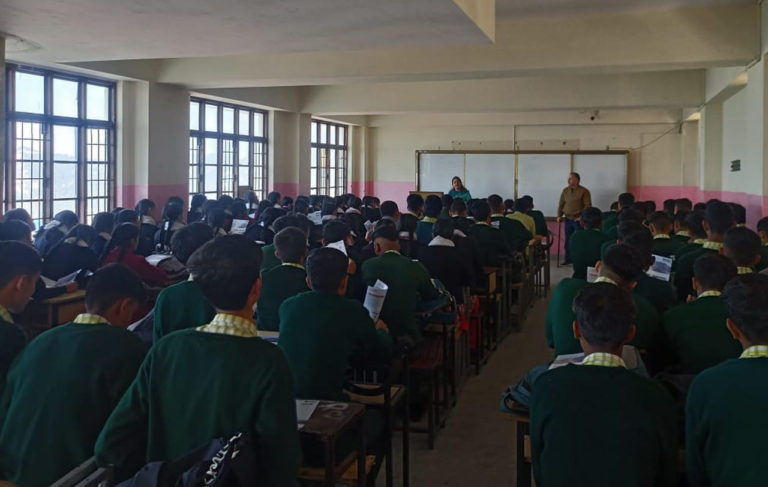
The Enlightened India Foundation on Tuesday released the findings of its Kangra Rural Learning Assessment 2026, based on direct assessments of 200 children from 20 villages in Kangra district. The report has been shared with state and district authorities with the aim of encouraging evidence-based discussions on the quality of rural education.
According to the survey, only 35 per cent of the children assessed met grade-level conceptual expectations simultaneously in English, mathematics and science, indicating significant learning gaps despite regular school attendance.
One of the most concerning findings relates to mathematics, where students experience a steep decline in conceptual understanding during the transition to upper primary classes (Grades 6 to 8). The report notes that the problem is particularly severe among girls, with only 17 per cent demonstrating expected mathematical competency during this stage compared to 47 per cent of boys.
Smita Choudhary, Lead Researcher and President of the Enlightened India Foundation, said the findings had been shared with government officials to ensure they reached policymakers, but stressed that community awareness was equally important.
“Our survey shows that while children are physically in classrooms, many are losing conceptual understanding, particularly in mathematics, by the time they reach middle school. At the same time, the findings demonstrate that government schools remain the backbone of education for rural girls and possess significant institutional strengths that deserve greater recognition and support,” she said.
The survey also points to disparities in household investment in children’s education. According to the findings, 77 per cent of boys in the sample attended private schools compared to 56 per cent of girls. Boys were also more likely to receive private tuition, with 33.7 per cent receiving additional coaching compared to 24.3 per cent of girls.
As a result, girls depend far more heavily on the public education system, accounting for 71 per cent of government school enrolment in the surveyed sample.
Despite catering to a comparatively less-resourced student population, government schools performed competitively in key subjects. While private schools showed a clear advantage in English proficiency, with 85 per cent of students meeting expected levels compared to 58 per cent in government schools, the performance gap narrowed considerably in STEM subjects. Government school students recorded 42 per cent competency in mathematics against 46 per cent in private schools, while science scores stood at 65 per cent and 69 per cent, respectively.
The report also examined children’s digital habits. Although 89 per cent of surveyed children reported having regular access to smartphones and the internet, only 5 per cent used digital devices exclusively for educational purposes. Most reported spending their online time on games and social media, which the report suggests competes with time available for learning.
Another area of concern identified by the assessment is digital safety. Nearly 46 per cent of the children surveyed had received no form of digital safety education, exposing them to online risks and highlighting the need for structured awareness programmes both in schools and at home.
The report revealed that school attendance alone is not sufficient to ensure grade-level learning, with upper primary mathematics emerging as a critical challenge. It also notes that while household educational investments continue to favour boys, government schools have demonstrated notable academic resilience by delivering learning outcomes in mathematics and science comparable to those of private institutions, while serving as the primary educational support system for rural girls.
The Enlightened India Foundation, a registered non-profit trust, has been working in rural Kangra for the past five years through a self-funded model. The organisation is run entirely by local young women and focuses on strengthening rural education systems through field-based research and evidence-driven interventions.