Hamirpur: Chief Minister Sukhvinder Singh Sukhu’s announcement that the Himachal Pradesh government is considering a policy to provide relief to poor and landless families living on government land has sparked a fresh debate over whether the move is a genuine welfare initiative or a politically timed promise ahead of the 2027 Assembly elections.
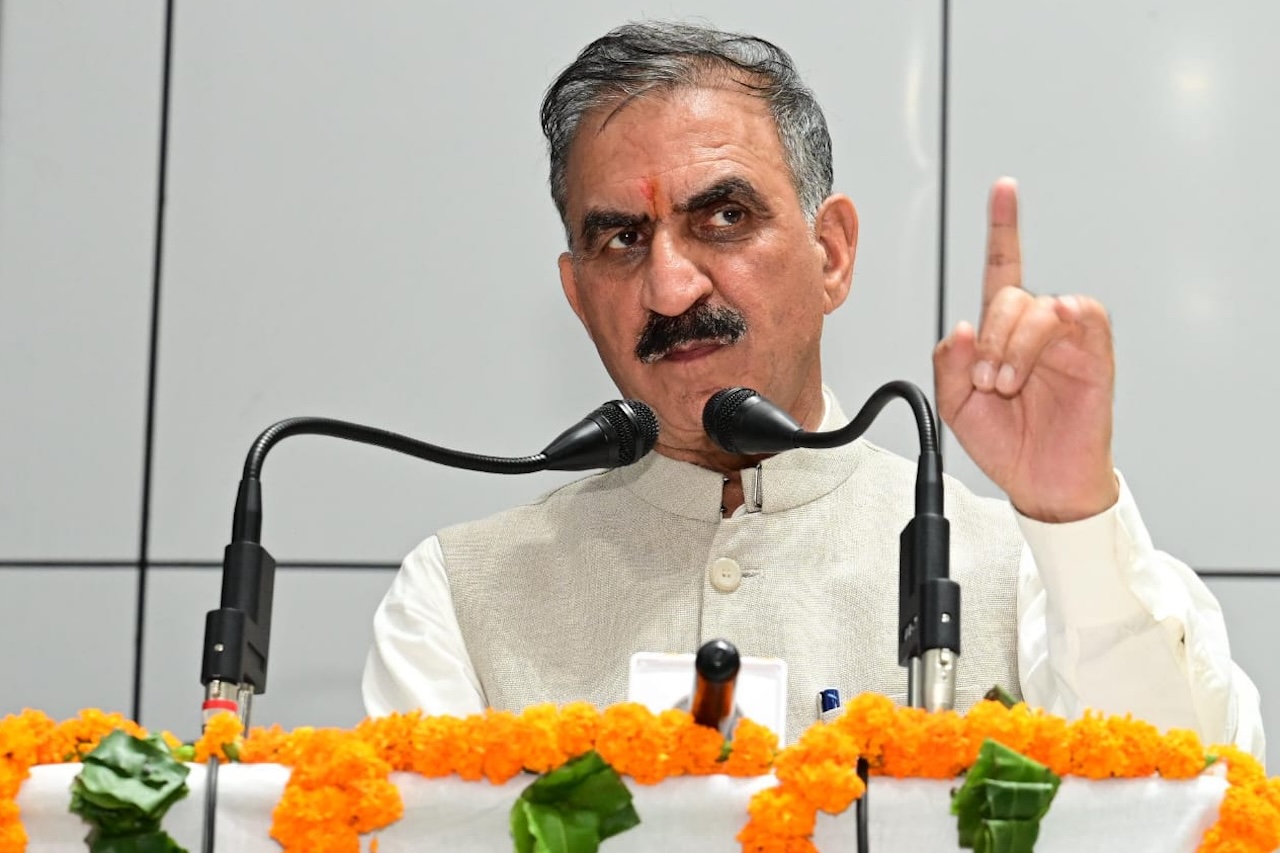
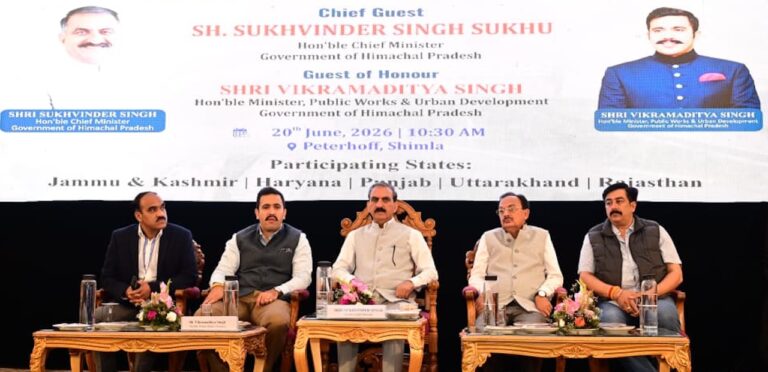
Addressing a public meeting in Hamirpur, the Chief Minister said the government was studying the Supreme Court’s guidelines on encroachment cases and would take an appropriate decision in the interest of poor and landless families who have been living on government land for years. No further details regarding the proposed policy, eligibility conditions or implementation timeline were announced.
A Shift in Government’s Stand?
The announcement comes against the backdrop of an extensive anti-encroachment drive carried out by the state government over the last two years. Acting on court directions, district administrations across Himachal Pradesh have removed illegal structures from government land, issued eviction notices and reclaimed public property in several districts. In many cases, families occupying government land—along with commercial establishments—have faced demolition and eviction.
The government’s stated position during these drives has consistently been that illegal occupation of public land cannot be permitted and that the administration is duty-bound to implement judicial orders. Against this background, the proposal to frame a relief policy appears to signal a significant shift in approach.
The obvious question is whether the government is changing its policy or merely attempting to soften the impact of its eviction campaign.
The Larger Problem of Encroachment
Illegal encroachment has long remained one of Himachal Pradesh’s most contentious governance issues. Public land has been occupied not only by poor and landless families but also by influential individuals, commercial establishments, hotels and private developers. Successive governments have struggled to address the problem, often caught between humanitarian concerns, political pressures and judicial directives.
This makes the issue far more complex than simply protecting vulnerable families. Any policy that fails to distinguish between genuine landless households and organised or commercial encroachers risks undermining the rule of law. If long-term occupation alone becomes the basis for relief, critics argue it could unintentionally reward illegal encroachment and encourage similar occupations in the future.
Equally, treating all encroachers alike ignores the reality that many economically weaker families settled on government land decades ago because they had no alternative housing or rehabilitation support. A humane government policy must therefore strike a balance between protecting public property and safeguarding vulnerable citizens.
Legal Challenges Ahead
The Chief Minister himself acknowledged that the government is examining Supreme Court guidelines before taking a decision. That acknowledgement underlines the legal complexity of the issue.
Any policy concerning government land must withstand judicial scrutiny. Courts have repeatedly emphasised that public land cannot be regularised indiscriminately, particularly when such action compromises public interest or violates statutory provisions. While governments may formulate rehabilitation or welfare measures for genuinely vulnerable families, such policies must remain consistent with constitutional principles and judicial directions.
Without a clearly defined legal framework, the proposed policy could face legal challenges even before it is implemented.
Politics Before Policy?
The timing of the announcement is difficult to ignore.
With Himachal Pradesh expected to go to Assembly elections next year, the promise of relief to families living on government land is likely to resonate with a sizeable section of voters. Land-related issues have traditionally carried significant political weight in the hill state, and any proposal offering security to long-term occupants is bound to attract public attention.
Critics may therefore view the announcement as politically expedient, particularly because it lacks the essential ingredients of a public policy—there is no Cabinet-approved proposal, no draft legislation, no consultation paper, no defined eligibility criteria and no implementation roadmap.
Supporters of the government, however, may argue that acknowledging the hardships of poor and landless families is itself a legitimate policy objective and that examining legal options before announcing details reflects administrative caution rather than political opportunism.
Questions That Remain Unanswered
Despite the Chief Minister’s announcement, several crucial questions remain unanswered.
The government has not explained who exactly will qualify as a “poor and landless family.” Will eligibility depend on income levels, land ownership records, years of occupation or social and economic vulnerability? Without objective criteria, the policy could become susceptible to allegations of arbitrariness and misuse.
It is also unclear whether relief will be limited to residential occupants or whether commercial establishments that have illegally occupied public land will also seek similar benefits. Himachal has witnessed numerous instances where valuable government land has allegedly been encroached upon by businesses and influential individuals. Any ambiguity on this issue could weaken public confidence in the government’s commitment to protecting public assets.
Another unanswered question concerns the nature of the proposed relief. Will eligible families receive ownership rights, long-term leases, rehabilitation at alternative sites or simply protection from eviction? Each option carries distinct legal, financial and administrative implications.
The government has also not clarified whether the proposed policy would apply retrospectively to families who have already been evicted during recent anti-encroachment drives or only to those currently occupying government land. Nor has it specified whether a cut-off date will be fixed to prevent fresh encroachments in anticipation of future regularisation.
Balancing Compassion and the Rule of Law
There is little disagreement that genuinely poor and landless families deserve protection and dignity. Equally, there is broad consensus that organised encroachments on public land cannot be legitimised simply because they have existed for years.
The real challenge lies in separating genuine hardship from deliberate land grabbing.
If the government succeeds in designing a transparent, legally sustainable policy with strict eligibility conditions and safeguards against misuse, it could address a long-standing social issue. However, if the proposal becomes a blanket regularisation exercise or remains confined to political rhetoric, it risks undermining both the rule of law and public confidence in governance.
For now, the Chief Minister’s statement has raised expectations, but until the government places a concrete policy in the public domain, it remains a promise without a framework—one that will continue to be viewed as much through the prism of electoral politics as public welfare.