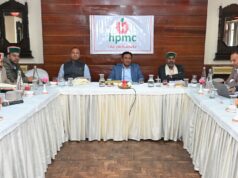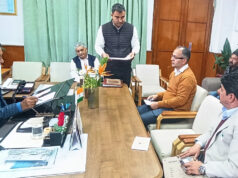


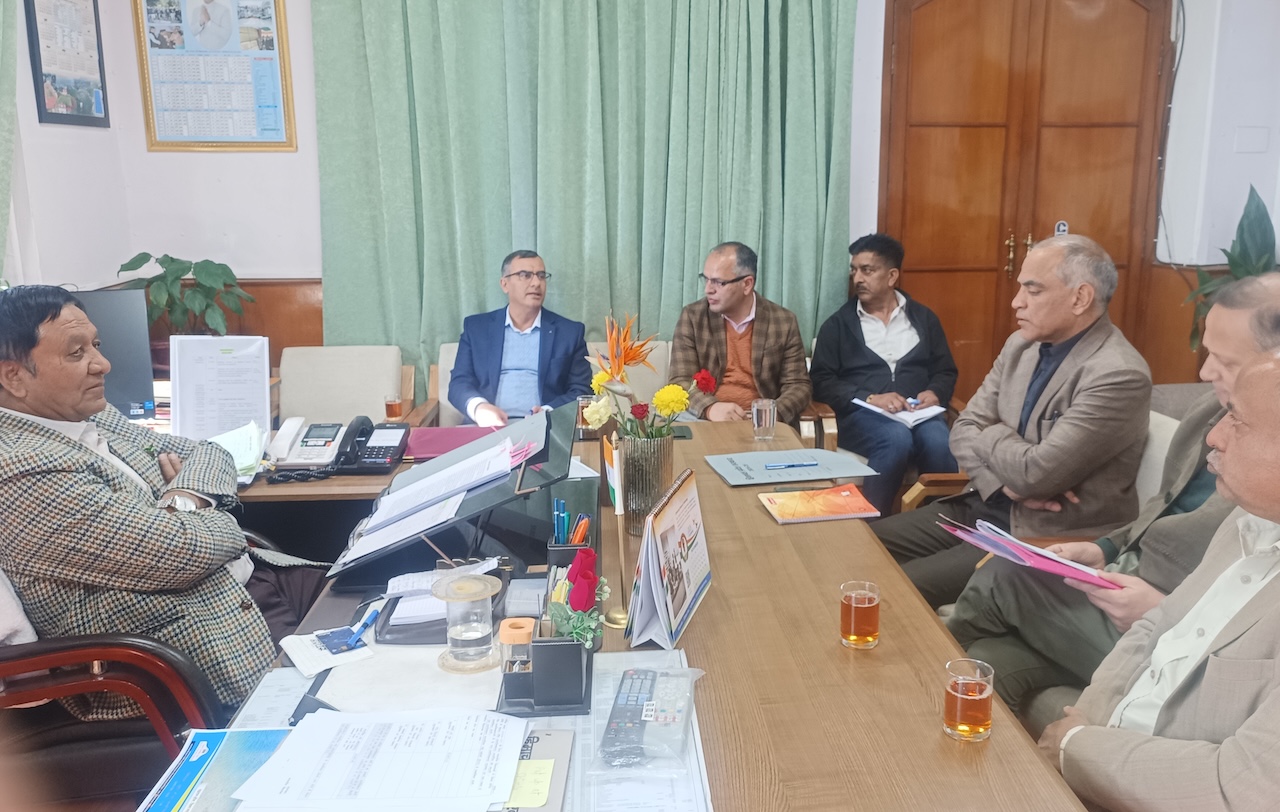
Shimla: The Himachal Pradesh government has set a strict one-week deadline to prepare a draft policy on encroachment of forest land in the state, aiming to balance ecological protection with the rights and livelihood concerns of the people. The decision was taken during a high-level meeting chaired by Revenue and Horticulture Minister Jagat Singh Negi here on Monday.
The move comes in compliance with directions from the Supreme Court of India, which has repeatedly stressed the need for states to clearly identify and deal with encroachments on forest land. Negi said the government was committed to upholding the principles of a welfare state while fully implementing the court’s guidelines.
“Protecting forest land and safeguarding the legitimate interests of the people are both priorities for us,” the minister said. “The draft policy will seek to strike a fair and balanced approach in line with the Supreme Court’s directions and the welfare goals of the state.”
To achieve this, a Sub-Committee has been constituted under the chairmanship of Additional Secretary (Revenue) Anil Chauhan. The panel includes officers from the Forest and Law Departments. It has been directed to examine the Supreme Court’s orders carefully and prepare a draft policy within one week for further consideration by the government.
Forest Encroachment: A Continuing Challenge
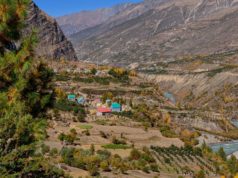
Encroachment on forest land has been a longstanding issue in Himachal Pradesh. From small residential plots to agricultural fields and orchard expansions, forest land has been occupied in various parts of the state — particularly in districts like Shimla, Kinnaur, Mandi and Chamba. The problem has posed difficulties for conservation efforts, as Himachal’s vast forest tracts are vital for ecological balance, water conservation and biodiversity.
The Supreme Court has made it clear that forest land cannot be diverted or regularised in violation of the Forest Conservation Act. States have often struggled to implement these directives on the ground due to socio-economic complexities, leading to tensions between environmental imperatives and people’s traditional land use practices.
Apple Plantations on Forest Land Under Spotlight
A contentious dimension of the encroachment issue is the spread of apple plantations and other horticultural activities on forest land. Apple cultivation is a cornerstone of Himachal’s economy, providing livelihoods to thousands of families. However, environmentalists argue that converting natural forests into orchards, even if green, does not replace forest ecosystems.
They contend that forests provide crucial ecological services — including soil stability, water recharge and habitat for wildlife — that monoculture orchards cannot. Critics of encroachment further warn that such conversions, if unchecked, could exacerbate environmental problems such as landslides and water shortages in fragile mountain regions.
At the same time, many orchardists claim they have developed previously barren or degraded land and insist on a pragmatic approach that recognises years of cultivation and investment. These conflicting perspectives have made firm and fair policy formulation a challenge for successive governments.
A Balanced Approach Sought
In directing the Sub-Committee to prepare the draft policy, the government has indicated its intent to weigh ecological protection and people’s livelihood concerns with sensitivity. The draft is expected to clearly define different categories of encroachment, suggest verification processes, spell out the legal framework for action, and recommend how to treat horticultural activities on forest land.
Experts say that Himachal needs a policy that protects its precious forests without unfairly penalising genuine cultivators and farmers. The government’s challenge will be to integrate conservation goals with the economic realities faced by hill communities.
Once submitted, the draft policy will be reviewed by the state cabinet before finalisation. The coming week is likely to be crucial in shaping how Himachal addresses its forest encroachment issue while upholding both environmental and welfare priorities.