
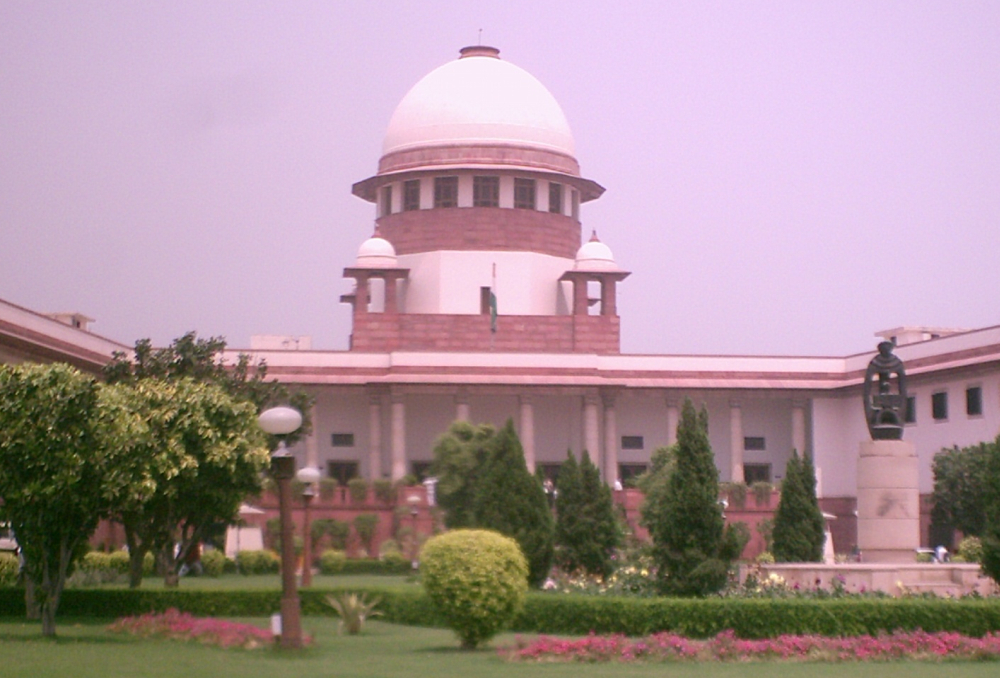
The Supreme Court has ruled that daughters belonging to tribal areas of Himachal Pradesh will not have ancestral property rights under the Hindu Succession Act, 1956. The apex court overturned a Himachal Pradesh High Court judgment that had earlier extended inheritance rights to daughters in tribal regions, stating that the Act does not apply to Scheduled Tribes unless specifically notified by the Central Government.
A division bench comprising Justice Sanjay Karol and Justice Prashant Kumar Mishra delivered the verdict on a petition challenging the Himachal Pradesh High Court’s June 23, 2015, decision. The Supreme Court struck down paragraph 63 of the High Court order, which had declared that daughters in tribal areas should inherit property in accordance with the Hindu Succession Act rather than customary law, citing social justice concerns.
The bench clarified that Section 2(2) of the Hindu Succession Act excludes Scheduled Tribes from its applicability, making the High Court’s order legally invalid. It further held that customary law and traditional practices continue to govern inheritance and property matters in Himachal’s tribal areas.
“The Hindu Succession Act cannot be extended to Scheduled Tribes unless a gazette notification is issued by the Central Government,” the court observed, referring to its recent decision in Tirath Kumar v. Daduram. The bench also cited earlier cases, including Madhu Kishwar v. State of Bihar and Ahmedabad Women’s Action Group v. Union of India, which had affirmed that tribal customary laws hold precedence in property-related matters.
The court emphasised that no notification has been issued so far to include any tribal community, including the Savara tribe, under the Act’s purview. It further reiterated that the authority to modify the lists of Scheduled Castes and Scheduled Tribes under Articles 341 and 342 of the Constitution rests solely with the President of India and cannot be exercised by any court or institution.
The Supreme Court termed the Himachal High Court’s reasoning “contrary to law and beyond the scope of the case,” noting that the High Court had deviated from the main issues raised in the appeal. Consequently, the apex court ordered the quashing and expungement of paragraph 63 from the 2015 judgment.