Solan: Dr YS Parmar University of Horticulture and Forestry, Nauni, is exploring academic and research collaboration with Weihenstephan-Triesdorf University of Applied Sciences, Germany, with a focus on international student exposure, dual-degree programmes and emerging technologies in agriculture and allied sectors.
The initiative gained momentum following a two-day visit by Prof. Dr Dietrich Darr of the German university, during which he held discussions with Nauni University Vice-Chancellor Prof. HS Baweja on potential areas of mutual cooperation. The discussions culminated in an agreement in principle outlining the broad areas for future collaboration.
Prof. Darr also delivered a presentation highlighting opportunities for academic exchange and joint research, expressing particular interest in food technology, sustainability analysis and supply chain management.
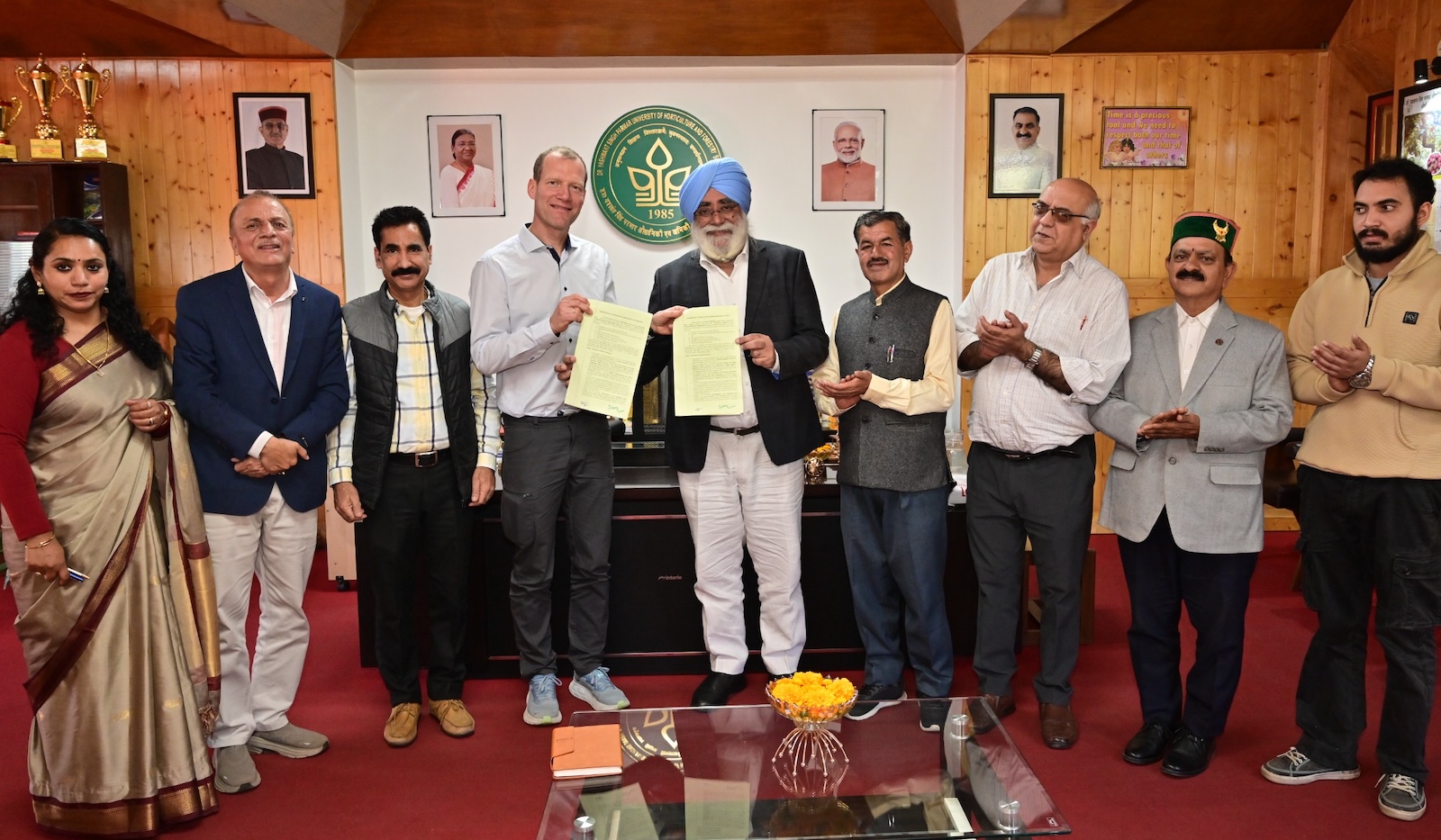
The agreement outlining the proposed areas of cooperation was signed in the presence of Dr KK Raina, Scientific Advisor; Dr BS Dilta, OSD Projects and Planning; Dr Kapil Kathuria, Head of the Department of Agribusiness Management; Dr Piyush Mehta; and Dr Rashmi Chaudhary.
The proposed partnership will focus on horticulture, forestry and allied sciences, with an emphasis on academic transformation, student development, interdisciplinary research and international exposure. Potential initiatives include dual-degree programmes in biotechnology and bioinformatics, food technology, landscape architecture and agri-food economics.
Prof. Baweja said the universities would also explore linking Nauni University’s proposed Distance and Online Education (DOE) programme with the International Online Semester programme offered by the German institution. The initiative could expand international learning opportunities for undergraduate and postgraduate students.
He said the collaboration would also explore integrating emerging fields such as artificial intelligence, climate-smart agriculture, ecosystem management, agribusiness management, digital technologies, and skill and entrepreneurship development into academic curricula.
Experiential learning, multidisciplinary programmes and stronger industry linkages would be key components of the proposed partnership, helping students develop the skills needed to become innovators and entrepreneurs.
Research collaboration is expected to cover a wide range of areas, including climate-resilient horticulture, conservation and sustainable utilisation of Himalayan biodiversity, ecological farming, apiculture and apitherapy, traditional knowledge systems, food processing, forest ecosystem services, agroforestry, and medicinal and aromatic plants.
Other proposed research areas include integrated pest and disease management and the application of artificial intelligence and emerging technologies to agricultural innovation and ecosystem management.
The partnership also envisages faculty and student exchanges, joint research projects and publications, academic seminars, specialised short-term programmes, and the exchange of academic materials and expertise.
Through the proposed collaboration, both institutions aim to strengthen innovation, entrepreneurship, industry partnerships and resource generation while addressing key challenges related to sustainable agriculture, food systems and natural resource management.