
Shimla: The Himachal Pradesh High Court has ordered an immediate halt to the operation of anti-hail guns in the Jubbal-Kotkhai area of Shimla district, directing that both government and privately installed systems remain non-operational for at least one year.
A Division Bench comprising Chief Justice G.S. Sandhawalia and Justice Bipin C. Negi passed the directions while hearing a Public Interest Litigation concerning the possible impact of anti-hail guns on weather conditions and neighbouring orchard areas.
The Court’s order covers the two government-installed anti-hail guns located at Deorighat and Bareonghat, besides privately installed anti-hail guns operating in the area.
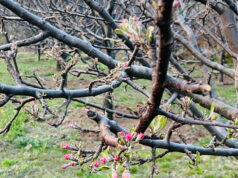
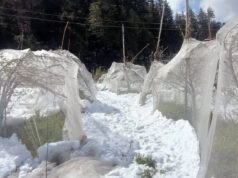
The matter has gained significance in Shimla’s apple belt, where hailstorms can cause substantial damage to orchards. Anti-hail guns have been promoted as a mechanism to protect crops from hail, but concerns have also been raised over whether their operation could influence cloud movement and rainfall in surrounding areas.
Concerns Over Cloud Movement and Heavy Rain
During the proceedings, the High Court took note of complaints and reports alleging that firing anti-hail guns could cause clouds to move towards adjoining areas, potentially resulting in heavy rainfall or hailstorms and causing losses to orchardists outside the immediate area where the guns are operated.
The Court also referred to an affidavit submitted by the Director of Horticulture, which reportedly stated that heavy rainfall occurred while the anti-hail system was in operation for more than an hour.
The observations have prompted the Court to seek greater clarity on whether there is any link between the operation of the guns and weather conditions in neighbouring areas.
The state government has also been asked to explain whether surrounding areas experienced any benefit after the operation of the anti-hail guns was discontinued.
Nauni University Conducting Scientific Study
The state government informed the Court that a study on the impact and effectiveness of anti-hail guns is being conducted by Dr Y.S. Parmar University of Horticulture and Forestry, Nauni.
According to the government’s response, it could take at least four more years to arrive at a definitive conclusion from the study.
Considering the importance of the issue, the High Court has impleaded Nauni University as a respondent in the case. Notice has been issued through the university’s Registrar, with a direction to submit its response within four weeks.
The Court has also sought a comprehensive response from the state government regarding representations that have highlighted alleged adverse effects associated with anti-hail guns in other countries.
What Are Anti-Hail Guns?
Anti-hail guns are devices designed to protect orchards from hailstorms by generating powerful acoustic shock waves directed towards the atmosphere. The principle behind the technology is that these shock waves may interfere with the development of hailstones inside storm clouds, causing water droplets to fall before they develop into damaging hail.
The technology has been used in parts of the Himachal apple belt, particularly Shimla district, where hailstorms can cause substantial damage during flowering and fruit-setting periods. An agro-economic study of hail-protection mechanisms in Shimla noted that anti-hail cannons generally cover an area of roughly 80–90 hectares, or around a 500-metre radius, depending on the system.
Himachal Pradesh began experimenting with anti-hail cannons in the 2010–11 period, when the state Horticulture Department installed three units on a pilot basis in the apple-growing belt. The technology was subsequently adopted by some orchardists themselves as a means of protecting high-value apple crops.
Technology Remains Controversial
While some orchardists have credited anti-hail guns with reducing hail damage, their scientific effectiveness remains disputed. An earlier assessment noted that the technology had received a mixed response and that questions remained over its effectiveness.
This debate has now gained fresh significance following the High Court’s intervention. The present proceedings will examine not only whether anti-hail guns effectively protect orchards from hail but also whether their operation can have unintended consequences for weather conditions and orchards in neighbouring areas.
The High Court’s one-year restriction is expected to provide an opportunity for the ongoing scientific assessment to gather further evidence on the technology, its effectiveness and its possible impact on surrounding areas.