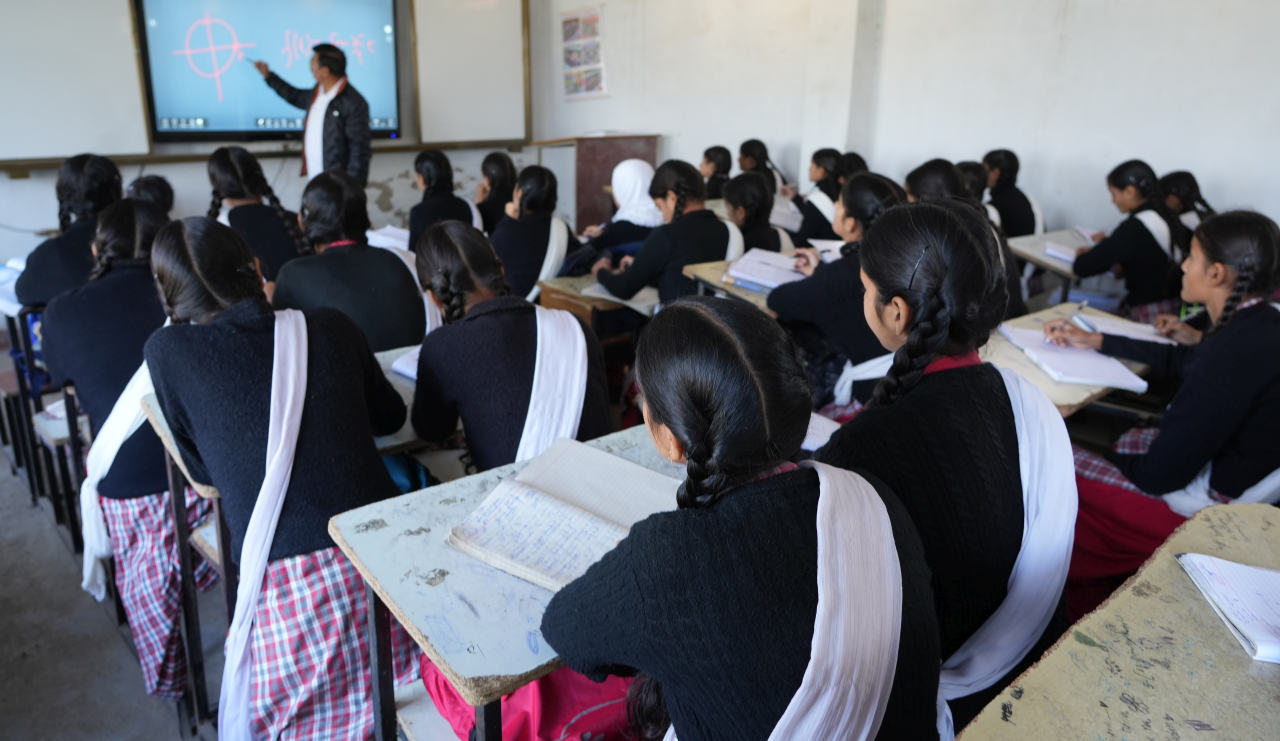
Shimla: Himachal Pradesh’s education sector is witnessing a striking contrast between robust school infrastructure and steadily declining student enrolment, according to the UDISE+ 2025-26 report released by the Union Ministry of Education. While the state continues to rank among the best in terms of educational facilities and teacher availability, shrinking classrooms are emerging as a major policy challenge.
The report reveals that Himachal Pradesh has an average of only 72 students per school, less than half the national average of 169 students. Among Indian states and Union Territories, only a few sparsely populated mountainous regions such as Ladakh and Mizoram report lower student numbers per school.
The findings indicate that the state’s challenge is no longer the expansion of educational institutions but ensuring the efficient utilization of its existing schools and teaching resources.
Nearly Half the Schools Have Fewer Than 30 Students
The report highlights the extent of the enrolment decline, with nearly 49 percent of schools in Himachal enrolling fewer than 30 students.
According to the data:
- 13.3 percent of schools have fewer than 10 students.
- 20.9 percent have 11 to 20 students.
- 14.5 percent have 21 to 30 students.
These figures point to a growing number of underutilized schools across the state, particularly in rural and remote areas.
Education experts attribute the trend to several demographic and social factors, including a declining birth rate, migration from villages to urban centres, the growing preference for smaller families, and an increasing shift of parents towards private schools.
Infrastructure Continues to Improve
Despite the falling enrolment, Himachal Pradesh has continued to strengthen its educational infrastructure, particularly in digital learning.
The UDISE+ report states that 16,976 schools have computer facilities, while 16,709 schools possess functional computers used for teaching. In addition, 14,522 schools are connected to the internet, reflecting the state’s sustained investment in digital education.
The availability of these facilities places Himachal among the better-equipped states in terms of school infrastructure.
Among the Best Teacher-Student Ratios in India
The report also highlights Himachal’s strong human resource base in education.
The state has approximately 14 lakhs students, 103,000 teachers, and 17,064 schools, resulting in a Pupil-Teacher Ratio (PTR) of 14:1, significantly better than the national average of 24:1.
A lower PTR means students generally receive greater access to teachers and more individual attention. However, experts note that maintaining such a large network of schools and teachers amid declining enrolment presents financial and administrative challenges.
The UDISE+ report suggests that Himachal Pradesh has reached a stage where school infrastructure has outpaced student demand. Rather than establishing new schools, the focus is likely to shift towards optimizing educational resources, rationalizing schools with very low enrolment, and ensuring efficient deployment of teachers without compromising access to quality education, especially in remote hill areas.
The report underscores that demographic changes are reshaping the state’s education landscape. While Himachal has successfully built a strong educational ecosystem over the years, declining student numbers now require a new approach to planning and managing the school system.