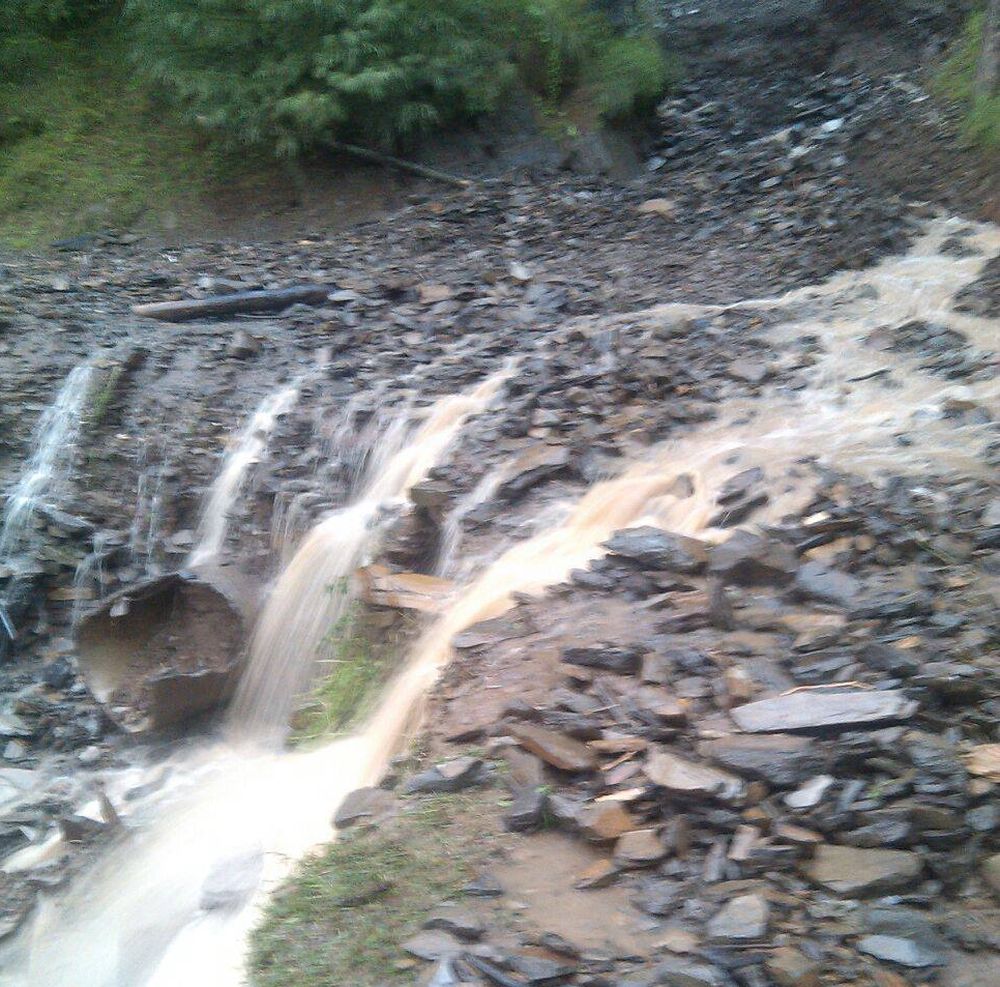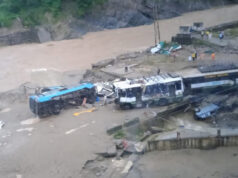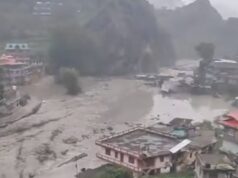


Himachal Pradesh is facing an alarming rise in extreme rainfall events, with cloudbursts and monsoon disasters leaving behind widespread devastation year after year. Once confined to the remote high-altitude regions of the Himalayas, cloudbursts are now striking lower, populated areas of the state, multiplying the scale of destruction.
According to the State Disaster Management Authority, this monsoon season alone has witnessed more than 50 cloudburst incidents, along with 95 floods and 133 heavy landslides. Experts warn that incidents of excessive rainfall in the Himalayan region have risen by nearly 200 percent in the past three decades, intensifying the impact of the monsoon in Himachal.
The trend is clearly visible in disaster records. Between 2018 and 2022, only six cloudbursts were reported in the state, but by 2023, the picture had changed dramatically. That year’s monsoon turned disastrous, with three major extreme rain events from July 8–11, August 14–15, and August 22–23. These triggered six cloudbursts, 32 floods, and 163 landslides in just a few days. By the end of the 2023 season, Himachal had suffered 45 cloudbursts, 83 floods, and more than 5,700 landslides—making it one of the worst years of monsoon destruction in the state’s history. In 2024, 14 more cloudbursts, 40 floods, and three landslides were recorded, again leaving behind heavy losses.
Experts link this surge in disasters to climate change, global warming, and rising human activity in fragile mountain zones. Studies by IIT Roorkee, the Wadia Institute of Himalayan Geology, and the Ministry of Earth Sciences reveal that Himalayan glaciers are melting at twice the rate since 2000. The expansion of glacial lakes such as Samudra Tapu and Gepang Gath in Lahaul-Spiti between 1979 and 2017 has also raised the risk of outburst floods, further amplifying monsoon-related disasters.
Adding to the crisis are hydropower projects and dams, which, according to experts, are altering the local climate. Reservoirs increase evaporation and disrupt moisture balance, while tunnels and road construction are destabilising already fragile slopes. These changes have increased the frequency and intensity of rainfall, making Himachal’s monsoon far more destructive than in the past.
Meteorologists explain that a cloudburst occurs when more than 100 mm of rainfall hits a single area within an hour. In mountainous terrain, clouds trapped by high peaks release vast amounts of water in minutes, overwhelming rivers, drains, and villages below. Where earlier cloudbursts were rare and restricted to remote mountains, they are now hitting inhabited valleys and towns, creating repeated monsoon disasters.
The changing pattern of rainfall is equally worrying. Where the monsoon once spread rains evenly across months, today the same volume pours down in a single day. This leads to flash floods, soil erosion, and landslides, which combine with cloudbursts to wreak havoc across Himachal Pradesh.
Urbanisation and deforestation are compounding the problem. Natural drainage systems have been destroyed by unplanned construction and encroachments, causing water to accumulate and rush down suddenly, mimicking the destructive impact of cloudbursts.
Experts caution that Himachal’s mountains are becoming increasingly vulnerable to monsoon disasters and stress the urgent need for stronger policies—tighter checks on construction, safer hydropower development, restoration of natural drainage and forests, and improved early warning systems.
With climate change intensifying, the state now finds itself at the frontline of extreme monsoon disasters, where cloudbursts and floods are no longer seasonal exceptions but annual threats.