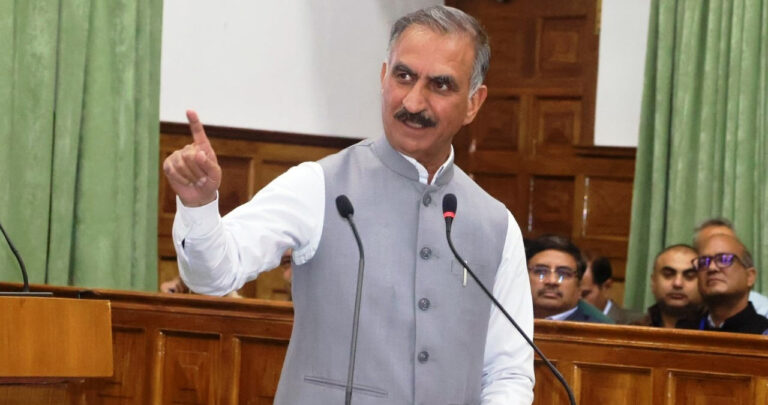

Shimla: The process of reorganising administrative units and exploring the creation of new districts in Himachal Pradesh has gained momentum, with Chief Minister Sukhvinder Singh Sukhu directing the commission constituted for the purpose to first prepare a Standard Operating Procedure (SOP) for the exercise.
The Chief Minister chaired a meeting with the commission on Saturday to review its functioning and discuss various aspects of the proposed administrative reorganisation. He directed that the SOP should take into account the state’s demographic profile, geographical conditions and other important factors before decisions are considered regarding the creation or restructuring of administrative units.
Sukhu also instructed the commission to seek suggestions from the general public and district administrations to ensure that local requirements and public convenience are adequately considered in the process.
He directed the General Administration Department (GAD) to extend full cooperation and provide the necessary facilities to ensure the smooth functioning of the commission.
Justice Dharam Chand Chaudhary, chairman of the commission, members Vishal Panwar and Rajesh Sharma, Special Secretary GAD Harbans Singh Brascon, and Director of Land Records and Consolidation of Holdings Torul S. Raveesh attended the meeting.
The state government has constituted the commission under the chairmanship of retired Justice Dharam Chand Chaudhary to examine the existing administrative structure and recommend changes, including the possibility of creating new districts.
The commission will review the existing arrangement of districts, subdivisions, tehsils, sub-tehsils and development blocks. It will examine the feasibility of creating new administrative units, merging existing ones, or reorganising them through division or other adjustments wherever required.
The exercise will consider several parameters, including population, geographical conditions, accessibility of government offices for residents and overall administrative efficiency. The commission will also consult public representatives, concerned government departments and other stakeholders before finalising its recommendations.
Apart from administrative requirements, the financial implications of creating new units will also be examined. This will include assessing expenditure on office buildings, infrastructure, staff recruitment and other essential facilities.
The commission has been given six months to submit its report to the state government. Its recommendations are expected to provide a framework for any future decisions on the creation of new districts and the reorganisation of administrative boundaries in Himachal Pradesh.
Despite the constitution of the commission, the possibility of creating new districts or administrative units faces a degree of reluctance within the government itself. Several Cabinet ministers are understood to be cautious about the proposal, primarily because of the substantial financial burden involved in establishing new administrative offices, appointing staff and developing the required infrastructure. The government will also have to consider the recurring expenditure associated with maintaining new administrative establishments at a time when the state’s financial resources are under pressure.
The political and administrative implications of reorganising existing districts and constituencies may also make the exercise challenging. Consequently, while the commission has been tasked with examining the possibilities, its recommendations may not automatically translate into the creation of new districts.
On the other hand, demands for new districts and administrative units have continued to emerge from different parts of Himachal Pradesh. Supporters of the proposal argue that the state’s difficult mountainous terrain, scattered population and long travelling distances make access to government offices particularly challenging for residents of remote areas.
They believe that smaller administrative units would bring government services closer to people, reduce travel time and expenditure, improve the delivery of public services and strengthen administrative monitoring at the grassroots level.
Advocates also point out that administrative reorganisation should not be viewed merely as an expenditure but as a long-term investment in governance and regional development. They argue that decisions should be based on geographical realities, population requirements and public convenience rather than financial considerations alone.