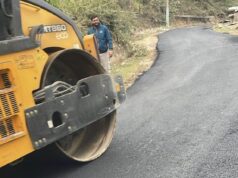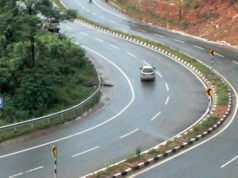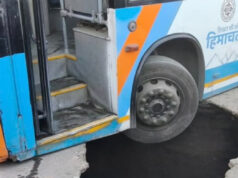


New Delhi: Road defects and delayed repairs have long troubled commuters on national highways. In a bid to address this persistent issue, the National Highways Authority of India (NHAI) is rolling out an Artificial Intelligence (AI)-based monitoring system to keep highways under constant watch and improve maintenance response time.
The authority plans to deploy the system across nearly 40,000 km of national highways, marking a major shift from manual inspections to technology-driven surveillance. High-resolution dashboard cameras will be installed on Route Patrol Vehicles (RPVs), which will conduct weekly surveys of highway stretches. These vehicles will capture detailed visuals of road surfaces, signage, and nearby infrastructure.
The collected data will be analysed using AI and Machine Learning (ML) models capable of identifying over 30 types of defects. These include potholes, cracks, rutting, damaged lane markings, non-functional street lights, and broken crash barriers. Officials say the system will help detect problems early and trigger quicker repairs, reducing risks for commuters.
RPVs, already used for highway patrolling and emergency response, will now double up as mobile inspection units. They will ensure continuous monitoring, particularly in remote areas where regular physical inspections are difficult to carry out.
The new system will also identify issues beyond road damage, such as illegal encroachments, damaged signboards, and unauthorised median openings. To further strengthen safety, night-time surveys will be conducted once every week each month to check the condition of reflectors, road markings, and lighting.
To manage the large volume of information, NHAI is developing a dedicated IT platform equipped with dashboards, analytics, and historical data comparison tools. The system will be integrated with the NHAI Data Lake, allowing authorities to plan maintenance more efficiently and ensure timely intervention.
Officials believe the AI-driven initiative will bring greater accountability in highway maintenance and significantly improve road conditions. If implemented effectively, the move could reduce accidents linked to poor road quality and offer smoother travel for commuters across the country.