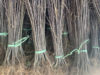


Prolonged absence of winter rainfall has pushed horticultural crops in Himachal Pradesh into severe moisture stress, prompting Dr YS Parmar University of Horticulture and Forestry, Nauni, to issue an advisory for farmers, particularly in rainfed and hilly areas of the state.
The university said rainfall patterns have remained erratic, with moderate to irregular distribution over the years. Long-term data from 1980 to 2024 show that November receives below-normal rainfall in nearly 68.2 per cent of the years. This season, the last rainfall was recorded on October 9, 2025, after which the state has witnessed a dry spell of around 70 days. The extended dry period has resulted in significant water stress in fruit crops and nurseries.
Experts warned that in sub-humid mid-hill regions, nearly 30 to 50 per cent of soil moisture is lost through evaporation, a figure expected to increase under prevailing conditions. With about 70 per cent of Himachal Pradesh being rainfed, the recurrence of drought during these months has become a serious concern. Insufficient soil moisture, they said, can adversely affect fruit plant saplings by restricting root development, reducing nutrient uptake and increasing susceptibility to diseases.
The advisory recommends postponing new plantations of deciduous fruit crops, including apple, peach, plum, apricot, persimmon, walnut and kiwifruit, until moisture conditions improve. For orchards where plantation has already been completed, farmers have been advised to ensure life-saving irrigation, preferably through drip irrigation systems, along with mulching.
To conserve soil moisture, the university has suggested covering the tree basin area with dry grass or crop residue mulch, with an ideal thickness of five to ten centimetres. Experts noted that mulching helps retain moisture, suppresses weeds, moderates soil temperature and adds organic matter to the soil after decomposition.
Farmers have also been advised to avoid digging tree basins during the dry spell to prevent further moisture loss. Minimal pruning should be carried out under drought conditions, while the use of chemical fertilisers such as nitrogen, phosphorus and potassium should be avoided until adequate soil moisture is restored. However, the application of well-decomposed farmyard manure may continue to improve soil health.
The advisory encourages farmers to visit fields where natural farming is being practiced or to observe demonstrations at the university’s research station at Mashobra, Krishi Vigyan Kendra Rohru or nearby university stations. Farmers following natural farming practices have been advised to apply Jeevamrit as a 10 to 20 per cent foliar spray and as solid drenching at 15-day intervals, maintain the Whaapsa line and use mulch to protect crops.
To check disease incidence, the university has advised collecting fallen apple leaves and decomposing them in compost pits or spraying five per cent urea on the orchard floor for quick decomposition of infected leaves. For white root rot, farmers have been asked to expose the root system of infected trees to sunlight, remove the infected portion and apply Bordeaux paste. In case of collar rot, wounds near the collar region should be scarified and treated with Bordeaux paint or other copper fungicide-based paints.
For managing canker, experts recommend removing and destroying infected plant parts, mummified fruits, dead twigs and pruned branches, avoiding mechanical injuries and applying balanced fertilisers based on soil and leaf analysis. The infected portion should be scraped up to healthy tissue, cleaned and treated with Bordeaux paint or a copper fungicide-based paint.
The university has also stressed long-term preventive measures such as integrated farming, fruit-based agroforestry models, crop diversification, water-efficient vegetables, use of anti-transpirants and wider adoption of natural farming practices. Farmers have been urged to use weather-based advisories through the Meghdoot app to plan agricultural activities more effectively.