
Himachal Pradesh is often introduced to the world through its snow-covered mountains, apple orchards, ancient temples and picturesque villages. Yet beneath this familiar image lies a remarkable cultural diversity shaped by local deities, oral traditions, seasonal rituals and community celebrations that differ from one valley to another.
In many parts of the state, a festival is not simply an event marked on the calendar. It is a collective expression of faith, identity and belonging. Village deities travel from one settlement to another, people gather to honour the harvest, and generations preserve folk songs and dances that may have no written record.
From the famous Kullu Dussehra to the lesser-known Phulaich of Kinnaur, the torch-lit Halda festival of Lahaul and the distinctive customs of remote villages, Himachal’s traditions reveal a world far richer than its popular tourist image.
1. Kullu Dussehra: When hundreds of village deities gather

Kullu Dussehra is one of the most distinctive religious festivals in India because its main celebrations begin on Vijayadashami, when Dussehra festivities elsewhere in the country are generally concluding.
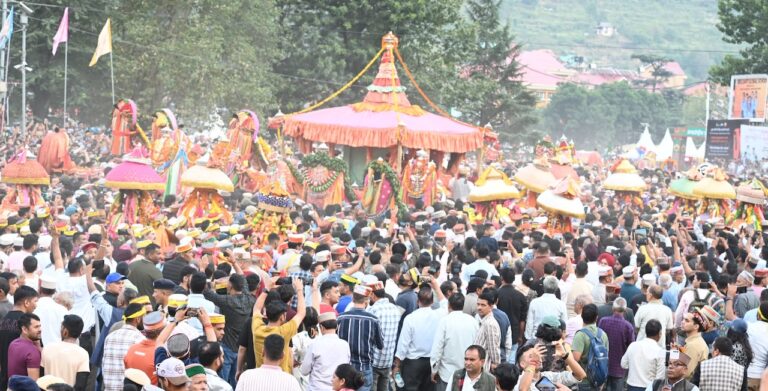
The festival centres on Lord Raghunath, the presiding deity of Kullu. Hundreds of village deities, carried in decorated palanquins by their traditional attendants, assemble at Dhalpur ground during the festival.
What makes the gathering remarkable is the continuing importance of these local deities in the cultural and social lives of the surrounding communities. Their arrival is accompanied by traditional music, processions and rituals, transforming the valley into a vast gathering of village traditions.
The festival is not merely a religious spectacle for visitors. It reflects the distinctive system of local deity worship through which communities maintain relationships with their sacred traditions and with one another.
2. Phulaich: The festival of flowers in Kinnaur

In the high-altitude districts of Kinnaur, the arrival of the flowering season inspires a traditional celebration known as Phulaich, also called Ukhyang in local usage.
Often associated with the collection of seasonal wildflowers, the festival expresses the close relationship between mountain communities and their natural environment. Villagers gather flowers from the surrounding hills, participate in rituals and celebrate through traditional songs, dances and community feasts.
The customs and timing vary among villages, but the festival is broadly associated with remembering ancestors, honouring local traditions and celebrating the natural abundance of the mountains.
Phulaich also highlights the distinctive cultural identity of Kinnaur, where Himalayan and Tibetan cultural influences have interacted over generations. The flowers are more than seasonal decorations: they form part of a cultural expression tied to landscape, memory and community.
3. Halda: Lahaul’s spectacular festival of fire

In the cold valleys of Lahaul, the Halda festival brings fire into the heart of winter. Traditionally associated with the New Year celebrations of some local communities, it features bundles of burning cedar or other locally available wood carried together in a torch-lit gathering.
The torches are brought together at a designated location, creating a striking display against the darkness of the Himalayan night. The ritual is associated with seeking blessings, prosperity and protection for the community.
Halda is particularly interesting because it reflects the adaptation of cultural traditions to the demanding environment of high-altitude life. Its customs can differ between settlements, and local religious practices influence how the festival is observed.
For visitors, the sight of a hillside illuminated by traditional torches offers a glimpse of a winter celebration that is deeply connected to community life rather than commercial entertainment.
4. Minjar Fair: Chamba’s celebration of harvest and heritage

The historic town of Chamba celebrates the Minjar Fair with colourful processions, folk performances and community gatherings. The name Minjar refers to a tassel-like ornament, traditionally associated with the festival and worn or carried by participants.
One of the central features is the ceremonial procession associated with the Minjar offering to the Ravi River. The fair brings together religious observances, local traditions and cultural performances, while also providing an important occasion for trade and social interaction.
The festival is linked in local tradition to Chamba’s historical relationship with its river and agricultural landscape. It reflects the importance of water, harvest and collective well-being in the life of the region.
Minjar also demonstrates how a historic town fair can serve several purposes at once: religious observance, celebration of local identity, economic activity and the transmission of cultural traditions.
5. Sazo: When Kinnaur’s deities return to the heavens

Sazo, observed in parts of Kinnaur, is associated with local beliefs concerning the departure of village deities to their heavenly abode for a period before returning to their communities.
The observance may involve prayers, offerings, household rituals and restrictions that vary from one locality to another. The precise customs depend on the village’s traditions and its relationship with its presiding deity.
What makes Sazo distinctive is the way it reflects a worldview in which deities are understood not simply as figures worshipped inside temples but as active participants in the life of the community.
The festival offers a glimpse into Kinnaur’s distinctive religious traditions, in which temples, household practices, ancestors and the natural landscape are closely connected.
6. Budhi Diwali: A second Diwali in the remote hills

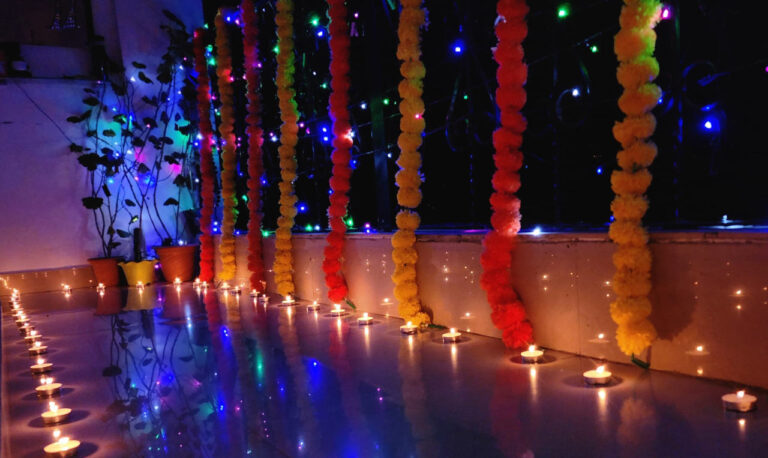
While most of India celebrates Diwali on the same night, several communities in Himachal Pradesh observe Budhi Diwali approximately a month later, on the new-moon night following the main festival.
The tradition is especially prominent in Trans-Giri Sirmaur, parts of upper Shimla and Nirmand in Kullu. Depending on the locality, celebrations may last several days and include torch processions, folk music, traditional dances and communal feasts.
Several legends explain the festival. One popular account suggests that news of Lord Rama’s return to Ayodhya reached remote mountain communities late. Other interpretations connect the celebrations with harvest completion, winter preparations and local mythological traditions.
In Trans-Giri, the festival is also associated with Baliraj Dahan, while Nirmand has distinctive folk dances and songs of its own.
Budhi Diwali is a reminder that the cultural calendar of Himachal is not uniform: communities have preserved their own ways of celebrating, shaped by geography, folklore and local beliefs.
7. Lavi Fair: A centuries-old trading tradition in Rampur

The Lavi Fair in Rampur Bushahr is among Himachal Pradesh’s most historically significant trading fairs. Its origins are associated with historic trade links between the former Bushahr kingdom and regions across the Himalayas, including Tibet.
Traditionally, traders brought wool, livestock, dry fruits, local produce and other goods to exchange in a gathering that connected mountain communities and trading networks. Although modern transport and changing commerce have transformed the fair, its historical identity remains an important part of Rampur’s heritage.
Lavi is distinctive because it represents a time when fairs were essential economic institutions. They were places where people traded goods, exchanged news, formed relationships and connected remote settlements to wider markets.
The fair continues to celebrate this legacy through commercial activity, cultural programmes and local participation.
8. Losar: Welcoming the New Year in the Buddhist Himalayas

In Buddhist communities of Lahaul-Spiti and parts of the Himalayan borderlands, Losar marks the traditional New Year. The celebration is associated with prayers, family gatherings, monastery rituals and the preparation of festive food.
Homes and religious spaces are cleaned and prepared, while families seek blessings for the coming year. Depending on the community, celebrations may include traditional performances, religious ceremonies and visits to monasteries.
Losar is particularly significant because it reflects the cultural connections between Himachal’s high-altitude regions and the wider Tibetan Buddhist world.
Its observance also illustrates the diversity within the state itself. The traditions of the Buddhist valleys differ considerably from those of the lower hills, yet both contribute to Himachal’s rich cultural identity.
9. Karyala: The folk theatre that brings village life to the stage

Not all of Himachal’s distinctive traditions are religious festivals. Karyala, a traditional form of folk theatre associated with parts of Shimla and surrounding regions, uses humour, satire, music and performance to portray aspects of everyday life.
Performances may take place during village gatherings and festive occasions. Characters and situations drawn from familiar social experiences make the theatre accessible to audiences, while humour provides a way to comment on human behaviour and social problems.
Unlike formal theatre performed on a fixed stage, traditional folk performances often depend on community participation and local settings.
Karyala is culturally important because it preserves regional expressions, performance styles and oral storytelling. It also demonstrates that entertainment in traditional village life served a wider purpose: it brought people together and provided a means of reflecting on society.
10. Deity palanquins and village justice: The living tradition of Devta culture

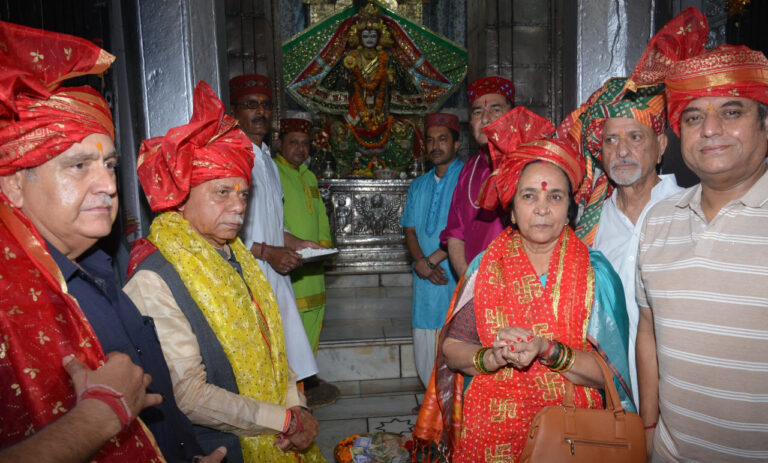
One of the most distinctive features of Himachal Pradesh is its living Devta tradition. In many villages, local deities have their own temples, ceremonial palanquins, attendants, musical traditions and annual festivals.
During important occasions, the deity’s palanquin may be carried through the village or taken to gatherings involving other deities. Traditional musicians accompany the procession, and community members participate in rituals according to local custom.
In some communities, people also seek guidance from a deity’s oracle on matters affecting village life. Historically, such institutions have played roles in resolving disputes, organising communal activities and maintaining customary practices. Their influence varies widely across regions and villages.
This tradition is particularly striking because the deity is often treated as an active presence in community affairs rather than solely as an object of worship. The relationship between a village and its deity can be closely tied to its collective identity.
11. Traditional marriage customs: When the community becomes part of the ceremony

Traditional marriage customs across Himachal Pradesh vary considerably according to region, community and family tradition. Ceremonial clothing, folk music, wedding processions and collective feasting remain important features of many rural weddings.
In Kinnaur, traditional attire and distinctive jewellery form an important part of wedding celebrations. In Kullu and other hill districts, local songs and dances may accompany wedding processions and gatherings.
Some Himalayan communities have historically practised forms of marriage that differ from mainstream Hindu wedding customs, including polyandry in certain localised contexts. Such practices have never been universal across Himachal Pradesh and have changed considerably over time.
These variations illustrate the influence of geography, inheritance patterns, historical social structures and local traditions on marriage customs.
The preservation of regional wedding songs, ceremonial clothing and oral traditions is particularly important because these practices are often transmitted within families rather than through written records.
The festivals and customs of Himachal Pradesh are not simply colourful additions to its tourism appeal. They represent generations of accumulated knowledge, faith, artistic expression and community organisation.
Yet these traditions face challenges from migration, changing lifestyles and declining interest among some younger generations. As elders pass away, songs, dialects, ritual knowledge and traditional performance styles can disappear if they are not actively passed on.
Documentation, local cultural programmes, school-level awareness and responsible tourism can all help preserve this heritage. Equally important is ensuring that communities themselves remain central to decisions about how their traditions are represented.
Himachal Pradesh’s greatest cultural treasure is not confined to its temples or monuments. It lives in the village procession, the winter bonfire, the flower gathered from a mountainside, the folk song remembered by an elder and the dance performed by an entire community. These traditions give the state its distinctive identity — one that deserves to be celebrated, documented and carried forward to future generations.