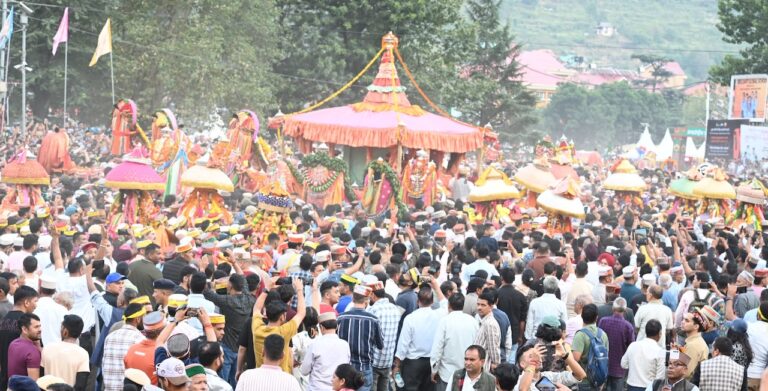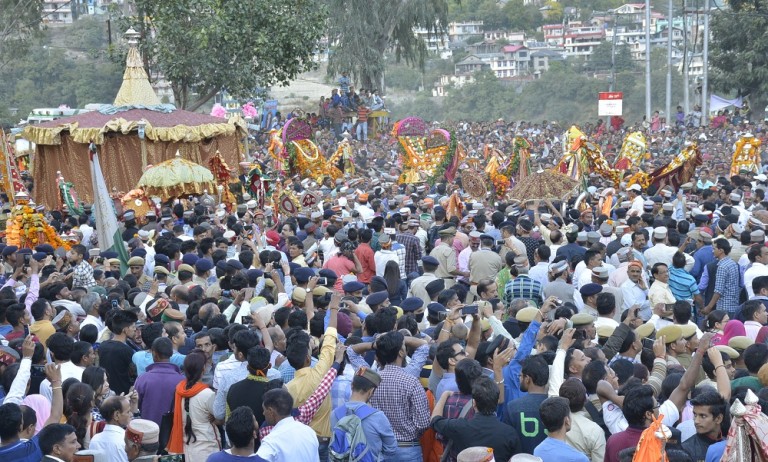
Kullu Dussehra is much more than a religious festival. Unlike the traditional Dussehra celebrations across much of India, where the festival concludes with the burning of effigies of Ravana, Kullu’s celebrations begin on Vijayadashami and continue for several days, bringing together hundreds of local deities, traditional processions, folk music, cultural performances and centuries-old customs.
Held in the historic Dhalpur Maidan in Kullu, the festival reflects the distinctive Dev Sanskriti (deity culture) of Himachal Pradesh and the deep-rooted relationship between the region’s communities, their village deities and their shared cultural identity.
As the valley prepares for another edition of this celebrated gathering, Kullu Dussehra once again places Himachal Pradesh’s rich spiritual traditions, tourism potential and cultural heritage at the centre of national attention.
Kullu Dussehra 2026: Seven Days When the Gods Descend on Dhalpur

KULLU: The historic Dhalpur Maidan is set to become the spiritual and cultural heart of Himachal Pradesh as the International Kullu Dussehra begins on October 21, bringing together village deities, devotees, folk artists, traders and visitors from across India and abroad. The seven-day festival will continue until October 27, with the traditional Rath Yatra of Lord Raghunath marking its commencement and Lanka Dahan forming part of the concluding ceremonies.

What makes Kullu Dussehra extraordinary is not merely its scale, but the living traditions it preserves. Here, deities are not confined to temples, and religious observances extend beyond individual shrines. Village gods and goddesses, accompanied by their traditional custodians, musicians and devotees, travel from different parts of the valley to assemble in Dhalpur, transforming the town into a remarkable meeting place of faith, folklore and community life.
The 2026 celebrations are expected to feature more than 250 hill deities, according to the district administration’s festival announcement. A recent Indian Express report puts the number of invited deities at 347, reflecting the growing scale and organisational demands of the gathering.
For Kullu, this is more than an annual fair. It is an affirmation of a cultural inheritance that has survived generations and continues to shape the social and spiritual identity of the valley.
A festival that begins when Dussehra ends elsewhere

Across much of India, Vijayadashami marks the culmination of Dussehra celebrations, with the burning of Ravana’s effigies symbolising the victory of good over evil. Kullu follows a different tradition. Its principal festivities begin on Vijayadashami and continue for seven days, making it one of the most distinctive Dussehra celebrations in the country.
The origins of this tradition are traced to the 17th century, during the reign of Raja Jagat Singh. According to the commonly recounted historical tradition, the king brought an idol of Lord Raghunath from Ayodhya and established the deity at Kullu. Lord Raghunath subsequently became the presiding deity of the valley and the central figure of its Dussehra celebrations.
Over time, the festival developed into a distinctive institution in which the valley’s village deities gather to pay their respects to Lord Raghunath. The royal tradition, local religious beliefs and community participation became closely intertwined, giving Kullu Dussehra a character unlike that of most other Dussehra festivities.
The festival’s significance lies in this inversion of the usual calendar: while celebrations elsewhere conclude on Vijayadashami, Kullu’s most important religious and cultural gathering begins.
Lord Raghunath’s Rath Yatra: The spiritual centrepiece

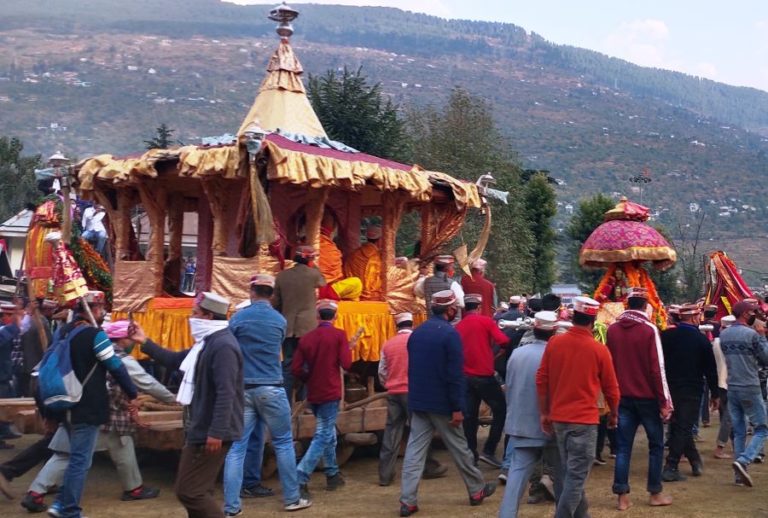
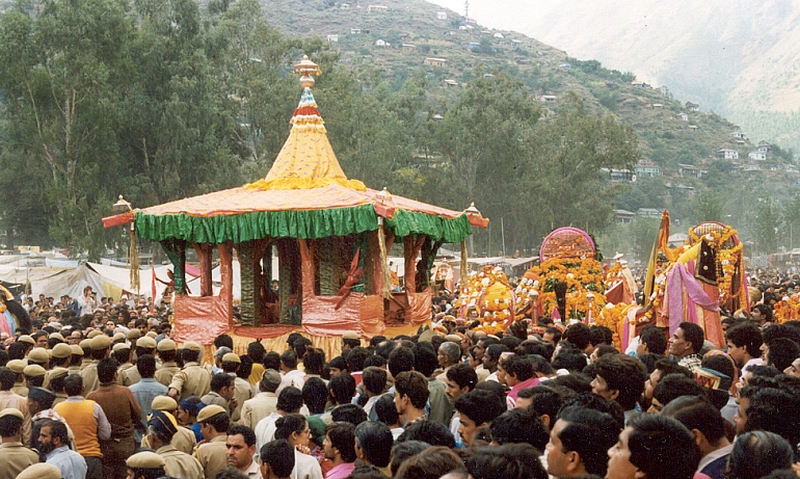
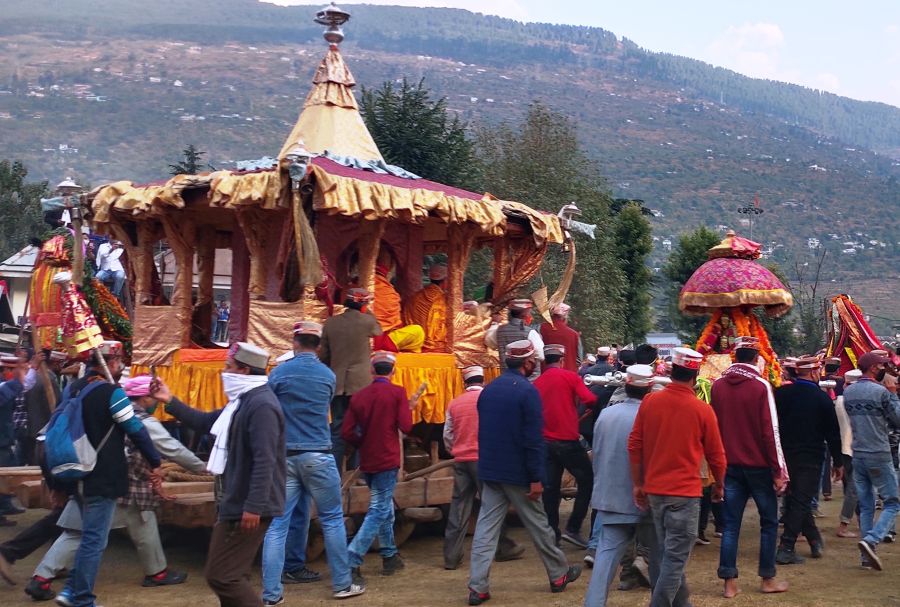
The Rath Yatra is the defining moment of Kullu Dussehra. The decorated wooden chariot carrying Lord Raghunath is brought into Dhalpur Maidan amid the presence of devotees, traditional musicians and representatives of participating deities.
The procession is not simply a ceremonial parade. It represents the central place of Lord Raghunath in the religious life of Kullu and the continuing authority of customs maintained by the valley’s communities.
The arrival of Goddess Hadimba from Manali is another important part of the festival’s traditional sequence. The goddess holds a special place in the religious traditions of the former Kullu royal family and the region. Her arrival adds to the ceremonial significance of the gathering.
As the chariot moves through Dhalpur, devotees participate in the proceedings with reverence. The combination of the wooden rath, traditional attire, musical instruments and gathered deities creates an atmosphere that connects the present generation with centuries of inherited practice.
For visitors, the Rath Yatra is among the festival’s most striking sights. For local residents, it is an expression of faith, belonging and continuity.
Dev Sanskriti: When village deities become the guests of honour
The most distinctive feature of Kullu Dussehra is its congregation of devtas — village deities whose traditions remain deeply embedded in the everyday lives of people across the valley.
In Kullu’s Dev Sanskriti, a deity is understood not merely as an idol installed in a temple, but as a living spiritual presence associated with a particular community and its inherited customs. The deity’s rath or palki, traditional ornaments, ceremonial objects and accompanying musicians form part of a cultural system preserved over generations.
Deities arrive from different areas of Kullu district, including Manali, Sainj, Banjar, Anni and Nirmand. Each brings its own traditions, distinctive ceremonial practices and followers. Their arrival transforms Dhalpur into a shared religious space where different local traditions meet without losing their individual identities.
The deities’ custodians and devotees play an important role in maintaining these customs. Traditional instruments accompany the processions, while the palanquins and decorated ceremonial objects reflect the craftsmanship and artistic heritage of the region.
The gathering also highlights how religious traditions help maintain social relationships across mountain communities. The annual journey to Dhalpur provides an occasion for people from different villages to meet, renew associations and participate in a shared cultural event.
Yet the growing scale of the festival also brings questions about space, recognition and the management of participating deities. A recent legal development concerning an invitation sought by a newly established household deity has highlighted the importance of historical recognition and established customary practices in determining participation.
This underlines the delicate balance between preserving established traditions and managing the evolving demands of a major public festival.
Folk music, Nati and the cultural rhythm of the hills

While religious rituals provide the festival’s spiritual foundation, music and dance give it a broader cultural expression.
Traditional Himachali music accompanies the movement of deities and the ceremonies associated with them. Folk instruments, rhythmic performances and regional songs create an atmosphere that reflects the cultural diversity of the valley.
Among the most recognisable features is Nati, the traditional folk dance associated with Himachal Pradesh. Performed by groups moving in coordinated patterns, Nati represents collective participation and the festive spirit of the hills. Its presence at Kullu Dussehra gives local communities an opportunity to celebrate and showcase their cultural identity.
The festival also provides a platform for folk artists and cultural groups from outside Himachal Pradesh. Official festival and tourism information highlights performances by artists from different Indian states and international cultural troupes.
This combination of local traditions and outside participation gives the festival a wider cultural reach. Visitors encounter not only the religious practices of Kullu but also a broader exchange of music, dance and performance.
The challenge is to ensure that modern stage productions and entertainment programmes complement, rather than overshadow, the rituals that make Kullu Dussehra distinctive.
From a traditional gathering to an international festival
Kullu Dussehra has developed from a predominantly religious gathering into an internationally recognised festival that brings together cultural programmes, exhibitions, commercial activity and tourism.
Its international status has widened the event’s reach, attracting visitors who come to experience the valley’s traditions as well as its mountain landscape. The official festival platform presents the event as a showcase for the deity culture, Rath Yatra, Nati and international folk performances.
For Himachal Pradesh, the festival also offers an opportunity to present a different dimension of tourism. Beyond destinations such as Manali and the state’s adventure tourism circuit, Kullu Dussehra draws attention to the cultural heritage of mountain communities.
Its appeal rests on authenticity. The deities’ processions and local rituals are not performances created exclusively for tourists; they arise from religious traditions that continue to hold meaning for the people who participate in them.
This distinction gives the festival a cultural value that extends beyond visitor numbers. It offers an opportunity to understand the relationship between faith, community institutions and the natural and historical setting of the Himalayas.
A major boost for the local economy
The arrival of thousands of visitors creates opportunities for traders, artisans, transport operators, hoteliers, restaurant owners and small businesses.
The Dhalpur fairground becomes a commercial hub, with stalls offering local products, food, handicrafts, clothing and other goods. The district administration’s preparations for the 2026 event have included notices concerning food stalls, market plots, parking areas and event infrastructure, reflecting the logistical scale of the festival.
For small traders and local entrepreneurs, the festival offers a concentrated period of commercial activity. For tourism businesses, it helps extend the appeal of the autumn season and encourages visitors to explore the wider district.
Local crafts and traditional products can also gain visibility among visitors from outside the state. With effective promotion, the festival can help connect local producers with new markets and encourage greater appreciation of Himachal’s cultural heritage.
However, the economic benefits need to reach local communities in a meaningful way. Responsible stall allocation, fair access for small traders, effective waste management and adequate public facilities are essential to ensure that the festival’s commercial expansion remains compatible with its cultural purpose.
Organising a festival of this scale
The growing popularity of Kullu Dussehra also brings substantial administrative responsibilities.
Managing the arrival of hundreds of deities and their followers, regulating traffic, maintaining sanitation, providing drinking water and ensuring public safety require careful coordination among government departments, local bodies, police personnel, organisers and community representatives.
The use of Dhalpur Maidan for religious ceremonies, cultural performances and commercial activities makes planning especially important. Space must be allocated in a way that allows traditional rituals to retain their prominence while accommodating visitors and businesses.
The district’s published preparations for 2026 include arrangements for markets, parking and technical infrastructure for festival entertainment.
As attendance and expectations grow, the festival’s organisers face a larger question: how can Kullu Dussehra modernise its public facilities without losing the intimacy and authenticity of its traditional practices?
The answer lies in treating cultural preservation as an essential part of event management, rather than as an additional attraction.
Preserving a heritage for future generations
Kullu Dussehra’s lasting significance lies in the way it brings together religion, history, music, local institutions and community life.
In an era of rapid urbanisation and changing lifestyles, the continued participation of village communities in the festival demonstrates the resilience of regional traditions. The gathering creates a space in which younger generations can witness customary practices, learn about their local heritage and understand the cultural ties connecting different parts of the valley.
Preservation, however, requires more than an annual celebration. It depends on the continued support of deity custodians, musicians, artisans, local communities and institutions responsible for documenting and transmitting traditional knowledge.
Tourism can support this process when it respects the religious character of the event. Publicity and modern infrastructure can increase the festival’s reach, but the traditions themselves must remain central.
Kullu Dussehra therefore represents both a cultural inheritance and a continuing responsibility — to protect the practices that have shaped the valley while ensuring that they remain meaningful to future generations.
A celebration that belongs to the valley

As Kullu prepares for the week-long celebrations from October 21 to 27, the festival once again brings the valley’s diverse communities together around Lord Raghunath and the traditions of Devbhoomi Himachal.
The Rath Yatra, the gathering of village deities, the rhythms of folk music and the movements of Nati dancers are all parts of a larger cultural story — one in which faith and community have remained closely connected over centuries.
Kullu Dussehra’s uniqueness does not rest solely on the number of deities or visitors it attracts. Its deeper significance lies in the survival of a living tradition that continues to shape the identity of the valley.
As the wooden chariot moves into Dhalpur and the assembled deities take their places, Kullu offers a powerful reminder that heritage is not simply something inherited from the past. It is something communities continue to practise, protect and pass on.
In Kullu, Dussehra is not merely a festival that celebrates the victory of good over evil. It is a celebration of faith, collective identity and the enduring cultural spirit of the Himalayas.