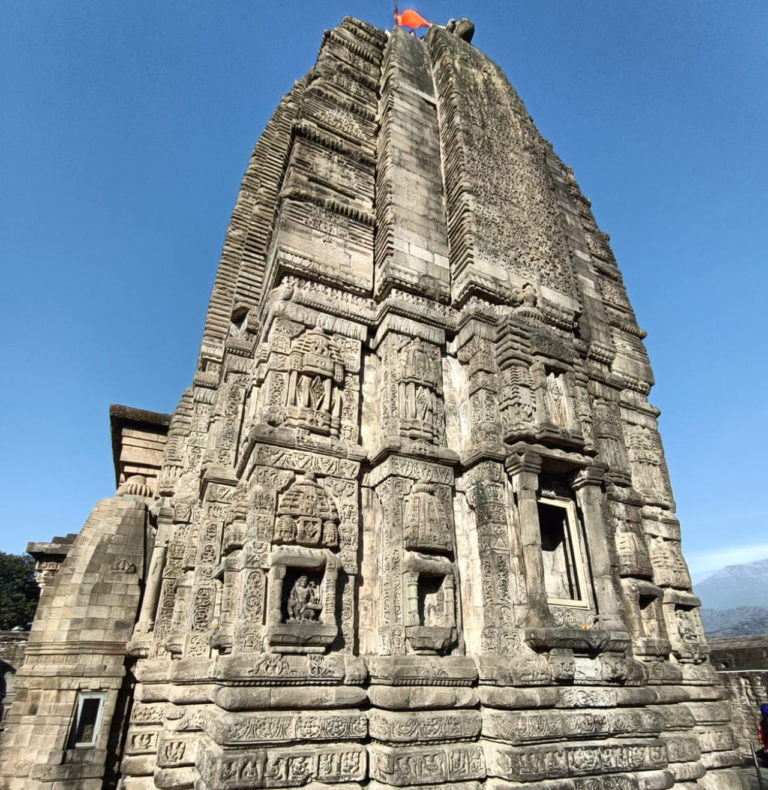

BAIJNATH: As Dussehra celebrations light up towns and cities across Himachal Pradesh, one historic town in Kangra district observes the occasion very differently. In Baijnath, there is no traditional burning of Ravana’s effigy, no customary celebration of his defeat, and no embrace of the festivities that mark Vijayadashami in much of the country.
The reason lies in the town’s deep religious association with Lord Shiva and a local legend that portrays Ravana, the king of Lanka in the Ramayana, as one of the deity’s greatest devotees.
Home to the historic Baijnath Shiva Temple, the town has preserved a distinctive tradition that regards burning Ravana’s effigy as inauspicious. For local residents, the practice reflects their reverence for Ravana’s devotion to Shiva rather than a rejection of the religious significance of Dussehra.
The legend behind Baijnath’s unusual tradition
According to local mythology, Ravana undertook intense penance to please Lord Shiva and offered his ten heads as a mark of devotion. Pleased with his worship, Shiva restored his heads and granted him powerful blessings.
Another legend associated with the Baijnath temple recounts that Shiva gave Ravana a sacred lingam to carry to Lanka, with the condition that it must not be placed on the ground during the journey. When Ravana reached the area now known as Baijnath, the lingam was placed on the ground and became permanently established there.
The Himachal Pradesh government’s official Kangra district website records this legend and explains that, out of respect for Ravana’s devotion to Shiva, Dussehra is traditionally not observed in Baijnath.
For the people who follow this tradition, Ravana is remembered not only through his role in the Ramayana but also as a learned figure and a devoted worshipper of Lord Shiva. This religious association has shaped the town’s distinctive approach to Dussehra over generations.
The historic Baijnath temple at the heart of the tradition
The centuries-old Baijnath Shiva Temple is central to the town’s religious identity. The temple, known for its historic architecture and association with Lord Shiva, attracts devotees throughout the year.
Its importance extends beyond its architectural heritage. The stories surrounding the temple have helped shape local customs, including the decision not to burn Ravana’s effigy during Dussehra.
Residents believe that burning the effigy would disrespect Shiva’s devotee and could invite misfortune. This is a matter of local religious belief, rather than a historically established event, but it remains an important explanation for the continuation of the custom.
Reports published by The Tribune have also documented accounts of attempts to organise traditional Dussehra celebrations in the past, which residents associate with adverse consequences. These accounts are part of local oral tradition and should be understood in that context.
A contrast with Dussehra celebrations across Himachal
In Shimla, Mandi, Hamirpur, Una and numerous other parts of Himachal Pradesh, Dussehra is commonly marked by Ramlila performances, fairs and the burning of effigies of Ravana, Kumbhakarna and Meghnad. These ceremonies symbolise the victory of Lord Rama over Ravana and the triumph of good over evil.
Baijnath, however, follows a different path. Rather than organising Ravana Dahan, residents maintain their traditional distance from these festivities because of their reverence for Lord Shiva and the beliefs associated with Ravana’s penance.
This distinction illustrates the diversity of religious customs within Himachal Pradesh itself. The state is known for its numerous temples, village deities and regional traditions, and festivals can take on different forms depending on local beliefs and historical associations.
Baijnath’s practice is particularly striking because it departs from one of the most widely recognised features of Dussehra celebrations across India.
When tradition shapes the celebration
Baijnath’s approach to Dussehra demonstrates how religious traditions can influence public celebrations and community life. The town does not follow the customary Ravana-burning ritual, not because the festival is unknown to its residents, but because local beliefs attach a different significance to Ravana’s relationship with Lord Shiva.
The tradition has also drawn attention from outside the region, with national media repeatedly highlighting Baijnath as an unusual exception to the familiar Dussehra celebrations.
As the festival is observed elsewhere in the state, Baijnath’s example offers a reminder that India’s religious and cultural practices are not uniform. Different communities interpret their inherited stories through their own histories, beliefs and customs.
In Baijnath, the absence of Ravana Dahan is itself a tradition — one that reflects the enduring influence of Lord Shiva, the town’s sacred heritage and a distinctive local understanding of the Ramayana.