
Himachal Pradesh Government Moves to Tighten Control Over Sand and Gravel Extraction from Riverbeds
Shimla: The Himachal Pradesh government is preparing to overhaul the system governing the extraction of sand, gravel and other riverbed materials from areas associated with hydroelectric power projects, asserting that private project developers cannot claim automatic rights over such natural resources merely because land has been allotted to them for project purposes.
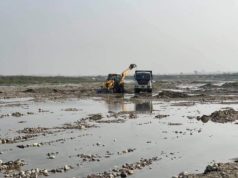
Under the proposed system, private power companies and project operators will not be permitted to independently issue tenders for the extraction of sand, gravel or other minor minerals from rivers without prior government approval. The government is considering action against project authorities that initiate such tendering processes without the required permission.
The move follows concerns over the existing practice under which officials associated with some hydroelectric projects have reportedly been issuing tenders for the removal of sand and gravel available within project areas.
Government to Retain Control Over Riverbed Resources
The government’s position is that allotment or acquisition of land for a power project does not automatically transfer ownership or extraction rights over riverbed minerals to the project developer.
Officials are now working on a mechanism under which the government itself would oversee and conduct the tendering process for the extraction of riverbed materials. The proposed arrangement is aimed at ensuring that the state’s rights over mineral resources are protected and that their extraction takes place in accordance with established rules.
Chief Minister Sukhvinder Singh Sukhu has also clarified the government’s position in the Himachal Pradesh Legislative Assembly while responding to issues concerning dredging and the extraction of mining material from rivers.
The government has stressed that Himachal Pradesh’s rivers and their mineral resources are public natural assets and cannot be exploited arbitrarily by project developers.
Large Number of Hydropower Projects Make Regulation Important
The issue assumes significance because of the extensive hydropower development taking place across Himachal Pradesh. Projects involving private companies, central public sector undertakings and other agencies are either operational, under construction or passing through various approval and administrative stages.
The Sutlej and Chenab river basins are among the most important regions for hydropower development in the state.
Major projects in the Sutlej basin include Nathpa Jhakri, Rampur, Kol Dam, Karcham-Wangtoo, Kinnaur Integrated Kashang, Shongtong-Karcham, Luhri Stage-I and Sunni Dam.
The 382-MW Sunni Dam project is also progressing through the required processes, with the Energy Department having issued a notification concerning the acquisition of private land in several villages of Shimla and Mandi districts.
Several hydroelectric projects are similarly operational or proposed in the Chenab basin, making the regulation of riverbed material extraction particularly important in areas where construction and power infrastructure are concentrated.
Private Sector Has Major Role in Hydropower Development
The private sector has played a significant role in expanding Himachal Pradesh’s hydropower capacity. With numerous projects spread across major river basins, the volume of construction activity has also increased the demand for construction material and the removal of sediment and riverbed deposits.
The proposed changes are therefore intended to establish a clear distinction between rights granted for implementing a power project and the government’s ownership and regulatory authority over minerals and river resources.
Once implemented, the new mechanism is expected to increase government oversight of sand and gravel extraction within hydropower project areas. The objective is to prevent unauthorised extraction, protect natural resources and ensure that any revenue generated through the disposal or extraction of riverbed material follows the prescribed government procedure.
The government is currently working out the modalities of the proposed system. Further details regarding permissions, tendering procedures, monitoring mechanisms and action against violations are expected once the new framework is formally finalised.