
Shimla: The Himachal Pradesh government has rolled out a new check post fee policy aimed at regulating the movement of minerals and curbing illegal mining activities, an issue that has continued to trouble several districts across the state.
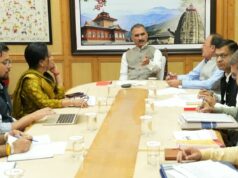
As per a notification issued by Additional Chief Secretary (Industries) R.D. Nazeem, a check post operation and infrastructure fee will now be levied on vehicles entering the state carrying minerals from other states. The fee has been fixed at ₹1,000 for tractor-trolleys and small vehicles, ₹1,500 for single-axle vehicles, and ₹3,000 for multi-axle vehicles. The orders have come into immediate effect.
Officials said that the move is aimed at strengthening monitoring at entry points and ensuring that mineral transportation complies with existing rules. Drivers and vehicle owners will be issued confirmation receipts at check posts, which will be mandatory to produce during transit within the state.
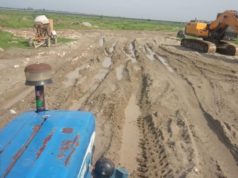
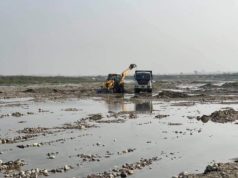
The policy comes in the backdrop of persistent concerns over illegal mining in Himachal Pradesh, particularly in industrial belts like Nalagarh and Baddi, as well as riverbed areas in Una, Kangra and Sirmaur districts. Unauthorised extraction of sand and gravel has been reported repeatedly, raising serious environmental and administrative concerns.
Experts have pointed out that unchecked mining has led to riverbank erosion, damage to aquatic ecosystems, and a fall in groundwater levels. The movement of overloaded vehicles has also been blamed for damaging rural roads and public infrastructure, adding to the financial burden on the state, which is already facing a tight fiscal situation.
Despite multiple crackdowns in the past, enforcement has remained a challenge due to limited manpower and gaps in monitoring, especially during night hours. Local residents in affected areas have often flagged the continuation of illegal activities, alleging that existing mechanisms have not been effective enough to deter violators.
Officials believe the new fee system will help create a record of incoming mineral-laden vehicles and act as a deterrent against unauthorised transport. At the same time, it is expected to generate additional revenue for the state and bring more transparency into the system.
However, the success of the policy will depend on strict implementation at check posts and coordination between departments, as the issue of illegal mining continues to demand sustained and consistent action from the authorities.