Solan: A new green revolution is quietly taking root in the mid-hills of Solan, where avocado is emerging as a promising high-value fruit crop and offering farmers an opportunity to diversify beyond traditional fruit cultivation.
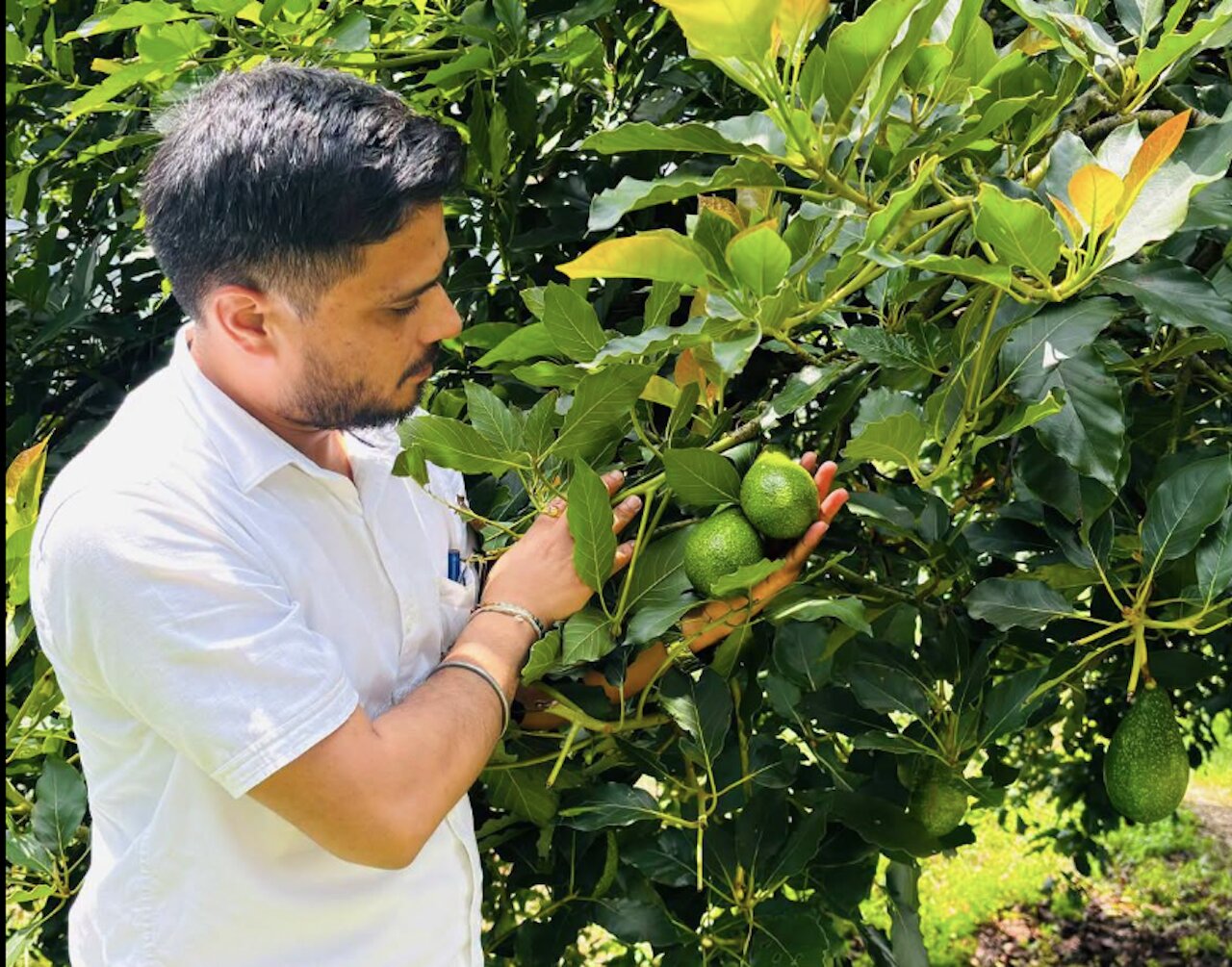
What began as an experiment is now emerging as a promising possibility for the region’s horticultural future. At Dharja, farmer Rohit Mehta has established Solan’s first avocado orchard over approximately 0.25 hectare, planting 70 saplings of four promising varieties—Hass, Pinkerton, Lamb Hass and Fuerte—under the MIDH scheme of the Department of Horticulture.
For a region where fruit cultivation has traditionally been dominated by conventional crops, the arrival of avocado represents more than just the introduction of another fruit. It signals the possibility of creating new income avenues for growers through crop diversification and high-value horticulture.
The journey of avocado in Solan, however, is not entirely new. A few avocado plants were introduced at PCDO Gaura, Solan, in 2025, and their encouraging performance has strengthened hopes about the crop’s suitability to local agro-climatic conditions.
Even more significantly, avocado plants established in parts of Solan as early as the late 1980s have continued to provide evidence of the crop’s long-term adaptability. Their satisfactory growth and performance suggest that avocado can potentially be cultivated successfully in the district’s mid-hill areas.
According to the observations, the crop shows potential particularly in areas up to around 1,400 metres above mean sea level, subject to suitable site conditions and appropriate orchard management.
Could Avocado Become an Alternative to Traditional Fruit Crops?
The growing interest in avocado comes at a time when horticulturists and farmers are increasingly looking towards crop diversification. Instead of depending entirely on traditional fruit crops, growers can explore a broader portfolio of high-value fruits suited to local conditions.
Avocado could become one such option for suitable areas of Solan and other mid-hill regions of Himachal Pradesh.
Its inclusion in horticultural planning could give farmers an opportunity to gradually replace or supplement fruit crops that may face challenges related to changing climatic conditions, market fluctuations, productivity or profitability.
However, diversification should be location-specific rather than a blanket replacement of existing orchards. Farmers would need access to quality planting material, technical guidance, irrigation facilities, suitable land and reliable market linkages before making large-scale changes.
A New Income Opportunity for Growers
The biggest attraction of avocado is its potential as a high-value fruit crop.
Growing consumer awareness and demand for nutritious and premium fruits have created an expanding market for avocado in India. If Himachal growers can produce quality fruit consistently, the crop could provide an additional source of income and help improve the profitability of small and medium-sized orchards.
For farmers, this could mean moving towards a more diversified orchard model—combining established fruit crops with carefully selected high-value alternatives.
Such diversification can also help reduce dependence on a single crop and potentially provide greater resilience against changing market and climatic conditions.
Solan Could Lead the Way
Solan’s varied elevation, climate and horticultural tradition provide a strong foundation for experimenting with new fruit crops. The successful performance of avocado plants over several decades, together with the recent establishment of new orchards, provides an encouraging basis for further trials.
The first organised avocado orchard at Dharja could therefore become a demonstration model for farmers across the district. If the plants continue to perform well and growers receive appropriate technical support, avocado cultivation could gradually expand to other suitable mid-hill pockets.
The Department of Horticulture can play an important role by conducting demonstration orchards, identifying suitable locations, providing scientific guidance, ensuring quality planting material and helping farmers understand post-harvest handling and marketing.
From Traditional Orchards to High-Value Horticulture
The story of avocado in Solan is ultimately a story about looking beyond the familiar.
Himachal Pradesh has built a strong identity around fruit cultivation, but the future of horticulture may depend increasingly on the ability to experiment, diversify and adapt. New crops such as avocado could complement the state’s traditional fruit economy and create fresh opportunities for the next generation of growers.
For Solan’s farmers, the small orchard at Dharja may represent something much bigger: the possibility of turning a new crop into a new source of prosperity.
If scientific trials, farmer training, market development and government support move together, avocado could gradually establish itself as one of the promising high-value fruit options for suitable mid-hill areas of Himachal Pradesh—helping growers diversify their orchards, improve farm income and build a more resilient horticultural economy.