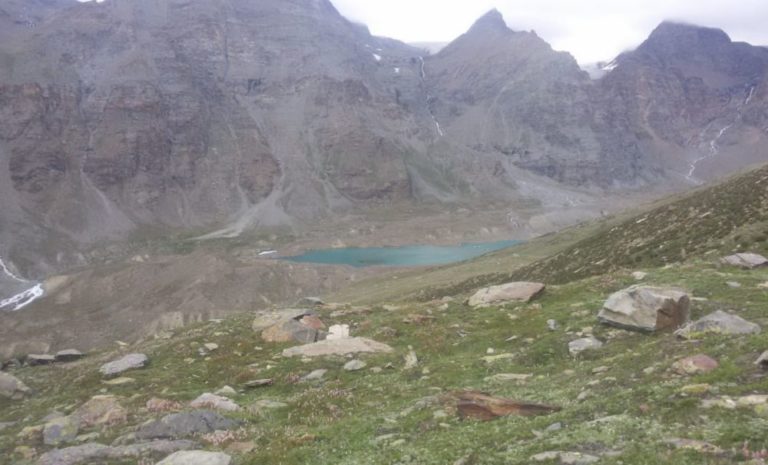
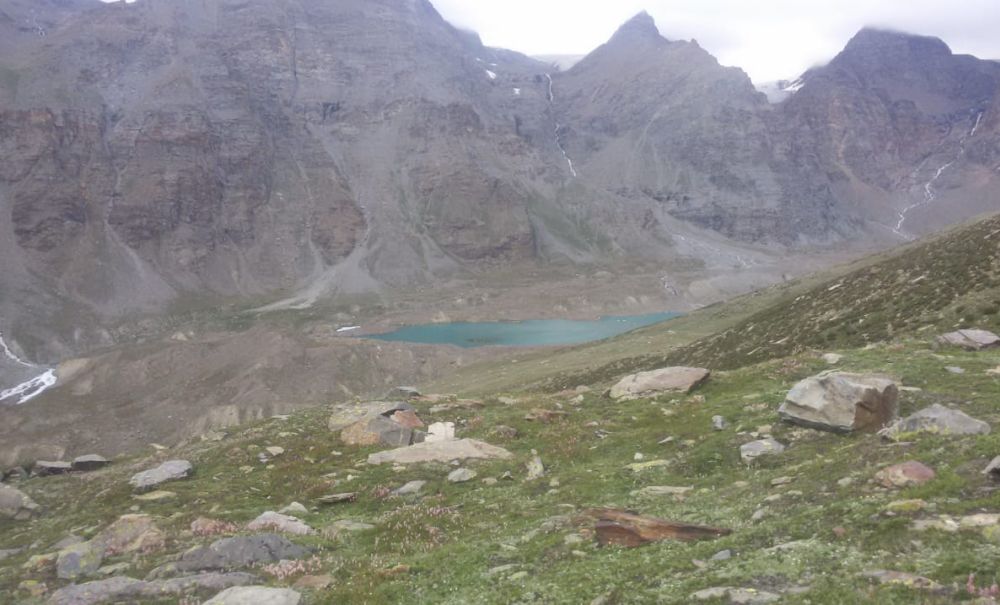
Lahaul-Spiti: In a significant step towards disaster preparedness in the Himalayan region, an early warning system has been installed at Ghepan Lake in Himachal Pradesh’s Lahaul-Spiti district. The system, established by the Centre for Development of Advanced Computing (C-DAC), is the first of its kind in the state to monitor a glacial lake and help authorities respond to potential flood threats.
Located at an altitude of approximately 13,450 feet above sea level, Ghepan Lake is among the high-altitude glacial lakes that require close monitoring due to the potential risks associated with rising water levels and changing climatic conditions.
Sub-Divisional Magistrate (SDM) Kunika Akers confirmed that the state’s first early warning system has been installed at Ghepan Lake. The initiative aims to strengthen monitoring and provide timely alerts to the concerned authorities if signs of a potential disaster are detected.
Glacial lakes are formed when meltwater accumulates in and around glaciers. Rising temperatures, accelerated glacier melting and increasing water levels can cause these lakes to expand, potentially increasing the risk of sudden flooding.
One of the major threats associated with glacial lakes is a Glacial Lake Outburst Flood (GLOF), which occurs when the natural barrier holding back a lake weakens or breaches, releasing a large volume of water downstream within a short period.
Such floods can carry rocks, boulders and debris at high speeds, posing a serious threat to human settlements, roads, bridges and other infrastructure in downstream areas. Given the mountainous terrain of Himachal Pradesh, a GLOF event can cause extensive damage and leave limited time for evacuation and emergency response.
The early warning system at Ghepan Lake is expected to help authorities track changes in the lake and identify potential warning signs. Sensors and monitoring equipment can collect information on parameters such as water levels and flow conditions, depending on the system’s installed capabilities.
Timely access to monitoring data can help concerned agencies assess emerging risks, issue alerts where necessary and prepare for emergency response and rescue operations.
The installation assumes significance as Himachal Pradesh is vulnerable to climate-related hazards, including flash floods, landslides and glacial lake outbursts. Strengthening surveillance of high-altitude lakes is considered an important measure to reduce disaster risks in the Himalayan region.
The system at Ghepan Lake marks a step towards improving early warning capabilities in the state, with the aim of minimising potential loss of life and damage to infrastructure in the event of a glacial lake-related emergency.