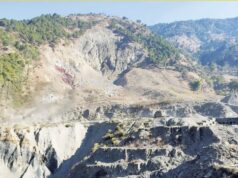

Shimla: The devastating glacier-related floods that struck Nepal and the Tibet border region, claiming more than 1,000 lives and leaving thousands missing, have turned attention towards the growing threat posed by glacial lakes and unstable high-altitude ice formations across other parts of the Himalayas, including Himachal Pradesh. The August 26 disaster, triggered by a major glacial collapse, sent torrents of rock, ice, mud and water downstream, destroying settlements and critical infrastructure.
The catastrophe has once again highlighted the vulnerability of Himalayan states to sudden glacial hazards and raised questions about the preparedness of downstream regions in India. In Himachal Pradesh, scientific studies have identified dozens of glacial lakes that are expanding in size and storing enormous quantities of water, creating the possibility of sudden Glacial Lake Outburst Floods (GLOFs).
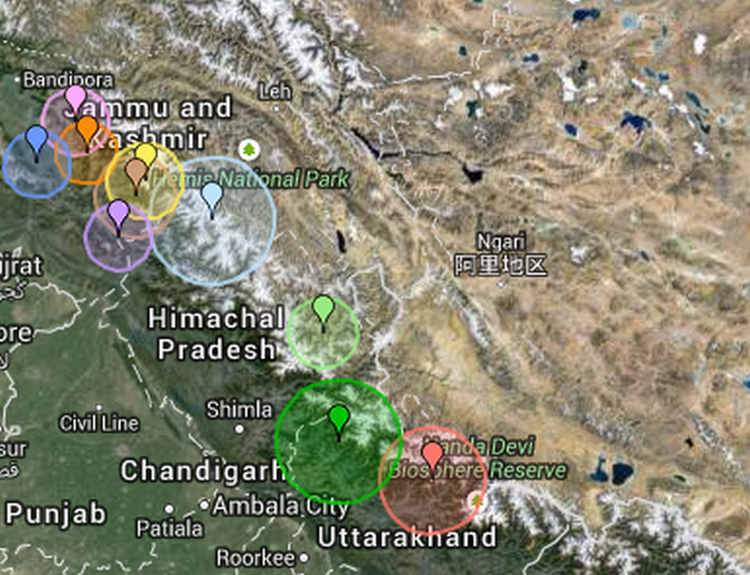
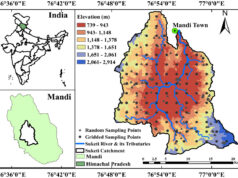
Research conducted by the School of Civil and Environmental Engineering at IIT Mandi has identified 48 potentially dangerous glacial lakes in Himachal Pradesh. The institute has been studying these lakes since 2015-16, examining changes in their size, water volume and the factors responsible for their expansion. The findings have highlighted the formation of what researchers describe as dangerous “water bombs” in the state’s high-altitude regions.
The threat is not confined to Himachal Pradesh. There are estimated to be around 2,000 glacial lakes across the Indian Himalayan region. The National Disaster Management Authority (NDMA) has identified 195 vulnerable glacial lakes in the Indian Himalayan region, with 67 classified as being in the very high-risk category.
Ghepan Lake raises biggest concern
Among Himachal’s vulnerable glacial lakes, Ghepan Lake in Lahaul-Spiti is considered one of the most hazardous. Located in the Chandra Basin above Sissu, the lake has expanded by approximately 178 per cent over the past 33 years.
The lake currently covers an estimated 1.07 to 1.21 square kilometres and is believed to hold between 24.1 million and 35 million cubic metres of water. Its maximum depth is around 46 metres.
A major outburst from Ghepan Lake could have serious consequences for Sissu and the wider Lahaul Valley. The Manali-Leh Highway and infrastructure around the Atal Tunnel could also be exposed to the impact of a sudden flood wave.
Samudra Tapu holds 24.7 million cubic metres
The Samudra Tapu glacial lake in the Chandra Basin of Lahaul-Spiti is another major concern. Spread over approximately 1.63 square kilometres, the lake is estimated to contain 24.7 million cubic metres of water and can reach a depth of nearly 59 metres.
Any sudden breach could send a huge volume of water into the Chandra Valley, posing risks to downstream settlements and infrastructure.
The Parchu Lake, formed along the Kinnaur-Lahaul border, also covers more than 10 hectares and has emerged as another area requiring close monitoring.
Threat extends to Beas and Sutlej basins
The danger is not limited to the Chandra Basin. The Himsu and Kalka lakes in the Beas and Sutlej basins have also been identified as dangerous. Their areas range from around 0.02 to 0.36 square kilometres.
Vasuki Lake in the Parvati Basin of Kullu, near Sosan, is another vulnerable glacial lake. Spread over 13.4 hectares, it contains an estimated 2.16 million cubic metres of water. A breach could put the Parvati and Manikaran valleys at risk.
The Sangla-Baspa Lake in the Sangla Valley covers between 14 and 19 hectares and is estimated to hold around 1.5 million cubic metres of water. A major outburst could affect the Baspa River as well as hydropower projects located downstream.
Beas could see 1,385 cumecs, Sutlej 3,500 cumecs
The scale of the potential danger has also been highlighted by a study conducted by IIT Ropar. The study has categorised nine lakes as posing a very high risk.
According to the assessment, a breach of vulnerable glacial lakes could generate peak flood discharges of around 1,385 cubic metres per second in the Beas River and as much as 3,500 cubic metres per second in the Sutlej River.
Such powerful flood waves could travel rapidly through narrow Himalayan valleys, carrying huge quantities of water, ice, rocks, mud and debris. The impact could extend to settlements, highways, bridges and hydropower infrastructure.
Multiple triggers can cause lake outburst
Scientists have identified several factors that could trigger the sudden failure of glacial lakes. These include unstable moraine dams, earthquakes, rockfalls and melting of ice cores within glaciers. Rising temperatures and accelerated glacier retreat can further contribute to the growth of glacial lakes and increase pressure on their natural barriers.
The recent Nepal disaster has demonstrated how quickly a high-altitude glacial event can transform into a catastrophe downstream. Scientists have stressed that Himalayan hazards are not restricted to conventional floods; glacier collapses, ice-rock avalanches, debris flows and GLOFs can combine to produce extremely destructive flood waves.
For Himachal Pradesh, the growing size and water volume of lakes such as Ghepan, Samudra Tapu, Vasuki, Parchu and Sangla-Baspa underline the need for continuous monitoring and stronger early-warning mechanisms.
With major settlements, highways and hydropower projects located downstream of these high-altitude lakes, experts say early detection of changes in lake levels and surrounding glaciers, real-time monitoring and evacuation preparedness will be crucial to reducing the loss of life and infrastructure in the event of a sudden outburst.