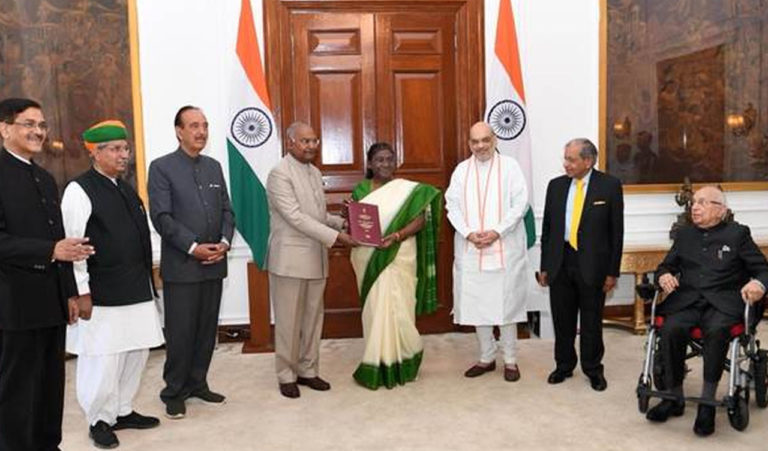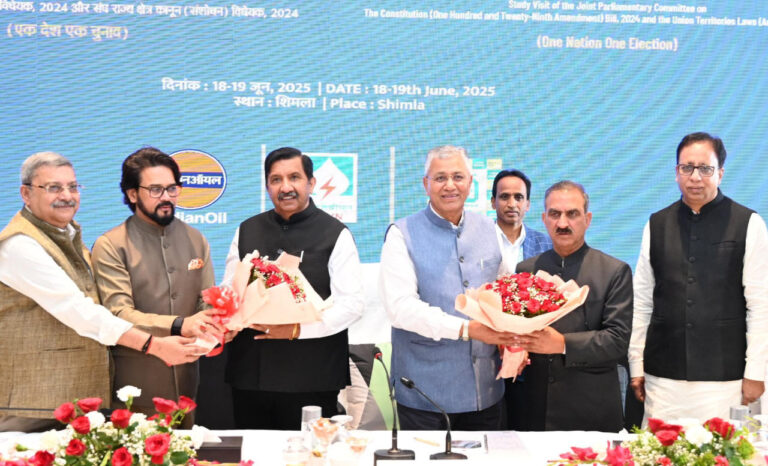
In a move that has stirred up considerable attention, the Union government has established a committee led by former President Ram Nath Kovind to delve into the feasibility of the widely-discussed concept of “one nation, one election.” This significant step follows the announcement of a special session of Parliament scheduled between September 18 and 22, with the specific agenda shrouded in secrecy.
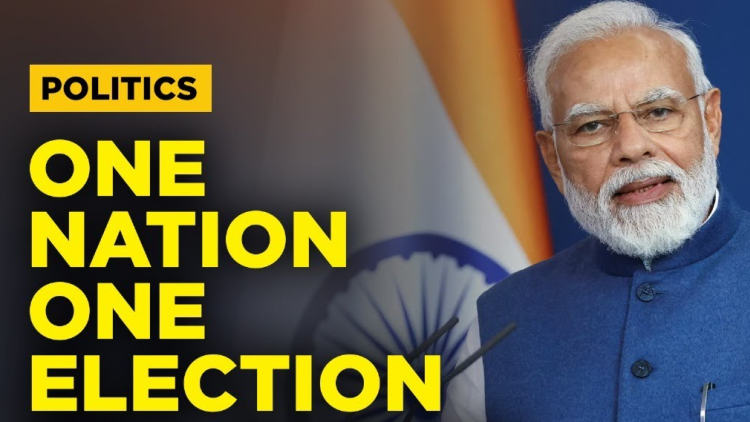
The notion of “one nation, one election” revolves around the idea of conducting simultaneous Lok Sabha and state assembly elections across the entire country. The Bharatiya Janata Party (BJP) and Prime Minister Narendra Modi have frequently addressed this issue, and it even found a place in the party’s manifesto during the 2014 Lok Sabha elections.
The appointment of Ram Nath Kovind to spearhead the committee is indicative of the government’s commitment to the concept as India approaches a series of upcoming elections. This includes assembly polls set to take place in five states during November-December, followed by the Lok Sabha elections slated for May-June next year.
It’s noteworthy that conducting simultaneous elections was the norm in India until the year 1967 when four elections were held concurrently. However, this practice was discontinued after certain state assemblies were prematurely dissolved during 1968-69. Subsequently, the Lok Sabha was dissolved a year ahead of schedule in 1970, leading to mid-term elections being held in 1971.
In their 2014 Lok Sabha Election Manifesto, the BJP pledged to explore methods for conducting simultaneous Assembly and Lok Sabha elections. Page 14 of the manifesto outlined the party’s commitment to electoral reforms, including the idea of synchronized elections, citing benefits such as reduced election expenses for both political parties and the government, as well as enhanced stability for State Governments.
Prime Minister Narendra Modi has been a vocal advocate of the “one nation, one election” concept, having discussed it in 2016 and convening an all-party meeting shortly after the 2019 Lok Sabha elections. The latter meeting, however, faced notable absentees from various opposition parties.
As the government’s committee under Ram Nath Kovind embarks on the task of exploring this complex electoral reform, the potential ramifications for India’s democratic process and political landscape remain subjects of keen interest and speculation.