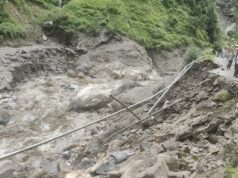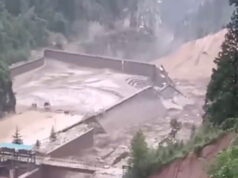


A comprehensive study by IIT Roorkee has identified the unique combination of steep terrain and soaring daytime temperatures as key drivers behind the increasing incidence of cloudbursts in select districts of Himachal Pradesh. The research, which analyzes data up to the end of 2024, points to five districts—Mandi, Shimla, Chamba, Kullu, and Sirmaur—as particularly vulnerable, while Una, Hamirpur, Bilaspur, Kangra, Kinnaur, Lahaul-Spiti, and Solan remain relatively unaffected.
Top-heavy monsoon rainfall in these five high-altitude regions makes them prone to sudden, intense downpours, with storms capable of depositing 200 mm to 1,000 mm of rain in a localized area within just a few hours. The phenomenon is fueled primarily by cumulonimbus clouds—commonly known as thunderclouds—formed under specific geographical and meteorological conditions.
According to the study, the steep mountainous slopes in these districts act as natural barriers. As warm air rises and encounters these physical impediments, it cools rapidly, condenses, and forms towering cumulonimbus clouds. Such clouds are notorious for unleashing torrential rainfall in concentrated bursts.
Temperature emerges as a critical catalyst. Solar heating during the day raises surface temperatures sharply, resulting in atmospheric instability. This destabilization accelerates the upward movement of moisture-laden air, which then cools and condenses at altitude to create massive thunderclouds capable of triggering cloudbursts.
Cloudbursts in the region exhibit a clear seasonal pattern: they are significantly more frequent in July and August—the peak of the monsoon—compared to June and September. This temporal spike correlates with the highest levels of atmospheric moisture and thermal instability during those months.
The IIT Roorkee findings highlight the urgent need for enhanced meteorological monitoring and early-warning systems, especially in the five high-risk districts. Recommendations include deploying more weather stations in mountainous terrain, improving real-time data transmission, and educating local communities on sudden-onset flood risks.
With extreme weather events becoming more erratic, the study underscores how local topography and global climate drivers—particularly rising temperatures—combine to shape severe weather patterns in the Himalayan foothills. It calls for region-specific disaster preparedness strategies and infrastructure resilience to safeguard lives and livelihoods.
Himachal Pradesh has witnessed an increase in the frequency and intensity of cloudbursts, particularly in areas above 1,500 meters. These incidents have caused flash floods, landslides, and damage to infrastructure and agriculture. The research warns that climate change, if left unmitigated, may further intensify these events in the coming decades.