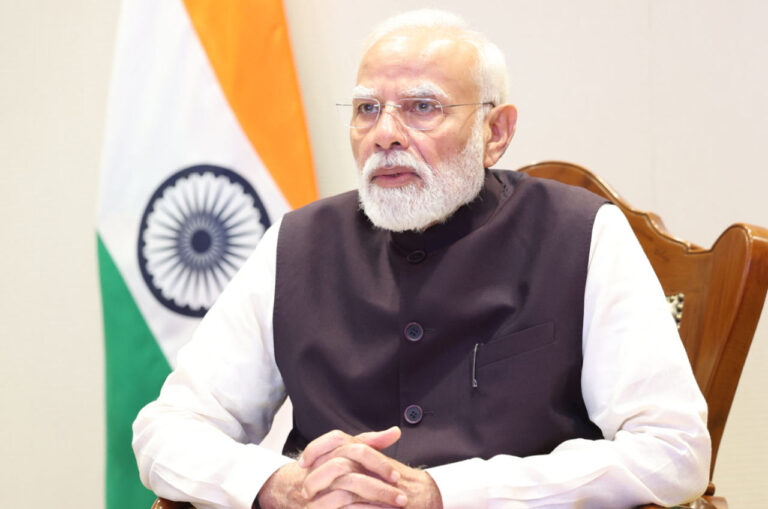
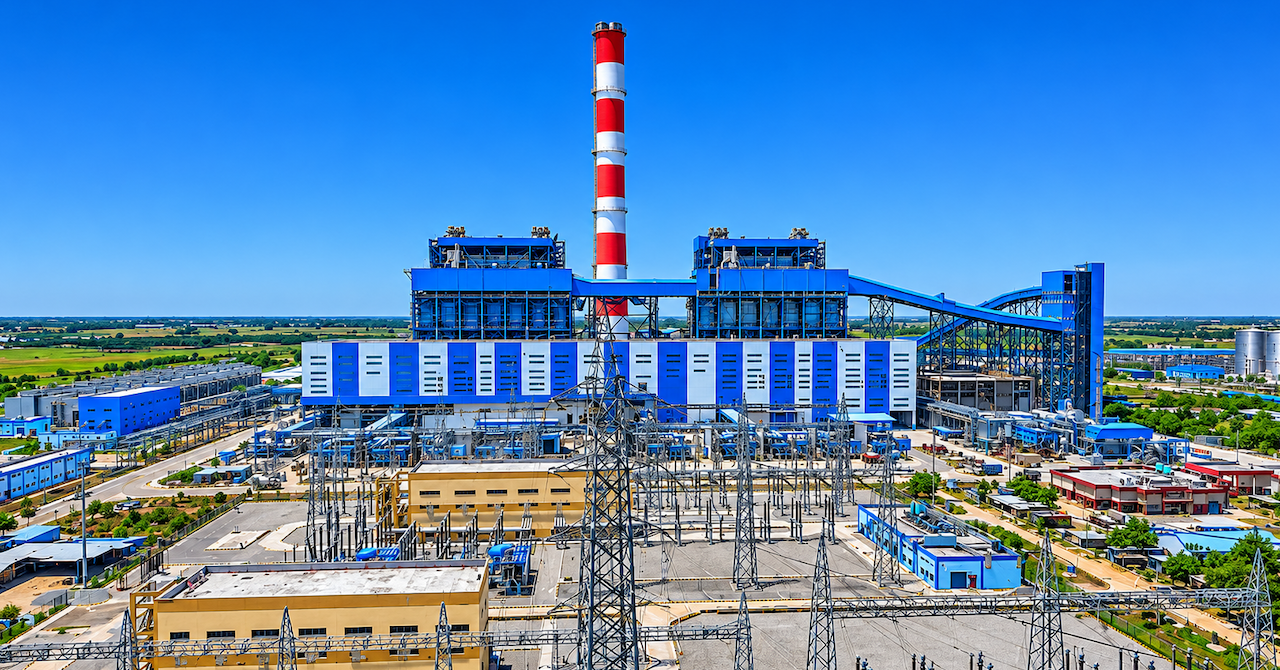
Prime Minister Narendra Modi virtually dedicated the second 660 MW unit of SJVN’s 1,320 MW Buxar Thermal Power Project to the nation from Vaishali in Bihar. The commissioning of the second unit marks the completion of the project’s full generation capacity, strengthening Bihar’s power infrastructure and contributing to electricity supply in the Eastern Region.
The second unit has been developed with an investment of ₹7,221.09 crore by SJVN Thermal Private Limited (STPL), a wholly-owned subsidiary of SJVN Limited. Located at Chausa in Buxar district of Bihar, the project comprises two units of 660 MW each, with a total revised approved cost of ₹14,269.40 crore.
Prime Minister Narendra Modi laid the foundation stone of the project on March 9, 2019, while its first 660 MW unit was inaugurated on August 22, 2025. With both units now commercially operational, the project has achieved its installed capacity of 1,320 MW.
The Buxar Thermal Power Project is expected to generate approximately 9,828.72 million units of electricity annually at a Plant Load Factor (PLF) of 85%. Over its projected operational period of 25 years, the cumulative generation is estimated at around 2,45,718 million units. Significantly, 85% of the electricity generated from the project has been allocated to Bihar under a long-term Power Purchase Agreement, providing additional support to the state’s growing energy requirements.
The project is based on Ultra Super Critical Technology and incorporates modern emission-control systems aimed at improving operational efficiency and reducing the environmental impact of coal-based power generation. To ensure a long-term supply of domestic coal, SJVN has also executed a Fuel Supply Agreement with Central Coalfields Limited (CCL), a subsidiary of Coal India Limited.
The additional power generation capacity is expected to help meet Bihar’s electricity demand, particularly during peak consumption periods, while strengthening the reliability and stability of the Eastern Regional Power Grid. The increased availability of electricity is also expected to support industrial operations, agriculture, commercial establishments and household consumers, contributing to economic activity and regional development.
The project also reflects the Centre’s vision of Atmanirbhar Bharat and Viksit Bharat through the extensive use of domestically sourced construction materials. Its development involved the utilisation of approximately 2,54,932 metric tonnes of steel and 2,84,291 tonnes of cement.
During different phases of construction, the project provided employment to approximately 65,000 workers, generating direct and indirect livelihood opportunities and supporting the local economy. Employment and other economic activities are also expected to continue during the project’s operational phase.
Beyond power generation, SJVN has undertaken several community development programmes in and around the project-affected areas under its Corporate Social Responsibility (CSR) and Sustainability initiatives. These interventions are aimed at extending the project’s benefits to local communities and supporting their socio-economic development.
SJVN Limited, a Navratna Central Public Sector Enterprise under the Ministry of Power, was incorporated on May 24, 1988, as a joint venture between the Government of India and the Government of Himachal Pradesh. With an installed capacity of 4,931.50 MW and another 3,860.50 MW under construction, the company continues to expand its energy portfolio across India and Nepal, contributing to the country’s power generation capacity and energy security.