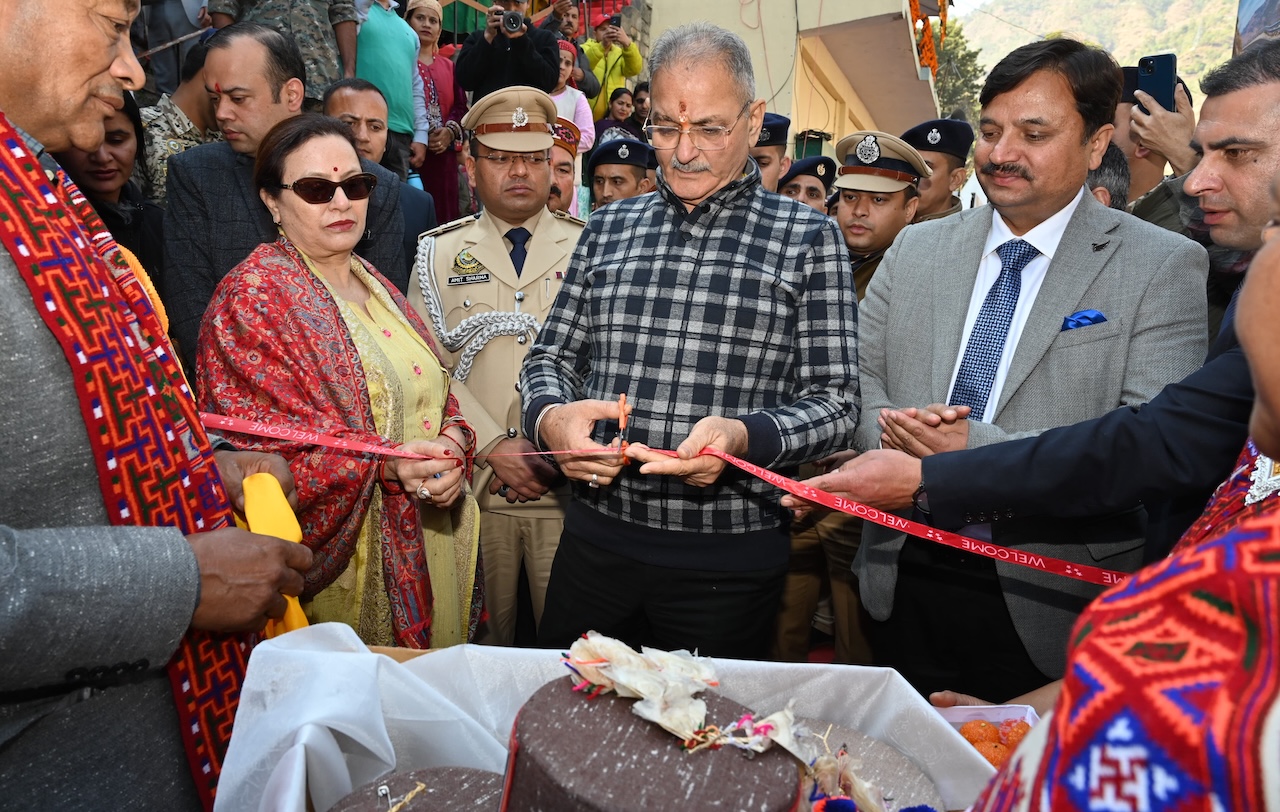
Rampur/Shimla: The centuries-old legacy of trade, cultural exchange and traditional commerce came alive once again as the International Lavi Fair commenced in Rampur Bushahr on Wednesday. Himachal Pradesh Governor Kavinder Gupta inaugurated the historic fair, marking the beginning of the four-day annual celebration that holds immense historical, cultural and economic significance for the state.
Held from November 11 to 14 at Paddam Ground, the Lavi Fair is among Himachal Pradesh’s most prominent traditional trade festivals. Rooted in the historic commercial relationship between the erstwhile Bushahr princely state and Tibet, the fair has evolved over the centuries from an important trading centre into a major platform for showcasing the region’s cultural heritage, traditional products and entrepreneurial potential.
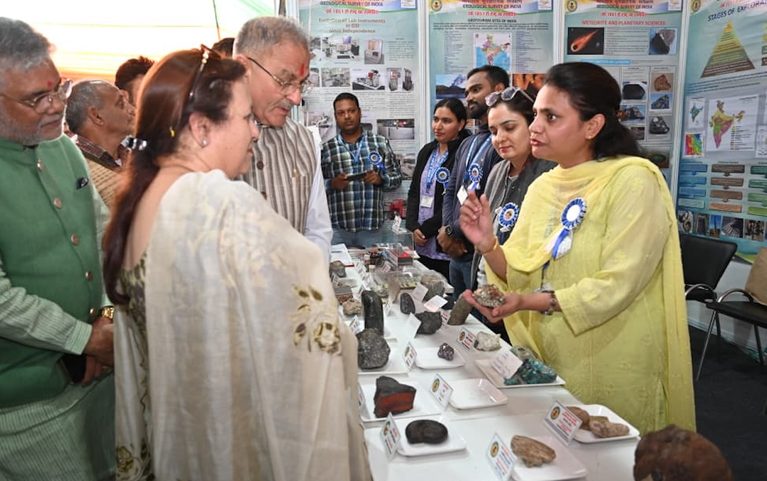
During the inaugural programme, Governor Kavinder Gupta inaugurated the Kinnauri Market and visited exhibitions organised by various government departments. He took keen interest in traditional Kinnauri textiles, handicrafts and locally manufactured products.
Emphasising the importance of preserving the state’s rich cultural traditions, the Governor said that fairs such as Lavi provide valuable opportunities to promote local products, encourage entrepreneurship and strengthen the rural economy. He also stressed the need to make traditional products accessible to wider markets and motivate young people towards self-reliance.
The Governor called upon people to maintain cleanliness during the celebrations, avoid the use of plastic and ensure that environmental protection remains an integral part of such traditional gatherings. He also appreciated the efforts of the district administration, fair committee, police and other departments in organising the event.
A centuries-old trading tradition
The Lavi Fair’s historical significance is closely tied to trade relations between the Bushahr princely state and Tibet. Its origins are generally traced to the 17th century, during the reign of Raja Kehri Singh, when Rampur emerged as an important commercial centre connecting the Himalayan regions with Tibet.
Strategically located along the banks of the Sutlej, Rampur served as a major meeting point for traders travelling through difficult mountain routes. Merchants from Tibet, Kinnaur, Lahaul-Spiti, Kullu and other Himalayan regions would gather here to exchange essential commodities and traditional products.
Wool, pashmina, dry fruits, medicinal herbs, spices, salt, livestock and woollen garments were among the important items traded during the fair. These exchanges were not merely commercial transactions but also strengthened social and cultural relationships between communities living on both sides of the Himalayan mountain ranges.
The fair acquired particular importance as a centre of India–Tibet trade, with Rampur serving as a vital link in the traditional trading network. However, the closure of the traditional border trade following the 1962 India–China war significantly altered its original commercial character.
Despite these changes, the Lavi Fair remained important as a symbol of the region’s historic trading relationships and cultural identity. It was accorded international status in 1985, further enhancing its recognition as an important traditional trade and cultural event.
From international trade to local economic opportunities
Although the nature of commerce has changed considerably over the years, the economic relevance of the Lavi Fair remains significant. What was once a major centre of cross-border trade has gradually transformed into an important marketplace for traders, artisans, farmers and small entrepreneurs.
Today, the fair attracts traders from different parts of the country, offering a wide variety of products, including woollen garments, shawls, dry fruits, handicrafts, household goods and agricultural produce.
The Kinnauri Market, in particular, provides an opportunity for local artisans and producers to showcase their traditional skills and products. Government departments also organise exhibitions to familiarise visitors with development programmes, welfare schemes and initiatives aimed at promoting local industries.
For rural producers, small traders and self-help groups, the fair offers an important platform to reach customers, expand their markets and generate additional income. It also contributes to the local economy through increased commercial activity, tourism and business opportunities for hotels, transport operators and other service providers.
At a time when traditional industries and indigenous products are seeking wider recognition, the Lavi Fair provides an opportunity to connect local craftsmanship with modern markets.
Preserving Himalayan culture and traditions
Beyond its commercial importance, the Lavi Fair remains a vibrant celebration of Himachal Pradesh’s cultural diversity. Traditional attire, folk music, Nati performances, local cuisine and handicrafts reflect the distinctive cultural identity of the Sutlej valley and neighbouring Himalayan regions.
The fair also carries significance for the preservation of traditional knowledge and indigenous practices. It provides younger generations with an opportunity to understand the historical roots of their communities and appreciate the skills, customs and traditions inherited from previous generations.
The Chamurthi horse, an indigenous breed associated with the high-altitude regions of Himachal Pradesh, is another important attraction connected with the fair’s traditional livestock trade. Its presence highlights the historical relationship between pastoral communities and the region’s commercial traditions.
A bridge between the past and the present
The continuing popularity of the Lavi Fair demonstrates how traditional institutions can adapt to changing economic and social circumstances while retaining their historical identity.
Though the old trading routes between India and Tibet no longer function in their earlier form, the fair continues to represent the spirit of those historic commercial and cultural exchanges. It brings together people from different regions, provides opportunities for local businesses and helps preserve the cultural heritage of the Himalayan communities.
Chief Minister Sukhvinder Singh Sukhu is scheduled to attend the concluding ceremony on November 14.
As Rampur welcomes traders, visitors and cultural performers, the Lavi Fair once again reinforces its relevance beyond being an annual celebration. It remains a living reminder of Himachal Pradesh’s historic trading legacy and an important platform for connecting cultural preservation with economic opportunities in the modern era.