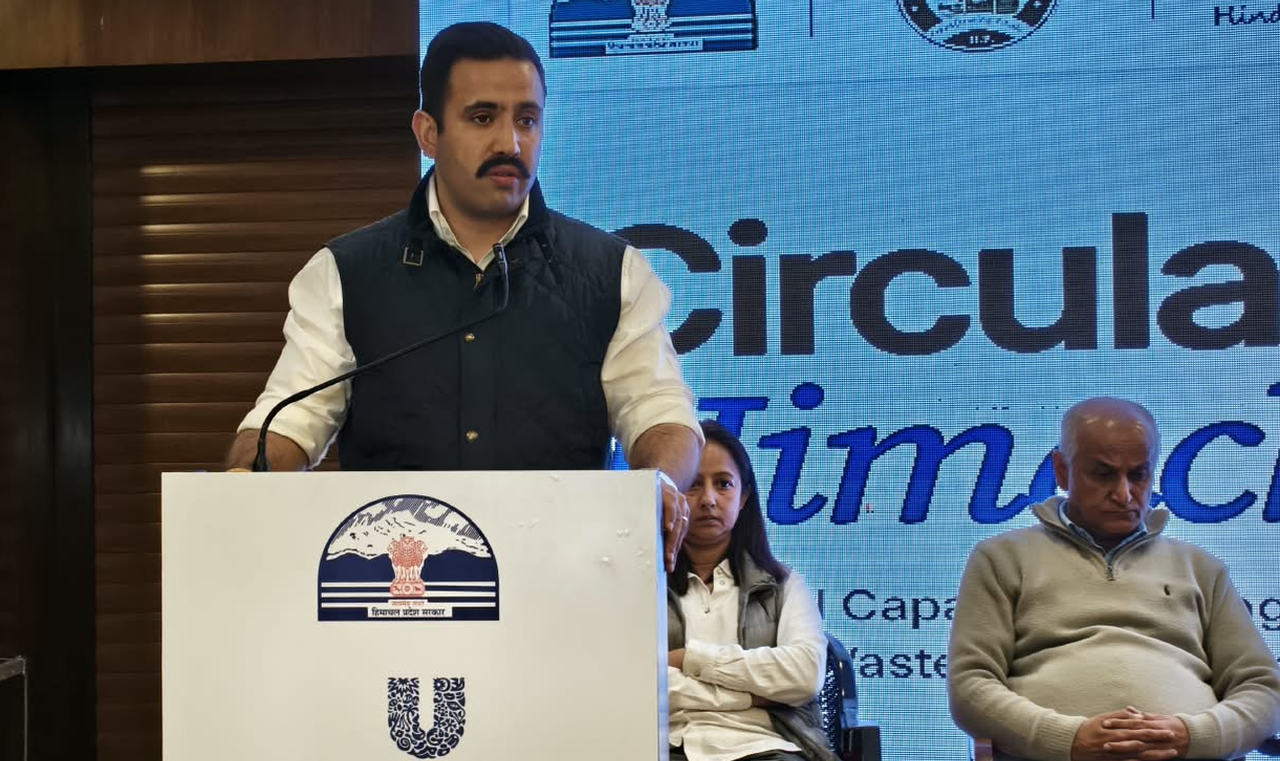
Shimla: The Himachal Pradesh government is focusing on waste segregation, recycling and public participation to promote sustainable urban development. Public Works and Urban Development Minister Vikramaditya Singh on Wednesday inaugurated a one-day state-level capacity-building programme under Project Circular Bharat, jointly organised by the Urban Development Department and Hindustan Unilever Limited (HUL).
The initiative aims to strengthen the capacity of elected representatives and officials of Urban Local Bodies (ULBs) to implement the Solid Waste Management Rules, 2026, and develop efficient, inclusive and environmentally sustainable waste management systems.
Speaking on the occasion, Singh emphasised that public participation, effective awareness campaigns and segregation of waste at source were essential to addressing the growing waste management challenges in urban areas. He said the success of such initiatives depended on the active involvement of citizens and other stakeholders at the grassroots level.
The minister also stressed the need to respect, support and empower sanitation workers, while encouraging households and communities to develop the habit of separating wet and dry waste.
Highlighting the shortage of land for waste disposal in urban areas, Singh called for long-term planning that takes into account the needs of the next 20 to 25 years. He emphasised the adoption of modern technologies, greater reuse and recycling of waste, and improved utilisation of plastic waste to reduce pressure on existing disposal facilities.
He also called for pilot projects in selected areas with the support of Hindustan Unilever Limited and other concerned organisations. These projects, he said, could help develop effective waste management models that could be expanded based on their performance.
Director of Urban Development Neeraj Kumar outlined the objectives of Project Circular Bharat, stating that it seeks to strengthen the leadership and institutional capacity of urban local bodies, promote practical waste management solutions and ensure active citizen participation.
He said the programme would focus on waste segregation at source, collection and transportation, processing, behavioural change, resource recovery, recycling and the effective functioning of Material Recovery Facilities (MRFs).
Under the initiative, urban local bodies will receive technical expertise in circular economy practices and resource recovery. The programme will also include assessments of training needs, capacity-building workshops, technical assistance and improved coordination among stakeholders.
Special emphasis will be placed on reducing waste generation, improving collection and processing systems, recovering valuable resources and making better use of existing waste management infrastructure.