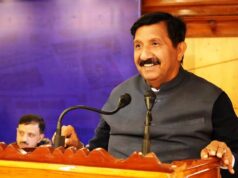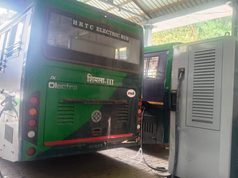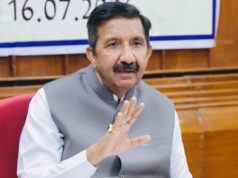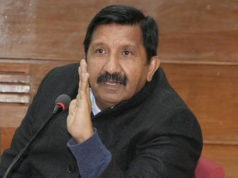

Shimla: The Himachal Road Transport Corporation (HRTC) is recording financial savings while reducing its dependence on diesel with the growing operation of electric buses across the state. Deputy Chief Minister Mukesh Agnihotri has said that the operation of e-buses is saving Rs 18.19 per kilometre for HRTC, besides contributing to environmental protection.
Agnihotri described HRTC as the lifeline of Himachal Pradesh, providing essential transport services to people in remote and inaccessible areas where road connectivity is often the only practical means of public transportation. He said the shift towards electric mobility was therefore significant not only from an environmental perspective but also for the corporation’s long-term financial sustainability.
From Manali-Rohtang to a Statewide Electric Fleet
Himachal Pradesh’s experiment with electric buses dates back to 2017, when HRTC began commercial operations of electric buses on the Manali-Rohtang route. The initiative was launched in response to environmental concerns surrounding the ecologically fragile Rohtang area and restrictions on conventional vehicles. The state subsequently expanded electric bus operations to other parts of Himachal.
The first major project involved 25 electric buses on the Manali-Rohtang stretch. In 2018, plans were also advanced to introduce electric buses in Shimla, with charging facilities identified at Dhalli and Shoghi.
By 2019, 50 electric buses had been introduced in Shimla, marking another major step in the state’s transition towards cleaner public transport. The buses were intended to provide pollution-free and quieter transportation in the state capital and other tourist destinations.
The expansion continued in subsequent years. The state’s Economic Survey recorded 75 electric buses in the HRTC fleet in 2022-23, operating in locations including Shimla and Manali. By 2023-24, the reported fleet had increased to 110 electric buses, alongside electric taxis operated by the corporation.
297 E-Buses Already Provided
The transition has gained further momentum under the state’s current green transport plans. Chief Minister Sukhvinder Singh Sukhu recently said that 297 electric buses had already been provided to HRTC and announced plans to add another 1,500 e-buses to the corporation’s fleet.
The proposed new buses are to be designed specifically for Himachal’s challenging terrain. Sukhu has directed that the new fleet should have a minimum range of 350 kilometres, an important requirement for operating on the state’s long and mountainous routes.
The government had earlier announced a broader objective of replacing diesel buses with electric buses in phases. In the 2023-24 budget, the state had proposed replacing 1,500 diesel HRTC buses with electric buses, with an expenditure provision of Rs 1,000 crore. The plan envisaged the development of dedicated e-bus infrastructure, including a new e-bus depot at Nadaun and conversion of the Shimla local depot into an e-bus depot.
HRTC subsequently floated a tender in 2024 for the procurement of 297 Type-I electric buses, along with chargers and comprehensive annual maintenance support, indicating the scale of the corporation’s ongoing electrification programme.
Focus on Charging Infrastructure
With the proposed expansion of the electric fleet, charging infrastructure is emerging as a key requirement. Sukhu has directed officials to accelerate the development of e-charging infrastructure across Himachal Pradesh.
The government has also directed that Una district be made fully operational with electric buses, while the HRTC Regional Manager’s office at Nalagarh is also to be made fully operational with electric buses. The latest plan also includes providing 30 electric vehicles to HRTC officers.
The state’s Electric Vehicle Policy has identified Shimla, Dharamshala, Mandi and Baddi as model towns for EV adoption. Earlier planning had identified multiple locations for fast-charging infrastructure as part of the effort to support greater use of electric vehicles in public and private transport.
Govt Considering Hydrogen Buses
Himachal’s clean-mobility plans are no longer limited to battery-powered buses. The state government is also considering green hydrogen-powered buses as part of its future public transport strategy.
According to the latest announcement, HRTC is expected to procure 100 green hydrogen buses along with 100 Super Deluxe buses. The government has said that the move is aimed at diversifying the corporation’s fleet while continuing the transition towards cleaner technologies.
Savings Could Strengthen HRTC’s Finances
The reported Rs 18.19-per-kilometre saving is particularly significant for HRTC, which operates an extensive network across some of the country’s most difficult terrain.
For a corporation that runs thousands of kilometres every day, lower operating costs can potentially translate into substantial savings over time. Along with lower dependence on conventional fuels, electric buses can help the corporation reduce its exposure to fluctuations in diesel prices.
Agnihotri has emphasised that the economic benefit comes alongside the environmental advantage. Electric buses produce no tailpipe emissions and are particularly relevant for heavily populated urban areas and environmentally sensitive tourist destinations.