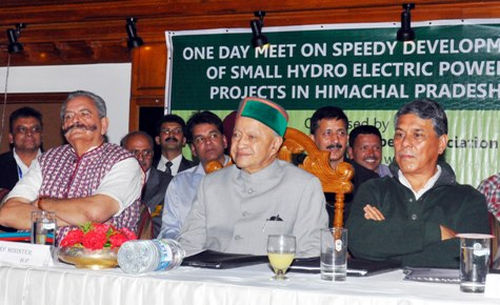

Shimla: In a renewed push to harness Himachal Pradesh’s vast hydroelectric potential, the state Cabinet has approved the allotment of 71 small hydroelectric projects to eligible Independent Power Producers (IPPs) under the provisions of the Hydro Power Policy, 2006.
The decision signals a return to private sector-led development in the small hydropower segment, which has long been a key pillar of the state’s renewable energy strategy. The Hydro Power Policy, 2006, was designed to position Himachal Pradesh as a major “hydro power state,” with a focus on capacity addition, employment generation, and revenue generation while promoting renewable energy sources.
Small hydropower projects—generally up to 25 MW capacity—have been promoted as eco-friendly and suitable for the fragile Himalayan terrain. The policy framework also provides incentives and encourages participation of private developers, with agencies like HIMURJA acting as nodal bodies for projects up to 5 MW. Himachal Pradesh is estimated to have a small hydro potential of over 2,000 MW, making it one of the most promising regions for such projects in the country.
Sector marred by delays and cancellations
Despite this potential, the state’s small hydropower sector has struggled with delays and implementation challenges for years. Issues such as forest and environmental clearances, land acquisition hurdles, and financial constraints have slowed project execution. In several cases, local opposition and concerns over ecological impact have further delayed or stalled projects.
The scale of the problem was evident when the state government previously cancelled 172 small hydro projects that had remained stalled for long periods without progress, indicating serious gaps between allotment and execution.
Policy and procedural bottlenecks have also contributed to uncertainty. Amendments to the hydro policy were introduced over time to fast-track approvals, but these raised concerns about environmental safeguards and the cumulative impact of multiple projects on rivers and ecosystems.
Environmental groups and studies have flagged issues such as deforestation, impact on irrigation systems, damage to local livelihoods, and risks of landslides due to construction activities linked to small hydro projects.
Balancing growth and sustainability
While small hydro projects are often considered cleaner alternatives to thermal power, experts caution that their cumulative impact—especially in ecologically sensitive mountain regions—needs careful assessment. Changes in river flow, habitat disruption, and pressure on water resources have been highlighted in several studies.
The government’s latest decision to allot 71 projects is being viewed as an effort to revive investor confidence and accelerate renewable energy generation. By selecting only those developers who meet eligibility criteria, the state aims to avoid the delays and non-performance issues that affected earlier allotments.
The success of this initiative will depend on faster clearances, stronger monitoring mechanisms, and better coordination between departments. Addressing local concerns and ensuring environmental safeguards will also be crucial to prevent opposition and litigation, which have slowed projects in the past.