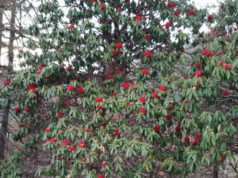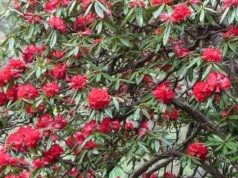

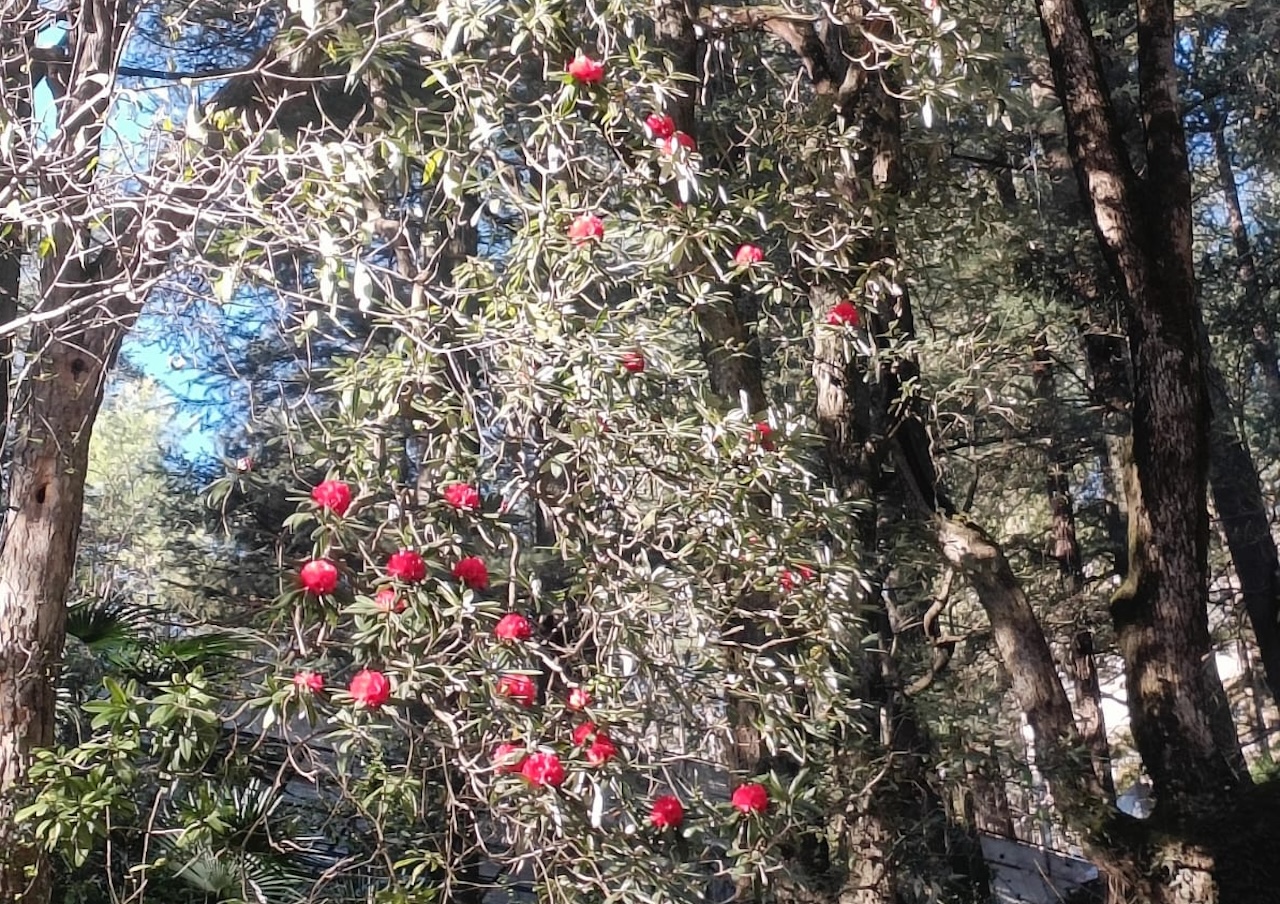
Shimla: The rhododendron — locally known as buransh and one of the most iconic signs of spring in the Himalayas — has blossomed early this year in and around Shimla, marking a departure from its usual flowering period. While the sight of crimson and pink blooms might delight visitors and residents, scientists and environmental observers warn that such early blossoming could be a sign of deeper climatic changes rather than just a seasonal quirk.
Traditionally, Rhododendron arboreum flowers in the mid-to-late spring months — late March and April — when temperatures gradually rise after winter. This year, however, observers have reported blooms much earlier, suggesting that weather patterns are no longer following historical norms.
What Research Says About Early Flowering
Scientific studies across the Himalayas have identified a clear trend: rhododendrons are flowering weeks earlier than they used to. One research study from the Western Himalaya found that R. arboreum has shown flowering advancement of 3–8 weeks compared to historical data, linked closely with rising mean winter and spring temperatures.
Temperature plays a crucial role in triggering flowering. Rhododendrons require a period of cool dormancy followed by a rise into warmth (typically 15–20 °C) to initiate blooms. With winters becoming milder and snowfall declining in many parts of the Himalayas, plants receive the signal to bloom sooner than usual.
Climate-linked changes like these are not just isolated phenomena. Similar shifts have been recorded at wildlife sanctuaries where rhododendrons bloomed nearly a month ahead of their regular season, prompting experts to describe this as an ecological shift in phenology — the timing of biological events.
Why Early Blooming Matters
Early flowering might seem benign, but it has important ecological implications. Rhododendrons are part of delicate mountain ecosystems and serve as food sources for pollinators, including bees, butterflies, and birds. When blooms appear earlier, they can fall out of sync with the life cycles of pollinators, leading to what scientists call a trophic mismatch — where plants and the creatures that depend on them are no longer aligned in time.
Furthermore, early flowering can expose blossoms to late cold snaps or frost, which can damage buds and reduce plant reproductive success. Long-term shifts could also push rhododendron populations to higher altitudes where temperatures are cooler, putting additional stress on species already facing habitat pressures.
Local climate patterns, including reduced snowfall, warmer winters, and changes in rainfall, have also been linked to these phenological shifts in research. These changes are consistent with broader warming trends observed across the Himalayas.
A Broader Indicator of Climate Change
Scientists regard species like rhododendron as bio-indicators — organisms that reflect the health and dynamics of their environment. When their seasonal cycles change noticeably, it often signifies underlying climatic alterations rather than random variation.
In Shimla and other Himalayan regions, early rhododendron blossoming should therefore be seen not only as an early spring spectacle but as a warning sign of shifting weather patterns. Continued monitoring and scientific study will be crucial to understand how these changes may affect Himalayan flora, fauna, and ecosystems in the coming years.